
Welcome to Trás-os-Montes – Portugal’s rugged, untamed frontier where time moves to the rhythm of crackling fireplaces and church bells echoing through stone valleys. The name itself whispers mystery: “Beyond the Mountains.” For generations, those protective granite walls shielded this northeast corner from modernization, preserving traditions that might have vanished elsewhere in Portugal.
Imagine a place where Celtic-inspired bagpires mingle with Gothic churches, where villagers cure meats in chestnut smokehouses passed down through eight generations. This is Portugal not as you know it, but as your great-grandparents might have remembered – a landscape where the sheer force of local character shaped everything from architecture to afternoon snacks.
Discovering Portugal’s Hidden Kingdom: Trás-os-Montes Unveiled
Tucked between Spain to the east and the Douro River to the south, Trás-os-Montes forms Portugal’s wild rooftop. This isn’t the Portugal of surf beaches or pastel de nata coffee shops. Here, medieval stone villages cling to hillsides in the shadows of three protective mountain chains – Gerês, Marão, and Alvão. Some call it Portugal’s “last frontier,” where you’ll encounter towns like:
- Bragança – Home to Europe’s best-preserved medieval citadel
- Chaves – Famous for thermal springs first tapped by Roman legionaries
- Miranda do Douro – Where Portugal suddenly plunges 200m into canyon country
Come autumn, entire valleys shimmer golden with falling chestnut leaves. In February, almond blossoms transform the Terra Quente (Hot Lands) into seas of white flowers. Yet through all seasons, those signature stone walls remain – lining vineyard terraces, framing arched village gates, and forming the bones of houses older than some European nations.
Mastering the Art of Transmontano Transportation
Navigating Trás-os-Montes is like treasure hunting through a medieval storybook. Every winding turn unveils something extraordinary – a 12th-century chapel, a shepherd leading lambs to higher pasture, or smoke curling from a cottage chimney where sausages cure overhead. But these treasures don’t reveal themselves easily. Here’s how best to explore:
The Freedom of Four Wheels
Renting a car unlocks the soul of this region. Modern highways connect main towns, but the magic happens along those thin gray lines squiggling up mountains on your map. Expect to:
- Navigate ribbons of tarmac clinging to hillsides (keep emergency pastries for courage)
- Yield roads to herds of sheep during seasonal migrations
- Discover hidden waterfalls by following tractor tracks into oak forests
Pro Tip: Download offline maps before departing. Mobile signals vanish regularly in these mountains.
Public Transport: A Slow Dance
Buses serve major towns reliably but infrequently. The 8am Chaves-to-Bragança run offers stunning views, but afternoon services dwindle outside summer. Adventurous travelers might try:
- Regional buses to village market days (usually early mornings)
- Hitching rides with farmers (commonplace in harvest season)
- Timing visits around festivals when extra transport runs
Two-Wheeled Adventures
E-bike rentals now appear in Bragança and Chaves, transforming once-daunting climbs into manageable adventures. Follow the Tua River from Mirandela, cycling past almond groves and 19th-century railway tunnels now bursting with wildflowers.
Timeless Travel: Crafting Your Perfect Transmontano Itinerary
“How long should I stay?” locals echo when asked. “Mais tempo que tens” – more time than you have. Three days shows you postcard highlights. Five days lets you breathe the mountain air properly. But to taste Trás-os-Montes’ soul? That takes a week of slow mornings and firelit evenings.
The Express Experience (3 Days)
- Day 1: Bragança Citadel & Montesinho Park villages
- Day 2: Chaves Roman baths & thermal pools
- Day 3: Miranda do Douro canyon boat tour
The Immersive Journey (5-7 Days)
Add these deeper experiences:
- Chestnut harvest walks with local guides
- Cold-smoking workshops preserving regional meats
- Overnights in alminhas (traditional pilgrim shelters)
- Learning Mirandês – Portugal’s second official language
Seasonal Tip: February brings almond blossom parades; September means roasted chestnuts at every village square.
Sleeping With History: Accommodations With Transmontano Soul
Forget generic hotels. In Trás-os-Montes, you bed down in converted olive mills, noble houses bearing family crests, or eco-lodges watching golden eagles nest. Where you stay shapes your experience:
Bragança’s Citadel Lodgings
Sleep within medieval walls at Pousada de Bragança, where original battlements frame views to Spain. Wander moonlit cobbles after day-trippers leave – you’ll have Europe’s most perfect castle village nearly to yourself.
Romantic River Refuges
Miranda do Douro’s hidden gem – Hotel Santa Catarina – offers balcony views of the Douro gorge so dramatic, you’ll forget to blink. At sunset, cliffs glow terracotta while night herons patrol below.
Family Farmstead Stays
Quinta da Faísca near Vinhais teaches kids to collect eggs, feed lambs, and help make traditional cornbread. Parents sip local wine fireside while planning tomorrow’s hike to ancient rock carvings.
Pilgrim’s Rest
Albergue São Bartolomeu’s shared dorm in Outeiro lets hikers swap stories between Camino de Santiago routes. Dawn brings mist drifting over vineyards as chapel bells summon village life to begin.
When Stone Whispers Stories: The Living History of Trás-os-Montes
Every cobblestone here holds a thousand stories. Wandering Bragança’s castle walls, you’re tracing steps taken by 15th-century dukes planning rebellions. Those mossy Roman milestones outside Chaves? Legionnaires marched past them to guard empire borders.
The Jewish Legacy
Tiny villages like Carção and Vilarinho dos Galegos hide signs of secret Jewish communities: homes with two doorways (one for Christian visitors), chimneys shaped like six-pointed stars, Sabbath bread ovens away from main houses.
Pagans in Plain Sight
Pre-Christian traditions flourish through masked caretos dances during winter solstice festivals. Men don woolen monster masks and bronze bells to scare away evil spirits – a ritual older than Portugal itself.
Borderland Ballads
In remote aldeias, elders still sing romanceiro ballads recounting medieval tragedies. The haunting Mirandês dialect carries phrases preserved when this area stood beyond kingdom control.
Flavors Forged in Fire: Transmontano Gastronomy
This is cuisine carved by necessity – smoked to survive harsh winters, cured to last summer journeys, roasted to warm frozen fingers. Meals become edible archaeology. Don’t leave without tasting:
Smoked Alchemy
Butchers in Vinhais still cure meats using Celtic-Iberian techniques – salting, then cold-smoking in stone casas de fume over oak and chestnut for weeks. The result? Presunto so complex it could be wine.
Posta à Mirandesa
Legend claims only marble-sized salt grains from Bragança’s mines properly crust this thick beef steak. Grilled over vine wood until charred outside, ruby within – it’s carnivore heaven.
Chestnut Culture
Autumn brings castanhas (chestnuts) roasted in street braziers. But locals transform them year-round into flour, cakes, liqueurs, even beer. In Podence, they stuff pork with chestnuts following Celtic recipes.
Whispers from the Past: Stoic Beauty in Every Stone
What stays with you after visiting Trás-os-Montes isn’t just landscapes (though those cliff-backed rivers haunt dreams). It’s witnessing ways of life persisting against modern homogenization.
You feel it watching shepherds in Miranda do Douro whistle intricate commands to border collies – a language unchanged for 600 years. You taste it in the sour tang of wheat bread baked in communal ovens at dawn. You hear it when village widows gather at sunset, murmuring secrets in Mirandês as their mothers did before them.
The mountains no longer isolate, but guard. Guard traditions, resilience, and a Portugal that tourist brochures rarely capture. Come curious, travel slow, and let this ancient land share its stories one stone, one smile, one fireside meal at a time.
Discovering Trás-os-Montes: Portugal’s Wild Frontier
Nestled in Portugal’s northeastern corner, Trás-os-Montes feels like stepping into another world – one where medieval castles crown rugged hillsides, villagers speak ancient dialects, and steaming bowls of stew tell stories of the land. This isn’t a destination for hurried checklists, but rather for slow travelers hungry for authentic experiences. Whether you’re climbing castle walls, walking shepherd trails, or feasting on smoked meats that taste of oak wood and tradition, every moment here becomes a cherished memory. Let’s explore the soul of this untamed region through its most captivating experiences.
The Heartbeat of Northern Portugal
Trás-os-Montes (“Beyond the Mountains”) perfectly lives up to its name. Shielded by granite peaks and stretching to the Spanish border, this region preserves traditions that have vanished elsewhere in Portugal. Life moves slower here, dictated by harvest seasons and village festivals rather than urban rhythms. Prepare for breathtaking landscapes, stone villages where neighbors still share bread ovens, and culinary traditions passed down through generations.
Chiseled in Stone: Bragança’s Medieval Citadel
Our journey begins in Bragança, the unofficial capital whose medieval citadel transports you back seven centuries. Unlike many restored fortresses, this 12th-century castle complex feels remarkably lived-in. Locals still tend flower boxes beneath its crenelated walls while children play hide-and-seek along cobblestone lanes. The military museum inside the keep displays an intriguing collection – from suits of armor that once clashed with Spanish forces to WWII rifles used by Portuguese soldiers.
But the true magic emerges at golden hour. As sunlight warms the terracotta rooftops below, climb the walls to gaze across the Côa River valley. Nearby, don’t miss the peculiar Domus Municipalis – Europe’s only surviving Romanesque civic building shaped like an irregular pentagon. On summer evenings, join locals sipping regional wines at tavernas just outside the walls, where the scent of roasting chestnuts fills the air.
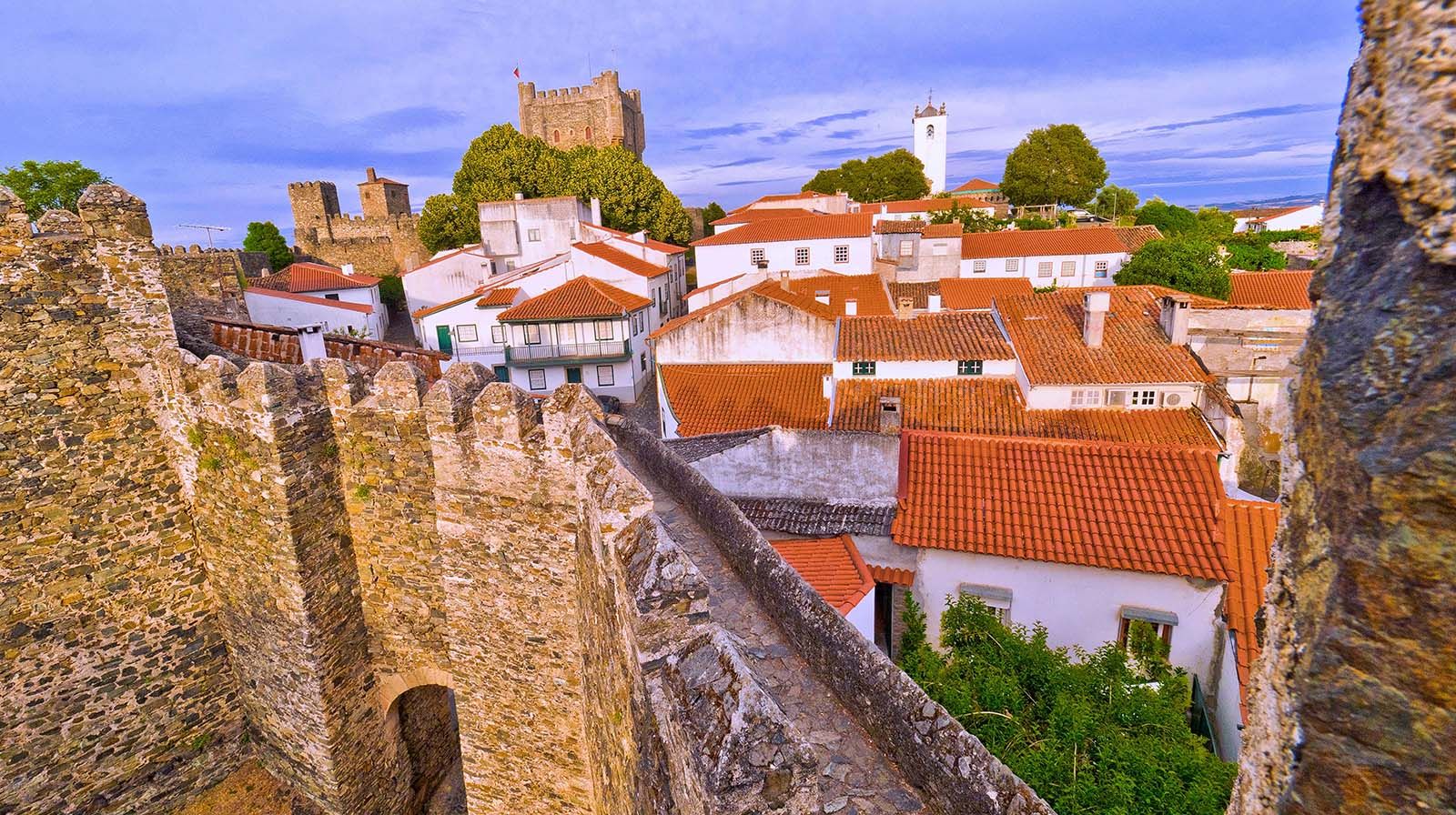
Partial view, at dusk, of the medieval citadel and the castle of Bragança in Portugal. © Shutterstock
Where Eagles Dare: Miranda do Douro’s Canyon Charm
Perched dramatically above the Douro River canyon, Miranda do Douro feels more like a Spanish pueblo than a Portuguese town. The Gothic cathedral dominates the skyline, but the real treasure lies in its chapel of relics – home to a 16th-century mechanical statue of Baby Jesus that winks at pilgrims. Walk the ramparts in late afternoon for vertigo-inducing views where giant griffon vultures circle below your feet.
This cultural crossroads birthed two unique traditions: The Mirandese language (still taught in local schools) and the spectacular Pauliteiros dance where eight men perform complex stick routines in embroidered kilts. Plan your visit around the feast of Santa Barbara (August) or the winter solstice celebration when Celtic fire rituals blend with Catholic tradition.
Soak in History: Chaves’ Roman Thermal Baths
Imagine bathing in waters that soothed Roman legionaries 2,000 years ago. In Chaves, Portugal’s oldest thermal town, geothermal springs still gush forth at a scorching 73°C (163°F). Start your visit at the beautifully preserved 1st-century Roman bridge crossing the Tâmega River, then follow the steam to the public fountains where locals fill jugs with mineral-rich water said to heal arthritis.
The Termas de Chaves spa combines modern hydrotherapy with ancient tradition – try their signature thermal pool circuit followed by a massage using olive oil from century-old groves. Afterwards, wander the historic center where Gothic arches frame cobblestone alleys, ending your stroll with pastéis de Chaves – flaky pastry pockets stuffed with tender veal at legendary bakeries like Pasteis de Chaves Manuel Padeiro.
Nature’s Untamed Playground
Wild Walks in Montesinho Natural Park
Covering over 700 square kilometers of rolling hills, chestnut forests, and pristine rivers, Montesinho Natural Park rivals any European wilderness. Hikers can choose between marked trails like the GR1 Transmontano or wander shepherd paths where you’re more likely to encounter deer than other humans. The village of Rio de Onor epitomizes the region’s quiet charm – straddling the Spain-Portugal border with shared pastures and stone houses decorated with colorful geraniums.
Wildlife spotting here feels thrillingly unpredictable. Dawn and dusk offer the best chances to see wild boar families, Iberian wolves (though sightings are rare), or golden eagles hunting above the ridges. For accommodations, consider a stay at Turismo Rural in Guadramil where you’ll fall asleep to owls hooting in ancient oak woods.
Sailing Stone Rivers: Douro International Natural Park
The Douro River transforms along the Spanish border, carving 120km of sheer cliffs up to 400m high. From Miranda do Douro’s quay, two-hour cruises reveal hidden caves, nesting peregrine falcons, and terraced vineyards clinging to impossible slopes. Spring brings explosions of yellow rockroses along the gorges, while autumn sets the hills ablaze with crimson and gold.
Hardcore adventurers can tackle the International Douro徒步 Trail – a 6-day trek passing medieval watchtowers and secret swimming holes. Overnight in tiny riverfront villages like Picote where dinner might be freshly caught trout grilled over vine cuttings.
A Feast Forged in Tradition
Cured Magic: Smokehouses of Trás-os-Montes
December brings the annual matança do porco (pig slaughter) across Trás-os-Montes, where families gather to transform every part of the animal into culinary gold. In smokehouses across Bragança and Vinhais, you’ll find dangling alheiras – unique sausages created by Jews during the Inquisition to mimic pork with bread and game meats. Other must-tries include:
- Butelo: Smoked pork ribs wrapped in stomach membrane, best enjoyed with Portuguese fava beans
- Chouriça de Mel: Sweet-savory sausage glazed with heather honey
- Presunto de Montesinho: Air-dried ham cured for 18 months in mountain air
Visit the Monday market in Mogadouro where wizened farmers sell homemade cheeses and hand-tied sausages from weathered wicker baskets. For the full experience, book a table at Restaurante O Caçador in Bragança – their posta mirandesa (veal steak) seared over oak embers is legendary.
Liquid Gold: Olive Oil Route in Mirandela
The Tua River Valley around Mirandela produces some of Portugal’s most awarded olive oils. Drive the Rota da Oliveira (Olive Oil Route), stopping at centuries-old lagares (press houses) like Quinta do Romeu where fifth-generation producers explain how Arbequina olives create their buttery gold. Time your visit during November’s harvest to witness stone mills grinding fruit into paste using methods unchanged since Roman times.
Mirandela’s 500-year-old bridge leads to delightful riverside parks perfect for picnics. Stock up at Loja da Azeite for infused oils – try the wild garlic variety drizzled over local cornbread. And don’t miss July’s Festa da Alheira celebrating the region’s “Jewish sausage” with live music, cooking demos, and fireworks reflecting off the Tua.
Festivals: Where Ancient Spirits Dance
Winter’s Wild Call: The Caretos of Podence
No experience matches the raw energy of Carnival in Podence village. As winter relinquishes its grip, masked figures called Caretos erupt through the streets wearing vivid wool costumes and brass cowbells. These ancient fertility symbols chase women (playfully!) while brandishing inflated pig bladders – a tradition tracing back to Celtic sun worship.
Meanwhile, in Vila Franca, villagers preserve the unique Festa dos Rapazes (Festival of the Lads) where unmarried men parade in colorful sashes while singing medieval ballads. For spring festivities, Mogadouro’s Almond Blossom Festival paints hillsides white while offering almond liqueur tastings and donkey-drawn cart rides.
Stone Steps to Heaven: Lamego’s Baroque Ascent
Though technically just outside Trás-os-Montes, Lamego’s sanctuary makes an unforgettable day trip. Pilgrims have climbed the 686-step staircase to Nossa Senhora dos Remédios since 1750, passing fountains, tile murals, and baroque statues depicting biblical scenes. Time your ascent for May’s Romaria festival when the steps transform into living art with flower carpets stretching to the hilltop shrine.
After catching your breath at the summit, explore Lamego’s cathedral housing one of Portugal’s finest Renaissance altarpieces. Reward your efforts at DOC Restaurant – celebrity chef Rui Paula’s riverside establishment serving modern twists on Douro cuisine. Their kid goat confit with chestnut purée perfectly encapsulates the region’s flavors.
Hidden Villages Frozen in Time
The soul of Trás-os-Montes resides in villages seemingly untouched by modernity:
- Vinhais: Renowned for velvety smoked ham produced in communal smokehouses
- Carrazedo de Montenegro: Chestnut capital where autumn brings aromatic roasts in village squares
- Pitões das Júnias: Remote mountain hamlet clinging to cliffs beside a 30m waterfall
In these timeless settlements, you might witness elderly women carding wool by hand or farmers threshing grain with wooden flails. Stay at rural guesthouses like Casa de São Miguel in Montesinho – a restored granite house where breakfast features honey from the owner’s beehives and preserves made with wild blueberries.
Essential Tips for Your Journey
To make the most of your Trás-os-Montes adventure:
- When to visit: Spring (April-June) and autumn (Sept-Oct) offer mild weather and vibrant colors. Winters can be snowy but magical for cozy tavern nights.
- Transportation: Renting a car is essential. Many roads remain narrow – take your time and enjoy the scenery.
- Accommodations: Opt for turismo rural properties for authentic experiences. Many offer homemade dinners using garden ingredients.
- Connecting: Learn basic Portuguese phrases. While younger locals may speak English, village elders often communicate through warm smiles and hand gestures.
In a world rushing toward homogenization, Trás-os-Montes stands defiantly unique – a land where ancient stones whisper forgotten histories, and every meal feels like a celebration of terroir. Whether wandering castle ramparts as ravens circle overhead or sharing homemade wine beside a farmer’s hearth, you’ll leave bearing more than photographs – you’ll carry stories that root themselves in your soul.
Discover Trás-os-Montes: Portugal’s Untamed Northeast
Imagine a place where time moves slower, where ancient stone villages cling to mountainsides, and where the air carries echoes of traditions unchanged for centuries. Welcome to Trás-os-Montes – Portugal’s wild frontier in the far northeast. Meaning “Behind the Mountains,” this rugged region feels worlds apart from the postcard-perfect beaches of the Algarve or the bustling streets of Lisbon. Here, brawny granite landscapes give way to hidden river gorges, chestnut forests turn golden in autumn, and villages preserve customs that date back generations.
Think of cobbled streets where elderly women still bake bread in community ovens. Picture men gathering in taverns to share stories over bottles of robust local wine. Hear the rhythmic tapping of pauliteiros dancers’ sticks during village festivals. This is Portugal at its most authentic – a place where modernity takes a backseat to tradition and where visitors become time travelers stepping into a way of life preserved like amber.

Aerial view of Bragança Castle, Trás-os-Montes, Portugal © Shutterstock
The Soul of Trás-os-Montes: Land of Tradition
To understand Trás-os-Montes is to embrace its contradictions – harsh yet beautiful, isolated yet welcoming. Villages here feel like open-air museums where daily life itself becomes cultural performance:
Bragança: Fortress of the North
Bragança’s medieval citadel stands sentinel over the landscape, its 12th-century walls enclosing cobblestone streets frozen in time. Inside these fortifications, you’ll find the unique Domus Municipalis – Europe’s only surviving Romanesque civic building – and the haunting Bones Chapel lined with human remains. But what truly brings Bragança alive is its Saturday market, where farmers sell fiery chouriça sausages and wheels of pungent sheep’s cheese.
Chaves: Where Waters Heal
Nestled along the Rio Tâmega, Chaves has soothed weary bones since Roman times with its bubbling thermal springs. The 1st-century bridge still spans the river, testament to Emperor Trajan’s engineers. Today, visitors soak in modern spa facilities before diving into the town’s culinary claim to fame: pastéis de Chaves – flaky meat pastries best enjoyed fresh from wood-fired ovens.
Miranda do Douro: Where Eagles Soar
Perched dramatically above the Douro River canyon, Miranda do Douro feels like standing at the edge of the world. The former cathedral town whispers secrets of centuries past, but living culture thrives here too. This is the heartland of Mirandese culture, where Portugal’s second official language survives, and where the haunting drone of bagpipes accompanies traditional dances.
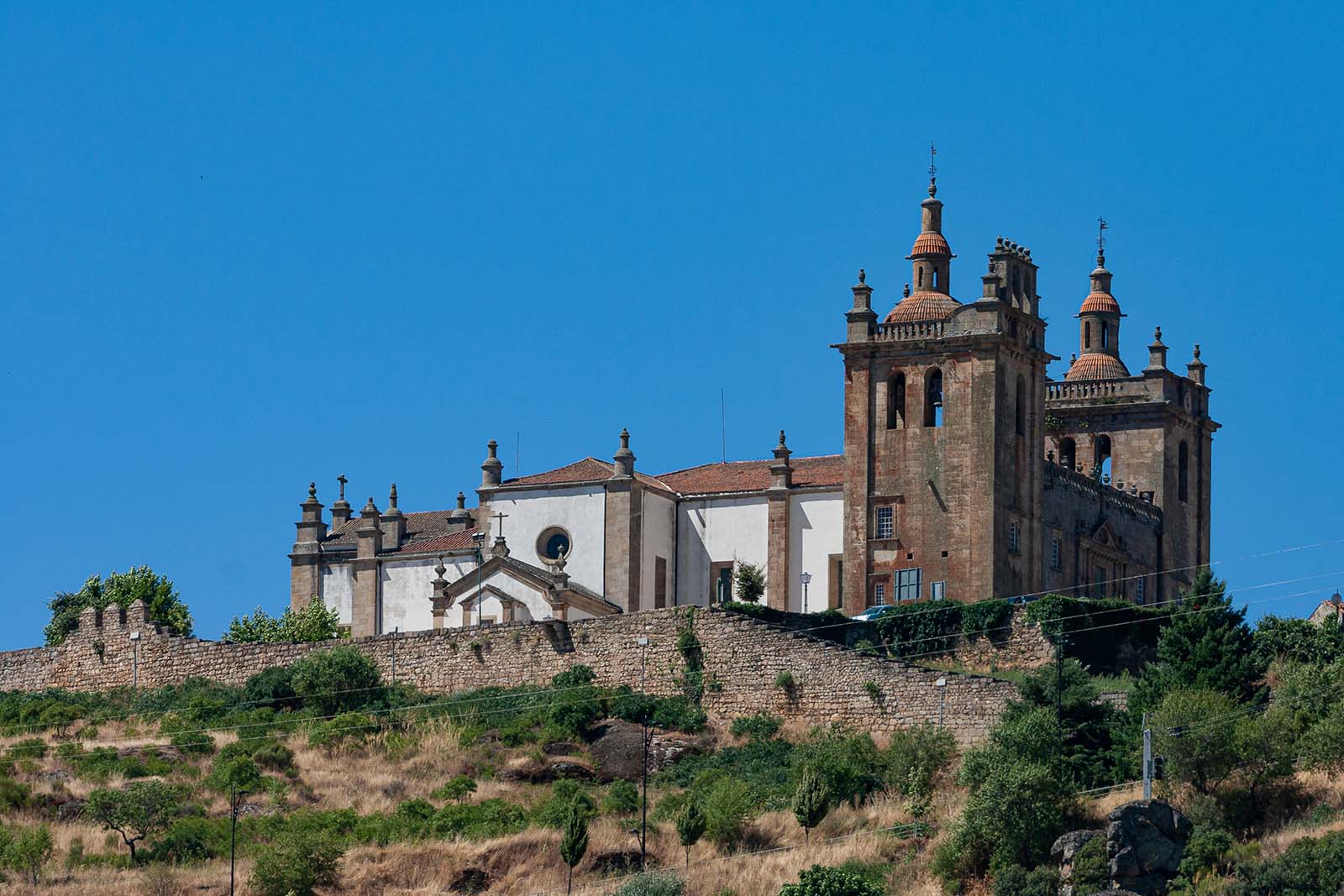
The Miranda do Douro Church © Shutterstock
Through the Seasons: Trás-os-Montes Weather Guide
Trás-os-Montes dances to nature’s rhythm, its continental climate painting the landscape in dramatically different hues throughout the year. Far removed from coastal influences, temperatures swing from baking summer heat to snowy winter nights. But every season unveils unique charms for those willing to embrace the elements.
Spring Awakening (March-May)
When almond blossoms dust hillsides in cotton-candy pink, you know spring has arrived. March begins cool (around 59°F/15°C), warming to perfect hiking weather by May (75°F/24°C). This is when:
- Walking trails through Serra do Larouco explode with wildflowers
- Village festivals celebrate Saint George and bread baking traditions
- Farmers markets overflow with first harvest greens and baby lambs
Pack layers for cool mornings and warm afternoons. Hotel rates hover between €55-€90 as crowds remain light.
Sultry Summers (June-August)
July and August see thermometers climbing to 86°F (30°C) – sometimes higher in sheltered valleys. Locals escape the siesta-hour heat, but evenings bring relief with open-air concerts and night markets buzzing until midnight. Key experiences:
- Midnight festivals honoring Saints Peter and John with bonfires
- Swimming in river beaches along the Tua and Sabor rivers
- Cooling off with local cider or vinho verde in shaded town squares
Book rural guesthouses early (€90-€120/night), especially during festivals. Always carry water when exploring.
Autumn’s Golden Glow (September-November)
September sustains summer’s warmth (80°F/27°C), while October brings crisp air and landscapes aflame in amber and gold. The harvest season brings:
- Chestnut festivals with roasting fires in villages like Vinhais
- Grape stomping celebrations in hidden Douro Valley vineyards
- Mushroom foraging in oak forests carpeted with leaves
Room rates drop to €55-€75 as crowds thin. Pack waterproof gear for November rains.
Winter’s Quiet Beauty (December-February)
Snow transforms Bragança into a winter wonderland while valleys lie shrouded in mist. Days average 48°F (9°C), nights often dip below freezing – perfect weather for:
- Smoky tavern meals of sausage and bean stews
- Observing ancient Carnival preparations in remote villages
- Tracking wolf prints in fresh snow at Montesinho Nature Park
Many rural accommodations close, but open hotels offer cozy stays for €45-€65. Dress in thermal layers!
Feast of the Frontier: Trás-os-Montes Culinary Journey
Food here tells stories of survival, isolation, and resourcefulness. Traditional dishes use every part of the pig, preserve foods through smoking and curing, and transform humble chestnuts into culinary gold. Dining isn’t just eating – it’s communion with the land and its history.
The Pantry of Peasants
Five essentials define Trás-os-Montes cuisine:
- Posta Mirandesa – This king of steaks comes from indigenous cattle cured in rock salt
- Fumeiro – Smoked sausages hang from tavern ceilings like edible chandeliers
- Olive Oil – Liquid gold from gnarled trees that somehow thrive in rocky soil
- Chestnuts – Roasted, boiled, in soups, cakes, even distilled into liqueurs
- Cornbread – Dense, crusty, used as edible spoons for hearty stews
Can’t-Miss Culinary Experiences
For authentic flavors, seek these Trás-os-Montes specialties:
- Alheiras de Mirandela: Invented by crypto-Jews avoiding Inquisition attention, these “sausages” cleverly substitute pork with bread and poultry
- Butelo com Casulas: The ultimate winter warmer – smoked pork ribs with salt-cured beans
- Bola Doce de Valpaços: A sweet bread stuffed with squash jam and regional nuts
- Pão-de-Ló de Murça: Feather-light sponge cakes made in wood-fired ovens
- Queijo de Cabra Transmontano: Tangy goat cheese aged in muslin cloths
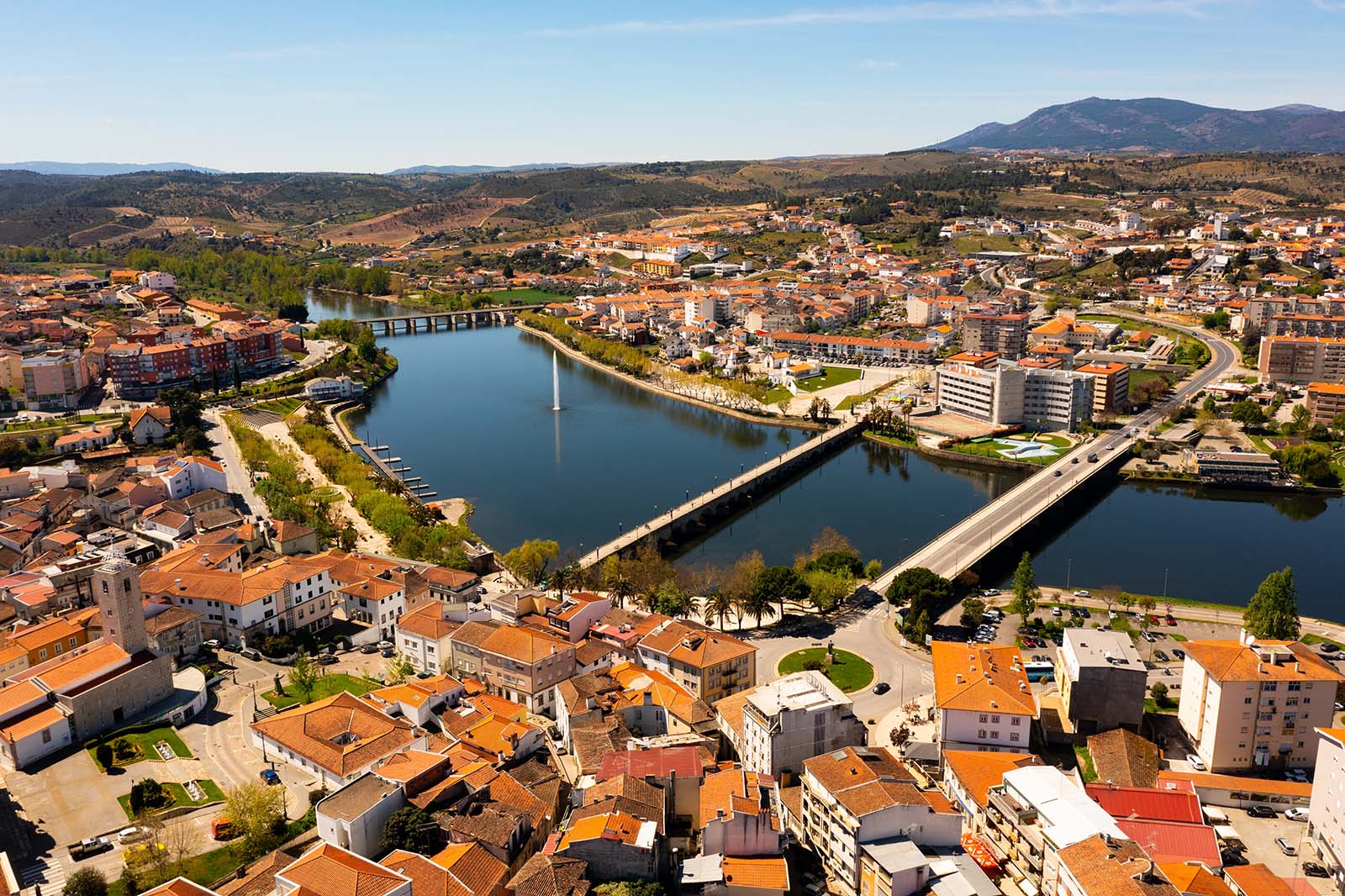
Picturesque aerial view of Mirandela city © Shutterstock
Crafting Your Perfect Trás-os-Montes Adventure
Beyond the well-trodden paths, Trás-os-Montes offers experiences that connect you with land and tradition. These curated journeys unveil the region’s soul:
Historic Heartlands Tour
Walk Bragança’s castle walls with a historian guide who’ll decode medieval carvings and recount borderland battles. Follow with tastings in family-run smokehouses where alheiras cure over oak fires. Take home more than photos – learn sausage-making secrets passed down generations.
Douro Canyon Expedition
Board a traditional rabelo boat at Miranda do Douro and drift beneath 400-meter cliffs as griffon vultures circle overhead. Disembark to explore vineyard terraces hacked into sheer rock faces. Sample wines from indigenous grape varieties like Tinta Roriz before these limited-production bottles ever reach shops.
Carnival of the Caretos
Time your visit for February’s otherworldly celebrations in Podence. Don masks alongside villagers transforming into Caretos – pagan fertility spirits who ring bells and chase women with playful mischief. It’s a UNESCO-recognized tradition where visitors become participants, not spectators.
Shepherd for a Day
Join an elderly pastor and his sheepdog tending Churra Galega Mirandesa flocks in Montesinho Natural Park. Learn whistled commands that travel kilometers, try your hand at cheesemaking in a stone corte, and savor mountain-picnic lunches of broa bread with smoky sausage.
Archaeology Roadtrip
Navigate winding backroads to prehistoric sites few outsiders see. Explore Iron Age hill forts at Cidadelhe, Roman gold mines near Celas, and mysterious carved stones at Tourém. Your archaeologist-guide brings these silent stones to life with stories of ancient deities and forgotten tribes.
Living the Rhythm of the Land
Ultimately, Trás-os-Montes reveals its magic through slowing down – through moments rather than monuments. It’s in the pause between an old shepherd’s whistle and his dog’s response. In the silence that follows the last peal of church bells in an empty valley. In the laughter erupting from a tavern where villagers debate whose homemade wine tastes strongest.
This isn’t a region you simply “do” – you feel it. You taste it in coarse bread dipped in peppery olive oil. You hear it in creaking oxcarts on cobblestones. You touch it in sun-warmed granite walls that have sheltered generations.
Come with curiosity rather than expectations. Accept invitations for homemade ginja liqueur. Learn three words of Mirandese. Let children teach you the steps to traditional dances. Only then will you begin to understand why Portuguese poet Miguel Torga called Trás-os-Montes “o reino maravilhoso” – the marvelous kingdom.


🌟 The Travaloca Travel Editors Community is a dynamic collective of individuals united by their passion for travel and their dedication to high-quality content creation. This community serves as the driving force behind Travaloca's informative and engaging travel resources. ✨ Core Identity: This group consists primarily of passionate travel enthusiasts who have turned their love for exploration into a commitment to writing and content curation. Members are recognized for their: Extensive Travel Experience: Possessing valuable firsthand knowledge from their journeys worldwide. Aptitude for Writing and Editing: Demonstrating a keen interest and skill in crafting, reviewing, and perfecting travel narratives, guides, tips, and reviews. Dedication to Storytelling: Transforming personal experiences and destination knowledge into accessible, inspiring, and reliable information for a global audience. 📝 Community Focus: The community’s primary role is to contribute, edit, and maintain the diverse range of content on Travaloca's platform. They ensure the information provided is accurate, engaging, and reflective of current travel trends. In essence, the Travaloca Travel Editors Community is where travel passion meets editorial excellence, enriching the user experience and solidifying Travaloca’s standing as a trusted travel resource.


