
The Complete Évora Travel Guide: Where History Meets Alentejo Charm
Picture this: You stroll through narrow cobblestone streets where Roman chariots once rolled, passing whitewashed houses adorned with vibrant yellow trim. Above you, stork nests crown medieval towers while the scent of slow-cooked pork drifts from traditional taverns. Welcome to Évora – Portugal’s living museum where 2,000 years of history coexist with youthful university energy and some of Europe’s most underrated cuisine.
This UNESCO World Heritage gem in the Alentejo region doesn’t just preserve history – it breathes life into it. By day, you’ll marvel at Roman temples older than London. By night, you’ll sip velvety local wines in plazas buzzing with students and musicians. From the haunting beauty of its bone chapel to panoramic views over endless cork oak forests, Évora offers experiences that linger long after you leave.
Why Évora Deserves a Top Spot on Your Portugal Itinerary
What makes this inland city so special? It’s the astonishing layers of civilization preserved within its honey-colored walls. Walk just 10 minutes through the historic center and you’ll pass:
- A 1st-century Roman temple standing proudly amidst Renaissance buildings
- Moorish arches whispering of 500 years of Islamic rule
- Gothic cathedrals where explorers once prayed before sea voyages
- Manueline windows from Portugal’s 16th-century Golden Age
Yet Évora isn’t frozen in time. The University of Évora – Portugal’s second oldest – keeps the city youthful with 10,000 students. This creates a fascinating contrast where professors debate philosophy in cafés overlooking Roman ruins, and traditional artisans welcome curious students into their workshops.
Where Exactly is Évora Located?
Tucked into Portugal’s sun-drenched Alentejo region, Évora sits about 130 kilometers east of Lisbon – roughly a 90-minute drive through rolling plains dotted with olive groves. This prime location makes it:
| Distance From | Travel Time | Transport Options |
|---|---|---|
| Lisbon | 90 minutes | Car, bus (Rede Expressos), train (CP Regional) |
| Badajoz, Spain | 1.5 hours | Car, bus (ALSA) |
| Algarve (Faro) | 3.5 hours | Car, bus via Lisbon |
Geographically, you’re in the heart of Portugal’s largest region – the Alentejo – known for its endless golden plains, world-class wines, and prehistoric monuments. The city itself spreads across a gentle hill, its medieval walls enclosing a compact center that’s effortlessly walkable.
Évora as Your Alentejo Base Camp
Smart travelers use Évora as a launchpad for wider explorations. Within an hour’s drive you can:
- Sample bold red wines at historic vineyards
- Walk among megalithic stone circles older than Stonehenge
- Photograph hilltop villages like Monsaraz with castle views over Spain
- Discover marble towns where entire churches gleam with local stone
The central location means you can enjoy city comforts by night while adventuring through rural wonders by day.
Getting Around Évora: A Local’s Guide
Navigating Évora feels wonderfully human-scale. Forget traffic jams – here’s how to move like a local:
On Foot: The Best Way to Absorb the Atmosphere
Évora’s historic core is pedestrian paradise. You can walk from the Roman Temple to the cathedral in 7 minutes flat. But it’s not about speed – it’s about savoring details: tracing 15th-century carvings on doorways, smelling orange blossoms in hidden courtyards, hearing fado music spill from open windows.
Pro Tip: Wear shoes with sturdy soles. Those picturesque cobblestones (called calçada portuguesa) test even the most comfortable footwear after hours of exploring.
By Car: Essential for Day Trips, Useless Downtown
If you’re staying within the walls, park immediately after arriving. The city provides several guarded lots like:
- Parking Praça de Giraldo (central but fills quickly)
- Estacionamento da Levada (near the aqueduct, more space)
- Parking do Colegio do Espírito Santo (university area)
Rental cars shine for exploring the Alentejo countryside. Expect well-maintained roads and scenic drives through vineyards to places like:
- Monsaraz (35 min): Hilltop village with stunning castle views
- Estremoz (45 min): Marble capital with Friday markets
- Cromeleque dos Almendres (20 min): Neolithic stone circle
Public Transport & Alternative Options
While Évora’s intra-city buses exist, tourists rarely need them. More useful:
- Taxis/Bolt: Affordable for short hops, especially with luggage
- Bicycles: Rent from shops like Lemon Bikes to explore flatter areas outside the walls
- Hot Air Balloon: For a splurge, companies like Winds Above offer dawn flights over Alentejo’s golden plains
How Many Days Should You Spend in Évora?
Here’s the truth: Évora reveals its magic slowly. While day-trippers rush between the bone chapel and cathedral, smart travelers linger. Here’s how to maximize your time:
The 24-Hour Sprint (Not Recommended But Possible)
If you absolutely must do Évora in a day, hit these essentials:
- Morning: Roman Temple & Évora Museum (opens 9:30 AM)
- Late Morning: Cathedral climb for panoramic views
- Lunch: Alentejo pork at Fialho restaurant
- Afternoon: Chapel of Bones + São Francisco Church
- Evening: Sunset drinks at Praça do Giraldo
You’ll see the sights but miss the soul. Évora’s charm amplifies when tour buses leave.
The Perfect 2-Night Stay
This allows you to:
- Day 1: Dive deep into history: temples, churches, museums
- Evening 1: Attend a cooking class to master migas (bread-based Alentejo dish)
- Day 2: Day trip to megaliths + wine tasting
- Evening 2: Enjoy petiscos (Portuguese tapas) at a family-run tavern
Extended Stays: Living Like a Local
With 3-4 days, you can:
- Take painting workshops using natural pigments
- Learn cork harvesting at nearby forests
- Bike through vineyards to hidden waterfalls
- Attend university cultural events or concerts
Seasonal Tip: Summer evenings see festivals like Évora Classical Week. Winter offers cozy fireside wine tastings with fewer crowds.
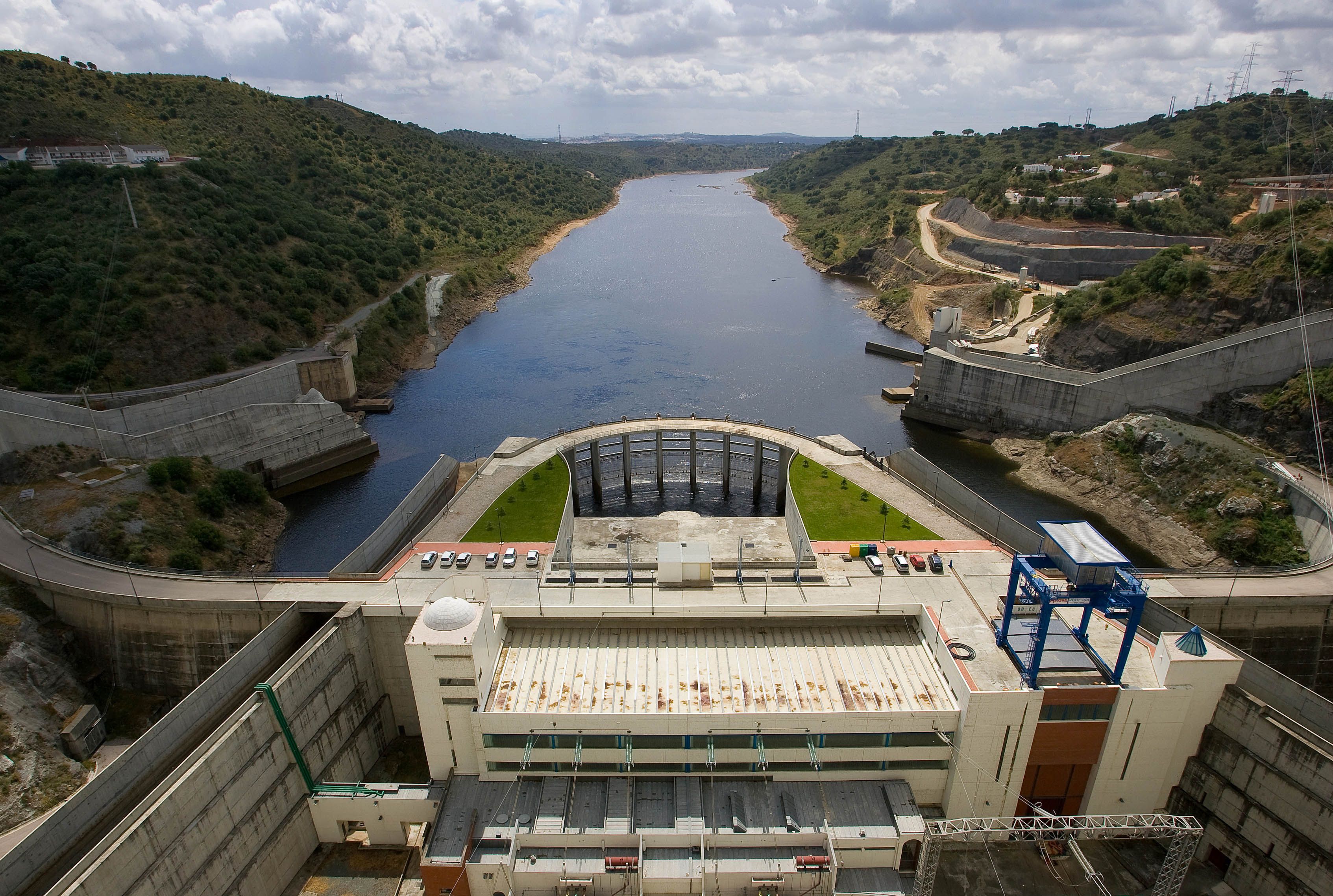
The Guadiana River flowing into Alqueva Dam, Europe’s largest artificial lake, perfect for sunset cruises near Évora
Where to Stay in Évora: Neighborhood Guide
Choosing where to stay shapes your Évora experience. Here’s the breakdown:
Historic Center (Best for First-Timers)
Imagine waking steps from the Roman Temple in a 16th-century mansion converted to a boutique hotel. Properties like Convento do Espinheiro (luxury) or Albergaria do Calvário (mid-range) offer historic charm with modern comforts. Pros: Walk everywhere, immersive atmosphere. Cons: Limited parking, can be noisy during festivals.
São Mamede District (Romantic Escape)
Quiet lanes near the cathedral hide intimate guesthouses with private terraces. Try Solar Monfalim’s rooftop views or Casa Palma’s flower-filled courtyard. Perfect for couples seeking peace after dark.
Outside the Walls (Family-Friendly Comfort)
Hotels like M’Ar De Ar Aqueduto offer spacious rooms, pools, and easy parking while being a 10-minute walk from the action. Great for travelers with kids or those who prefer contemporary design.
Countryside Quintas (Vineyard Bliss)
Stay surrounded by vineyards at properties like:
- Herdade do Esporão: Wine resort with Michelin-star dining
- Monte dos Perdigões: Working farm with cooking classes
- L’AND Vineyards: Luxury suites with skylights for stargazing
Ideal for romantic getaways or deepening your Alentejo wine knowledge.
Budget-Friendly Gems
Évora Hostel offers dorms in a former palace. For private rooms, Solar Montalim charms with antique tiles at modest prices. Many include breakfast with homemade jams from local oranges.

Evora old town in Portugal © Shutterstock
Discovering Évora: Portugal’s Living Museum in the Alentejo
If stones could talk, Évora’s cobblestones would whisper tales of Roman centurions, Moorish merchants, and Portuguese royalty. Nestled in the sun-drenched plains of Portugal’s Alentejo region, this UNESCO World Heritage city isn’t frozen in time—it pulses with life. Students laugh in ancient university courtyards, the aroma of slow-cooked pork drifts from family-run taverns, and afternoon light gilds 2,000-year-old temples. Let me take you on a journey through nine unmissable experiences that make Évora one of Europe’s most captivating historical destinations.
Évora’s Essential Experiences
What travelers often miss about Évora is how effortlessly it balances monumental history with everyday charm. Yes, you’ll find Roman ruins and Gothic cathedrals, but you’ll also stumble upon housewives hanging laundry beneath medieval arches and grandmothers debating the best olive oil in busy squares. This isn’t a city preserved behind glass—it’s a place where history serves as the backdrop for modern Portuguese life. Here’s your guide to experiencing Évora’s soul.
1. The Roman Temple of Évora: Where Centuries Collide
Your first sight of Évora’s Roman Temple feels like stumbling onto a film set. Fourteen Corinthian columns stand impossibly perfect against the sky, looking almost too noble to be surrounded by café umbrellas and passing scooters. Dating from the 1st century AD, this remarkably preserved structure—often mistakenly called the Temple of Diana—served as everything from a slaughterhouse to a knight’s fortress before being restored in the 1870s.
The real magic happens when you watch locals interact with history. Teenagers kiss where Roman priests once chanted, shopkeepers sweep sidewalks dusted with marble chips, and afternoon shadows turn the surrounding Jardim de Diana into a living painting. Don’t just snap photos—grab a bica (Portuguese espresso) at O Parque nearby and watch how morning sun turns the columns from honey-gold to rose quartz.
2. Évora Cathedral: Climb Through Eight Centuries
They call it Sé de Évora, but “stone time machine” might be more accurate. Portugal’s largest medieval cathedral combines Romanesque muscle with Gothic grace, its twin towers looming over the whitewashed city. Inside, you’ll find a museum-worthy collection of ecclesiastical treasures, but the real adventure begins when you ascend to the rooftop.
Follow narrow spiral stairs past Renaissance choir stalls to emerge onto a walkway between the towers. From here, the Alentejo unfolds—terra-cotta rooftops give way to cork oak forests stretching to Spain, with storks nesting on church spires below. Touch the gargoyles weathered by Atlantic storms since 1204, feel the bells vibrate when they ring (daily at noon), and understand why this climb tops every savvy traveler’s Évora checklist.
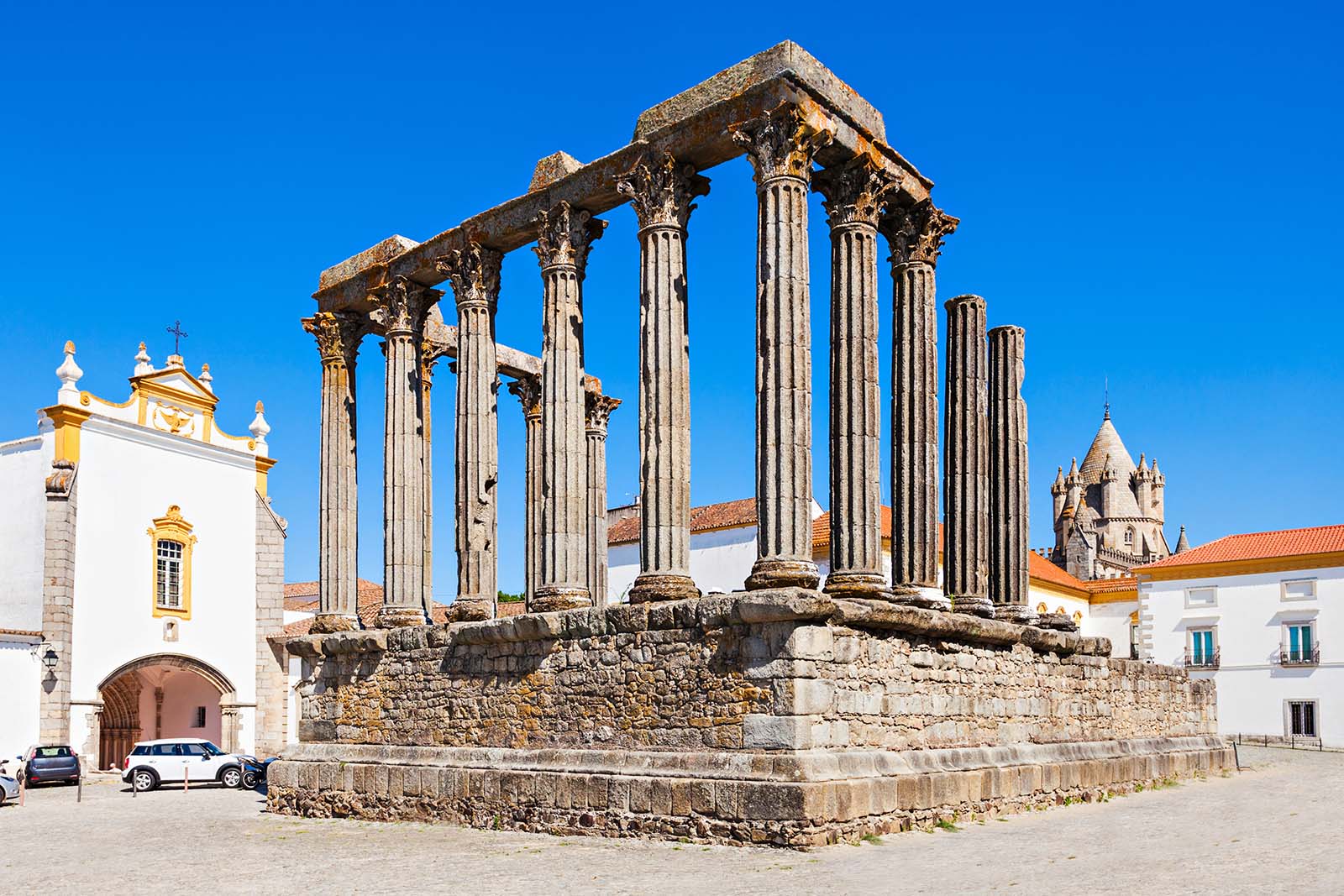
Roman Temple of Evora © Shutterstock
3. Capela dos Ossos: Évora’s Most Haunting Masterpiece
Behind São Francisco Church’s modest facade lies Europe’s most macabre chapel—and Évora’s most visited site. The Bone Chapel’s warning inscription seems to chuckle darkly: “We bones lying here, for yours await.” Walk through the low archway, and you’ll confront walls meticulously paneled with 5,000 skulls and femurs arranged in geometric patterns. Franciscan monks created this in the 16th century using remains from overcrowded cemeteries—a meditation on mortality that still silences modern visitors.
Strangely, the effect isn’t gruesome but peaceful. Golden light filters through yellowed skull orbits, illuminating Baroque paintings about life’s fleeting nature. Spend 20 minutes here, and you’ll emerge oddly comforted—if these long-gone monks could face death with such artistic flair, perhaps our own end isn’t so frightening.
4. Praça do Giraldo: Évora’s Living Room
Eight streets radiate from Praça do Giraldo like spokes from a wheel—a design element from Moorish times when Évora was called Yeborah. This main square witnessed brutal Inquisition trials and bloody revolts, but today it’s where Évora drinks its coffee and shares news. Grab a sidewalk table at Café Arcada, order a galão (milky coffee) with a pastel de nata, and play “spot the era” with surrounding architecture.
To your left: Renaissance fountains carved with Portugal’s coat of arms. Behind you: Baroque St. Anthony Church glowing in afternoon light. Ahead: Moorish-inspired arcades housing artisan shops. At dusk, students strum guitars by the marble fountain while older men debate football. This seamless blend is Évora’s heartbeat—past and present dancing together under Alentejo skies.
5. Évora University: Where History Still Teaches
Tucked behind a modest façade on Largo dos Colegiais, Évora University feels like Portugal’s answer to Hogwarts. Founded in 1559 by Jesuit scholars, its classrooms have hosted poets, revolutionaries, and Nobel laureates. Enter through the cloister—a serene square lined with 18th-century azulejo tiles depicting philosophers and saints—then climb to the Sala dos Actos.
Here, sunlight streams through stained glass onto original student desks grooved by centuries of nervous fingers. Guides will whisper stories about secret societies meeting in hidden rooms and how the university survived dictatorship purges. Don’t miss the Astronomical Observatory upstairs, where antique telescopes once mapped Portuguese colonial trade routes.
6. Água de Prata Aqueduct: Walking Through Walls
Francisco de Arruda—who later designed Lisbon’s Belém Tower—completed this 18km marvel in 1537 to solve Évora’s chronic water shortages. While its arcade marching across cork oak plains impresses, the most fascinating section lies within city walls. Follow Rua do Cano (“Pipe Street”), where locals built homes right into the aqueduct’s arches.
It’s like walking through a medieval dollhouse: windows peek from ancient stone, bougainvillea spills over Roman cement, and blue-tiled doorways open onto homes where families have lived for generations. Pop into O Fialho for wine tasting beneath an arch, or photograph the surreal house wedged between two pillars at Largo da Porta da Moura.
7. Almendres Cromlech: Standing Stones of the Alentejo
Twenty minutes west of Évora lies Europe’s Stonehenge—with a fraction of the crowds. The Almendres Cromlech dates from 6000 BC, making it 3,000 years older than its British cousin. Ninety-five granite megaliths form elliptical patterns that align with solstices, though their creators’ motives remain mysterious.
Walking among these weathered stones feels primal—touch their sun-warmed surfaces bearing Neolithic carvings of solar discs and serpentine lines. Local farmers still graze sheep here, adding to the timeless atmosphere. Combine your visit with the Zambujeiro Dolmen (Europe’s largest burial chamber) for a morning steeped in prehistory.
8. Alentejo Flavors: Évora’s Culinary Soul
Évora feeds both body and soul with hearty Alentejo cuisine—a rustic symphony of free-range pork, earthy olive oils, and bread baked in wood-fired ovens. Begin your edible education at Taberna Típica Quarta-Feira, where third-generation cooks serve migas com carne de porco—pork fat-fried breadcrumbs with succulent black pork. Follow it with açorda alentejana, a garlic-cilantro broth poured over farmhouse bread and crowned with poached egg.
Your wine? A bold Aragonez from nearby Borba. Save room for sericaia—a cinnamon-dusted egg pudding studded with boozy Elvas plums—at Fábrica dos Pasteis on Rua 5 de Outubro. Don’t miss the Saturday morning market next to Roman Temple for wheel-sized cheeses, wild oregano honey, and olive varieties you never knew existed.
9. Évora Museum: Hidden Treasures Revealed
Housed in a former bishop’s palace facing the Roman Temple, Évora’s museum often gets overlooked—a mistake at just €3 entry. Spanning Roman mosaics to Renaissance sculptures, its undisputed star is the 2nd-century “Hunt Mosaic.” Discovered in a local villa, its vivid tesserae depict leopards chasing deer and hunters wrestling wild boars—proof that Évora’s love for pork runs deep.
Other gems include Flemish triptychs traded for Alentejo wheat, 15th-century polyptychs glowing with gold leaf, and Manueline carvings salvaged from earthquake-damaged churches. The quiet courtyard garden, shaded by ancient palms, offers peaceful respite after temple-hopping.
Beyond the Sights: Évora’s Secret Rhythms
To truly understand Évora, slow down. Join elderly gentlemen discussing politics over medronho (local firewater) at Império do Medronho tavern. Attend Fado performances in candlelit cellars where mourners once sang of lost sailors. Visit in May for Feiras de São João, when medieval jousters charge down Praça do Giraldo. Or simply wander at dusk when golden light transforms alleys into Vermeer paintings.
Évora rewards those who linger—a conversation with a pottery maker in Aqueduct’s shadow, an impromptu wine tasting at Vinarium Wines, tracing zodiac symbols in the cathedral’s choir stalls. This cork-surrounded haven endures not as a relic, but as a living tapestry woven from Roman grit, Moorish geometry, and Portuguese saudade. Come taste its wines, touch its myths, and take home memories richer than any souvenir.
Discovering Évora’s Hidden Gems: A Journey Through Time and Flavor
The Timeless Magic of Monsaraz and Alqueva Lake
While Évora serves as the cultural heart of Alentejo, the medieval village of Monsaraz perched above the Guadiana River offers an experience that feels suspended in time. Imagine wandering through narrow cobblestone streets where whitewashed houses glow under the Iberian sun, their terracotta roofs contrasting dramatically with the azure sky. The village stands as a silent guardian overlooking Europe’s largest artificial lake, where islands emerge like mythic creatures from the crystal-circular waters of Alqueva Reservoir.
During summer months, the lakeshore transforms into a freshwater paradise. Unlike Portugal’s crowded coastal beaches, these river beaches offer serene swimming spots surrounded by cork oak forests and olive groves. As afternoon fades to evening, position yourself at the medieval castle walls – originally built by the Knights Templar – where sunset paints the landscape in hues of molten gold. When darkness falls, prepare for celestial magic: the Alqueva Dark Sky Reserve offers stargazing opportunities so vivid you’ll feel you can pluck constellations from the heavens.

Évora Through the Seasons: Your Complete Weather Guide
Évora’s Mediterranean climate offers distinctly different experiences each season. Situated inland amidst the Alentejo plains, the city experiences greater temperature extremes than coastal Portugal. Winter evenings might require a woolen cloak like those worn by the Romans who once walked these streets, while summer afternoons demand shady courtyards and chilled local wines. Below we break down what to expect throughout the year along with insider tips to make the most of each season.
Spring Awakening (March-May)
As almond blossoms perfume the air in March, Évora shakes off winter’s quiet. Daytime temperatures hover around 64°F (18°C), perfect for exploring Roman ruins without sweat-drenched shirts. By May, thermometers reach the mid-70s (around 24°C) as wildflowers blanket the surrounding plains. This is prime time for:
- Photography tours capturing emerald landscapes
- Winery visits as vineyards awaken
- Walking the Moorish walls in comfortable temperatures
Hotel rates range €70-€110 – book a room with a balcony to enjoy the spring serenade of church bells and birdsong.
Summer Intensity (June-August)
When summer arrives, Évora transforms. Thermometers regularly hit 88°F (31°C), climbing above 100°F (38°C) during heatwaves. Locals adapt with siesta culture – shops close midday as everyone retreats to cool stone houses. Savvy visitors follow suit:
- Dawn: Explore archaeological sites in merciful coolness
- Noon: Feast on gazpacho in air-conditioned restaurants
- Evening: Join festivals in moonlit plazas
Book accommodations early (€100-€150/night) and select hotels with pools – that afternoon dip becomes sacred during Alentejan summers.
Autumn’s Golden Embrace (September-November)
September brings harvest magic. Temperatures linger around 82°F (28°C) before mellowing to the low 70s (21°C) by November. The countryside explodes in golden hues as wineries bustle with grape-stomping traditions. Don’t miss:
- Truffle hunting tours in nearby oak forests
- Olive oil tastings at family-run presses
- Sunset views from Diana’s Temple as lanterns light the whitewashed city
With hotel rates dropping to €65-€95 and summer crowds gone, this becomes many visitors’ favorite season.
Winter’s Quiet Charm (December-February)
Though January highs reach only 55°F (13°C), Évora’s winter holds unique appeal. Rain occasionally polishes the marble streets, enhancing their ancient glow. You’ll find:
- Empty Roman ruins where you can ponder history undisturbed
- Smoke from chestnut vendors curling in plazas
- Heartwarming alentejana stews in cozy taverns
With hotel prices at their lowest (€55-€80) and minimal tourists, winter reveals Évora’s authentic soul.

Évora’s Culinary Soul: Where Tradition Meets the Table
To dine in Évora is to understand Alentejo’s essence. This is farm-to-table cuisine centuries before the term existed. Ingredients travel mere kilometers from field to fork. Restaurants occupy medieval cellars where Roman foundations meet Gothic arches. Meals unfold leisurely, accompanied by robust regional wines. Below we guide you through can’t-miss dishes and where to savor them.
Essential Alentejo Flavors
Évora’s cuisine tells the story of a land where resourcefulness transformed simple ingredients into legendary dishes:
- Açorda Alentejana – More than mere bread soup, this garlic-cilantro elixir enriched with olive oil and crowned by a poached egg sustained generations
- Migas com Carne de Porco – Breadcrumbs become transcendent when fried with garlic and paired with acorn-fed pork
- Sericaia com Ameixas de Elvas – A dessert showcasing Portugal’s pastry prowess: egg-rich cake floating in cinnamon syrup with candied plums
Évora’s Legendary Tables
Fialho: Culinary Royalty Since 1948
Entering Fialho feels like stepping into a Portuguese novel. Waiters in crisp black vests serve iconic dishes like perdiz (partridge) in port wine sauce. The wine cellar houses rare Alentejo vintages – ask the sommelier to pair your meal with a bold red from local clay-aged amphorae.
Taberna Típica Quarta-Feira: The No-Menu Adventure
Adventurous foodies flock to this tavern where surprises arrive on earthenware plates. Expect an endless procession of petiscos (tapas): garlic-rubbed lamb ribs, spiced sausage flame-grilled tableside, and homemade cheeses drizzled with rosemary honey. Reservations are essential – only twelve lucky diners feast here nightly.
Dom Joaquim: Where Tradition Meets Innovation
Chef Sandra combines respect for tradition with modern flair in her vaulted dining room. Must-tries include her signature bacalhau (cod) baked in crusty Alentejo bread and black pork loin with orange-infused migas. Save room for the chocolate salami – a playful take on Portuguese sweets.
Market Magic: Évora’s Mercado Municipal
For culinary immersion, visit the municipal market at Praça 1º de Maio. Each morning, farmers display pyramids of regional treasures:
- Wheels of Queijo de Évora – sharp sheep’s cheese aged in muslin
- Black Garrano pigs raised on acorns beneath cork oaks
- Baskets of pisum sativum – earth-sweet peas unique to Alentejo
Grab olives, cheese, and bread for an impromptu picnic among Roman ruins – the ultimate Évora dining experience.
Making Memories: Essential Évora Travel Tips
When to Visit
For most travelers, spring (April-May) and autumn (September-October) offer ideal conditions. May particularly sparkles with:
- Évora Classical Music Festival in historic venues
- Moderate crowds at key sites like Capela dos Ossos
- Pleasant temperatures for exploring the Roman Aqueduct
Getting There
Évora sits strategically in Portugal’s heart:
- By car: 90 minutes east of Lisbon via A6 motorway
- By train: Direct connections from Lisbon (1h40m)
- By bus: Frequent services from major cities
Where to Stay
- Convento do Espinheiro – A converted monastery with cloister gardens
- M’Ar De Ar Aqueduto – Sleek rooms with aqueduct views
- Solar Monfalim – 16th-century manor house dripping with history
Évora Awaits
From the starlit skies above Monsaraz to the soul-warming depths of an açorda bowl, Évora weaves an unforgettable spell. This city serves not just as a gateway to Alentejo, but as its living essence – where Roman ghosts whisper through temple columns and every meal becomes a celebration of tradition. Come for the history, stay for the hospitality, leave forever enchanted by Portugal’s golden heartland.
With this comprehensive guide, you’re equipped to experience Évora in all its seasonal glory. Whether you’re tracing Moorish patterns in the cathedral tiles, sampling velvety local wines, or simply watching laundry flutter on medieval balconies, you’ll soon understand why this UNESCO treasure captivates all who wander her sun-drenched streets.
Évora, Portugal: A Timeless Journey Through History, Culture, and Flavor
Nestled in the golden plains of Portugal’s Alentejo region, Évora feels like stepping into a living history book. This UNESCO World Heritage Site captures hearts with its sun-bleached architecture, ancient stones whispering tales from Roman times, and culinary traditions simmered to perfection over centuries. As one of Portugal’s most beautifully preserved medieval cities, Évora offers a journey where every cobblestone tells a story.
How to Get to Évora
Reaching this historic gem couldn’t be simpler:
- From Lisbon: A scenic 90-minute drive eastward or comfortable 90-minute bus ride from Sete Rios station
- From Porto: Consider the train to Lisbon followed by a connecting bus, or enjoy a road trip through Portugal’s heartland (4-5 hours)
- Day Trippers: Many visitors combine Évora with visits to nearby Monsaraz or the Alqueva Dark Sky Reserve
Once you arrive, prepare to slow down. Évora’s compact historic center invites exploration on foot—the best way to appreciate its architectural details and hidden courtyards.
13 Unmissable Experiences in Évora
Roman Temple of Diana
Standing proud in Évora’s main square, this 1st-century AD marvel transports you back to when Évora was Ebora Liberalitas Julia. The temple’s fourteen Corinthian columns create perfect photo frames at golden hour. Originally dedicated to Emperor Augustus, the misnomer “Diana” stuck after locals misinterpreted a medieval legend.
Chapel of Bones (Capela dos Ossos)
One of Portugal’s most unforgettable sites awaits at the Church of St. Francis. Built in the 16th century by Franciscan monks contemplating mortality, its walls display the remains of 5,000 souls. The haunting doorway inscription—”Nós ossos que aqui estamos, pelos vossos esperamos” (We bones here, for yours await)—sets the tone for a profound experience. Visitors emerge with new perspectives beneath the chapel’s poetic ceiling frescoes.
Évora Cathedral (Sé)
Portugal’s largest medieval cathedral dominates the skyline with its contrasting Romanesque heaviness and Gothic elegance. Climb to the rooftop for panoramic views stretching across terracotta rooftops to the Alentejo plains. Inside, don’t miss the museum’s 13th-century ivory Virgin Mary statue—a masterpiece whispering tales of medieval devotion.
Almendres Cromlech
Just 15km west lies Europe’s largest stone circle arrangement. Dating from 5000-4000 BC, the Almendres megaliths predate Stonehenge by millennia. Arranged in evolving patterns over 3,000 years, these 95 stones bear enigmatic carvings—possible star maps or spiritual symbols. Visit at dawn when morning light transforms the site into something magical.
Gruta do Escoural
Prehistory comes alive at this cave complex where 50,000-year-old Neanderthal tools and Paleolithic animal paintings were discovered. Though only partially accessible, guided tours reveal astonishing charcoal drawings—testaments to humanity’s eternal creative impulse.
Évora Museum
Housed in a former bishop’s palace, this collection spans Évora’s layered history. Roman mosaics share space with 15th-century Flemish altarpieces, while a remarkable Carthaginian warrior statue bridges ancient worlds.
São Brás Fort
This 15th-century military structure now offers tranquility with its shaded gardens and rotating art exhibitions—perfect for a peaceful timeout.
Praça do Giraldo
The city’s main square pulses with local life. Sit beneath the Renaissance arches sipping bica (Portuguese espresso) as children chase pigeons past the marble fountain commemorating Évora’s 1573 aqueduct completion.
Aqueduto da Água de Prata
Follow this 18km 16th-century aqueduct’s arches into town—some now incorporated into houses and shops—to appreciate Renaissance hydraulic engineering.
University of Évora
Founded in 1559, Portugal’s second university brims with Baroque artistry. The Sala dos Actos dazzles with azulejo tiles illustrating academic disciplines. Peek into the student chapel for gilded woodwork shimmering in candlelight.
Menino Jesus Church
A Baroque jewel box concealing astonishing silverwork and golden cherubs that seem to dance across the ceiling.
Palmela Palace Ruins
Climb these atmospheric remains at sunset for sweeping views over Évora’s silhouette—the cathedral and temple glowing amber against the twilight sky.
Convento dos Lóios
Marvel at this 15th-century monastery’s Manueline cloisters before dining beneath vaulted ceilings in its transformed refectory—now a luxury pousada hotel restaurant.
Taste of the Alentejo: Food and Drink Experiences
Évora acts as gateway to Alentejo’s culinary wonders—a region where food traditions run deep. Local specialties include:
- Açorda Alentejana: Garlic-infused bread soup starring fresh cilantro and poached egg
- Migas: Savory breadcrumbs transformed with pork, wild asparagus, or bacalhau
- Ensopado de Borrego: Tender lamb stew brightened with mint
- Pastéis de Toucinho: Sweet pork fat pastries that defy expectations
Epicureans shouldn’t miss these experiences:
Wine Tasting
Alentejo’s sun-drenched vineyards produce robust reds and refreshing whites. Visit a local adega for tastings of rich Alicante Bouschet or crisp Antão Vaz varieties.
Queijo de Évora
Sample this iconic sheep’s milk cheese—firm yet creamy with a distinctive touch of wild thyme.
Mercado Municipal
Join locals at this vibrant market where butchers display acorn-fed black pig presunto and cheesemongers offer aged treasures. Time your visit for Saturday mornings when farmers bring just-picked produce.
Dining in Évora: From Rustic Taverns to Convent Cuisine
Évora’s dining scene reflects its history—Moorish influences mingle with convent recipes and royal banquets. These establishments showcase the best flavors:
- Fialho Restaurante: Opened in 1945, this institution serves Alentejan classics like wild boar stew in a space adorned with vintage photos capturing decades of clientele.
- Restaurante O Fialho: Don’t confuse with its namesake—this cozy spot specializes in reinvented regional dishes. Their black pork carpaccio with orange and olive oil toast is sensational.
- Taberna Típica Quarta-Feira (Wednesday Tavern): Open only midweek as its name suggests. Squeeze into this tiny tavern for migas with cuttlefish or baked goat cheese drizzled with local honey.
- Café Alentejo: Dine within stone walls of a 16th-century convent. Their sopa de cação (dogfish stew) and sericaia (cinnamon-spiked egg pudding) recipe dates from the 1600s.
- Botequim da Mouraria: With just nine counter seats, this micro-restaurant offers front-row views as chef-owner Domingos crafts petiscos (tapas) paired perfectly with regional wines.
Crafting Your Perfect Évora Experience
Beyond independent exploration, these curated experiences reveal Évora’s layers through local expertise:
- Time Traveler’s Walk: Wander Évora’s UNESCO-listed lanes with a historian guide. Stand where Romans worshipped, Moors governed, and Portuguese kings held court while absorbing stories in shadowed courtyards.
- Stones & Stars Tour: Combine Évora’s Roman ruins with the mystical Almendres Cromlech, concluding with stargazing in Alqueva Dark Sky Reserve—heavens sparkling as they did millennia ago.
- Flavors of Portugal Journey: From Porto’s cellars to Lisbon’s tascas, pause in Évora for hands-on cooking classes. Learn secrets of Alentejan breads and stews before enjoying your creations under olive trees.
- Family Adventure: Turn history into fun with treasure hunts past Roman ruins, pottery workshops using traditional techniques, and picnics near the medieval aqueduct with games illustrating Évora’s past.
- Hilltop & Lakeside Escape: Pair morning explorations of Évora with afternoon discovery of medieval Monsaraz. Stroll fortified walls before sunset cocktails overlooking Europe’s largest artificial lake.


🌟 The Travaloca Travel Editors Community is a dynamic collective of individuals united by their passion for travel and their dedication to high-quality content creation. This community serves as the driving force behind Travaloca's informative and engaging travel resources. ✨ Core Identity: This group consists primarily of passionate travel enthusiasts who have turned their love for exploration into a commitment to writing and content curation. Members are recognized for their: Extensive Travel Experience: Possessing valuable firsthand knowledge from their journeys worldwide. Aptitude for Writing and Editing: Demonstrating a keen interest and skill in crafting, reviewing, and perfecting travel narratives, guides, tips, and reviews. Dedication to Storytelling: Transforming personal experiences and destination knowledge into accessible, inspiring, and reliable information for a global audience. 📝 Community Focus: The community’s primary role is to contribute, edit, and maintain the diverse range of content on Travaloca's platform. They ensure the information provided is accurate, engaging, and reflective of current travel trends. In essence, the Travaloca Travel Editors Community is where travel passion meets editorial excellence, enriching the user experience and solidifying Travaloca’s standing as a trusted travel resource.


