
At first glance, Namibia might seem like uncharted territory on the map—a sprawling canvas of raw, untamed beauty. But those shifting desert dunes? They tower like nature’s skyscrapers. Those eerie coastlines? They’re dotted with shipwrecks whispering stories of the past. And the wildlife? Lions, elephants and desert-adapted creatures roam freely, as if they’ve signed a lease on the land. Most adventures kick off in Windhoek, where German colonial architecture meets lively beer gardens and the smoky allure of braais (barbecues). But trust us—the magic happens when you hit the open road.
Head west to witness Sossusvlei’s burnt-orange dunes, where sand squeaks beneath your boots and silence speaks louder than the midday sun. Venture north to Etosha National Park, where salt pans shimmer and lion sightings steal your breath. Or brave the fog-draped Skeleton Coast, where solitude reigns and seal colonies serve up a… shall we say, pungent welcome.
Renting a car? Smart move—just know Namibia doesn’t coddle indecisive souls. Distances stretch endlessly, gravel roads test your patience, and gas stations might surprise you (think: a guy with a jerrycan and a smile). Pack extra water, embrace slow travel, and savor the emptiness. While English is widely spoken, you’ll catch snippets of Oshiwambo, Afrikaans, and German in the mix. And forget about Wi-Fi beyond city limits—consider it nature’s digital detox.
Ahead, we’ll unpack essential Namibia travel tips—from dodging rookie mistakes (desert nights get cold) to feasting on local flavors—so you can master this wild frontier like a pro.
When Should You Visit Namibia? Decoding the Seasons
Forget predictable weather—Namibia plays by its own rules. This is a land where mornings demand fleeces, afternoons blister under the sun, and wildlife sightings hinge on waterholes. Here’s how to time your visit:
- Dry Season (May–October): Namibia’s golden window. Crisp mornings give way to bluebird skies, and wildlife clusters around shrinking water sources—Etosha becomes a live-action nature documentary. Nights dip into sweater weather, especially for campers. Road conditions? Prime. Crowds? Book lodges early for June–August peak season.
- Wet Season (November–April): A dramatic shift. Thunderstorms paint the desert green, baby animals make their debut, and birdwatchers flock to Caprivi. But humidity climbs in the north, flash floods can disrupt plans, and remote roads turn treacherous. Wildlife disperses, making sightings trickier.
Namibia on a Budget: More Value Than You’d Think
Let’s be real: This isn’t a bargain-bin destination. But Namibia delivers value through raw, crowd-free experiences—think sundowners with oryx silhouettes or waking up to dunes bathed in dawn light. Your biggest expense? The journey itself. Here’s a breakdown:
- Budget Traveler ($60–80/day): Embrace the dirt roads. Camp under stars, cook over fires, and stock up at gas station markets. Expect basic amenities (hello, long-drop toilets!) but unforgettable freedom.
- Mid-Range Explorer ($120–200/day): Upgrade to a 2WD with AC, cozy guesthouses, and occasional lodge splurges. Enjoy poolside sundecks, guided game drives, and flexibility to roam comfortably.
- Luxe Adventurer ($300+/day): Namibia’s remote luxury shines—private guided safaris, fly-in lodges with plunge pools, and gourmet bush dinners. When your “neighbors” are desert-adapted elephants, every penny feels worth it.

Namibia’s night skies dazzle with unmatched clarity | Shutterstock
Safety in Namibia: Know Before You Go
Rest easy—Namibia ranks among Africa’s safest destinations. Political stability and warm locals make it ideal for solo travelers (including women) and families. Still, wilderness travel demands savvy:
Biggest threats aren’t crime—they’re environmental: Think pothole-riddled roads, thirsty elephants near waterholes, and underestimating desert distances. Help can be hours away, so self-reliance is key.
- Road Safety: Never drive after dark—animals ambush roads, and potholes lurk unseen.
- Wildlife Wisdom: Keep a safe distance from animals (yes, even in campsites).
- Desert Smarts: Carry 2+ gallons of water per person daily and extra fuel.
- Urban Caution: In cities like Windhoek, avoid flashing valuables and walking alone at night.
Namibia Visas: What You Must Know
Good news for many travelers: Namibia offers visa-free entry to passport holders from the US, UK, EU, Canada, Australia, and South Africa—you’ll get a 90-day stamp upon arrival.
Entry Requirements:
- Passport valid 6+ months beyond your stay
- Proof of return flight and sufficient funds
For other nationalities, apply for an eVisa pre-travel. Always double-check latest requirements with Namibia’s embassy before booking flights.
Namibia Visa Essentials: Your Gateway to Adventure
Dreaming of Namibia’s rust-red dunes and star-filled skies? Let’s make sure your paperwork doesn’t stall the adventure. For most travelers, Namibia welcomes you visa-free for up to 90 days, but come prepared with these essentials:
- A passport valid for at least six months beyond your travel dates
- Proof of onward travel (return ticket or continuing journey)
- Details of your accommodation and itinerary
Immigration officers may ask about your plans, so keep these documents easily accessible. Travel smart and breeze through arrivals!
Extending Your Namibian Journey
Fallen in love with the desert landscapes? If volunteering, research, or simply more road-tripping calls, you can apply for a visa extension through Windhoek’s Ministry of Home Affairs. Pro tip: Start this process early – last-minute requests may disappoint.
Working or Volunteering? Do It Right
Namibia takes work permits seriously. Whether it’s a short volunteering stint or NGO placement, secure the proper visa before arrival. Getting caught without one risks fines or deportation – not the souvenir you want. Trust us, legal entry makes for carefree wildlife spotting!

Imagine yourself here: Dawn paints the world’s oldest desert in fiery hues at Sossusvlei
Staying Healthy in Namibia: Your Ultimate Guide
Namibia’s raw beauty comes with unique health considerations. The African sun doesn’t play nice, medical facilities can be sparse, and wildlife encounters are real. But don’t worry – with these tips, you’ll thrive while exploring:
Medical Know-How Across Namibia
Windhoek and coastal Swakopmund boast quality private clinics, while pharmacies (“Apteek”) in most towns stock essentials. English-speaking staff can help with pain relief, insect bite remedies, or altitude medications for destinations like Damaraland.
In remote areas, self-reliance is key. Evacuation insurance isn’t just smart – it’s essential given potentially slow emergency responses. Pack these health essentials:
- All prescription medications plus copies of prescriptions
- A robust first-aid kit (antiseptic, rehydration salts, gauze, painkillers)
- High-SPF sunscreen and protective lip balm
- Malaria prophylaxis if visiting northern regions November-June
- Insect repellent with DEET and alcohol-based hand sanitizer
Vaccinations Worth Considering
While no specific shots are mandatory, these protect you best:
- Tetanus: Essential for outdoor adventures
- Hepatitis A: Recommended for all travelers
- Typhoid: Wise if eating at local markets
- Malaria prevention: Consult your doctor about antimalarials for northern regions
Eating and Drinking Safely
Tap water is generally safe in towns, but remote areas call for bottled or filtered water. Hydration is crucial – carry reusable bottles with purification filters when exploring beyond cities.
Namibian cuisine is a delight! Sink your teeth into sizzling kapana (street-grilled beef) or braai (barbecue) fresh off the fire. Follow these rules:
- Choose busy food stalls where high turnover ensures freshness
- Avoid lukewarm dishes left standing
- Embrace traditional meals like mahangu porridge when offered – it’s polite!
Cultural Etiquette: Blend In Like a Local
Namibia’s cultural tapestry weaves together German, Afrikaans, and Indigenous traditions. These simple gestures will help you connect genuinely with locals:
Dressing Respectfully
While safari wear works in the bush, urban and rural settings call for modesty:
- Cover shoulders and knees when visiting communities
- Save swimwear for pools and beaches
- In Windhoek, neat casual attire fits perfectly
The Art of Namibian Greetings
First impressions matter here. Always start with:
- A handshake and warm smile
- “How are you?” – this isn’t small talk but social currency
- Special respect for elders – use “Sir” or “Ma’am”
Skip greetings entirely and you’ll appear rude. Take those extra few seconds – it opens doors.
Public Behavior That Wins Smiles
Namibians value calm and consideration:
- Keep voices moderate, especially in wilderness areas
- Never litter – this pristine environment is fiercely protected
- Always ask permission before photographing people, particularly Himba and San communities
Dining Customs That Foster Connection
Shared meals build bridges. Remember:
- Handwashing before and after eating shows respect
- Accept food offers graciously – even unfamiliar dishes like mopane worms!
- Follow your host’s lead regarding utensils vs. hands
- Relax – meals unfold at a leisurely pace
Navigating Spiritual Spaces
With strong Christian and traditional beliefs:
- Dress modestly when visiting churches
- Never photograph ceremonies without consent
- Ask before entering sacred sites
Tipping Made Simple
While not compulsory, gratuities spread goodwill:
- 10% in restaurants unless service charge included
- Small notes for guides, drivers, and lodge staff
- For community visits, ask about appropriate gift-giving customs
Namibia’s Tipping Culture: A Traveler’s Guide to Showing Appreciation
While tipping isn’t mandatory in Namibia, it’s a meaningful way to acknowledge good service – especially when venturing beyond major cities where incomes tend to be lower. Here’s how to navigate gratuities like a pro:
Restaurants & Bars: In casual eateries, rounding up your bill is appreciated (a N$10-N$20 note often suffices). At upscale establishments, 10% of your total bill is standard if service wasn’t included.
Lodge & Camp Staff: These hardworking teams make your wilderness experience magical. Consider leaving N$50-100 per day for your room attendant, and another N$50-100 daily for your guide – more for exceptional service. Many lodges have collective tip boxes, but handing directly to staff ensures your appreciation reaches the right hands.
Fuel Station Attendants: While not expected, a few Namibian dollars (N$5-10) shows gratitude when attendants clean windshields or check tire pressures – common courtesies at Namibian pumps.
Remember to pair your gesture with a smile and a heartfelt “Thank you!” – try “Dankie” (Afrikaans), “Okuhepa” (Herero), or “Tangi unene” (Oshiwambo) to delight locals. These small acts forge connections in a land where neighbors might be kilometers apart.

Namibia’s hauntingly beautiful Skeleton Coast © Shutterstock
Why Namibia Shines for Family Adventures
Imagine your kids spotting giraffes grazing roadside, scrambling up cinnamon dunes, or counting shooting stars from their sleeping bag. Namibia delivers this magic – a safe, spacious playground where meltdowns fade into desert silence and nature becomes the ultimate teacher.
Top Experiences for Young Explorers
- Etosha National Park: Self-drive safaris mean no shushing during elephant sightings! Fenced camps with pools provide safe respites between wildlife encounters.
- Swakopmund’s Coastal Charm: From sandboarding down dunes to marine encounters at the aquarium, this German-flavored town serves adventure with a side of pastry-shop treats.
- Sossusvlei’s Martian Landscape: Kids embrace their inner mountaineer climbing Dune 45. Pro tip: Beat the heat with a sunrise start and pack extra snacks.
- Waterberg Plateau: Gentle trails through lush highlands teeming with wildlife offer safari-lite immersion without long drives.
- Family-Friendly Lodges: Reserves like Okonjima specialize in kid-friendly game drives with educational twists on conservation.
Navigating Namibia with Kids
Road trips define the Namibian experience. A rugged 4×4 becomes your family’s magic carpet, transforming long drives between destinations into opportunities for roadside picnics with curious warthog audiences. Essential tips:
- Bring reliable car seats and rotate “DJ duty” among older kids
- Stock coolers with treats from town supermarkets (fresh fruit becomes gold currency!)
- Schedule “wriggle breaks” at viewpoints and quirky roadhouse cafes
Family-Approved Accommodations
Namibia surprises with diverse family stays:
- Guest Farms: Spacious rooms, farm animals, and homemade meals create a homespun base
- Self-Catering Lodges: Kitchenettes tame picky eaters while decks become stargazing platforms
- Rooftop Tenting: Thrilling for older kids; consider ground tents for toddlers
Most importantly: Namibia remembers that kids are travelers too. Don’t be surprised when lodge staff greet them by name or guides craft special child-focused safari moments.

Desert-adapted elephant in Namibia’s Huab River region
Namibia’s Must-See Natural Wonders
This land crafts moments that tattoo themselves on your memory – where rust-red dunes meet Atlantic waves and canyons yawn wider than imagination. These iconic spots define Namibia’s soul:
- Etosha’s Wildlife Theatre: Africa’s answer to Yellowstone, where animals congregate at floodlit waterholes – sip sundowners while rhinos spar in the golden hour.
- Sossusvlei’s Dune Cathedral: Scale burnt-orange sands at dawn when Deadvlei’s skeletal trees cast long shadows across cracked clay. Worth every gritty step.
- Swakopmund’s Quirky Contrasts: Where German kolonials style meets adrenalin-pumping dunes. Feast on apple strudel after quad-biking desert moonscapes.
- Skeleton Coast’s Eerie Beauty: Fog-wrapped shipwrecks and barking seal colonies create Earth’s most atmospheric shoreline. Best explored by scenic flight.
- Damaraland’s Ancient Canvas: Discover 6,000-year-old rock art at Twyfelfontein before tracking desert elephants in parched riverbeds.
- Caprivi’s Liquid Wilderness: Namibia’s secret-green corner where hippos grumble in reeded channels and mokoro rides reveal water-lily kingdoms.
- Fish River Canyon’s Epic Scale: Hike Africa’s Grand Canyon through geological time, ending in blissful hot springs after multi-day treks.
Beyond these icons, Namibia rewards wanderers who venture further – the surreal salt pans of Makgadikgadi, the Himba villages of Kaokoland, or bird-rich wetlands at Walvis Bay. Each mile reveals why this remains Africa’s ultimate canvas for adventure.
Namibia’s Crown Jewels: Places That Steal Your Heart
Namibia whispers adventure with every rustle of desert grass and roar of distant lions. This land of contrasts offers raw beauty that feels untouched by time. Let me share the destinations that turned my journey from ordinary to extraordinary.
Must-Visit Gems
- Etosha National Park – Imagine salt pans stretching to infinity while zebras kick up dust at waterholes. This wildlife arena delivers front-row seats to nature’s drama. The dry season transforms watering holes into theater stages – lions, elephants, and rhinos star in sunset performances.
- Sossusvlei & Deadvlei – Picture climbing burnt-orange dunes as dawn breaks. From Dune 45’s summit, watch light paint the desert in fire colors. Deadvlei’s skeletal trees stand like sentries in a cracked clay pan – bring extra camera batteries.
- Swakopmund – Where desert meets Atlantic chill. Sip German-style coffee after quad-biking through roaring dunes. This adventure hub serves fresh oysters with adrenaline on the side.
- Fish River Canyon – Africa’s grand canyon leaves you speechless. Multi-day treks test your grit, while rim viewpoints reward with cold Windhoek Lagers and endless vistas. Surprisingly crowd-free – Namibia’s best-kept secret.
- Windhoek – More than just a launchpad. Savor game meat stews at colonial cafes before exploring craft markets bursting with vibrant textiles. The sundowners here prepare you for wilder horizons.
- Kolmanskop & Lüderitz – Time-capsule towns where sand drifts through abandoned parlors. Kolmanskop’s ghostly dwellings surrender to desert takeover, while Lüderitz charms with pastel architecture and wild coastal horses.
- Spitzkoppe – Namibia’s granite answer to Uluru. Scramble boulders by day, sleep beneath galaxies by night. Ancient rock art under open skies – no ticket booths, just pure wilderness magic.

Lion cubs play near a waterhole in Etosha National Park – just one of Namibia’s incredible wildlife encounters
How to Craft Your Perfect Namibia Adventure
Planning your Namibian odyssey isn’t about cramming sights – it’s about embracing vast horizons. Those graded gravel roads between destinations? They’re part of the magic. Let’s create an itinerary that lets you breathe in desert air and leave with soul-deep memories.
Timing Is Everything
One week – Focus is key:
- Wildlife lovers: Windhoek→Etosha→Waterberg Plateau
- Desert dreamers: Sossusvlei→Swakopmund→Namib-Naukluft
- Pro tip: Don’t attempt both circuits – you’ll spend more time driving than experiencing.
Golden 10 days – Hit the sweet spot:
- Classic route: Windhoek→Sossusvlei→Swakopmund→Etosha→Caprivi
- Experience dunes, coast, and safari with manageable drives (but early starts essential)
Two to three weeks – Live the rhythm:
- Add Damaraland’s rocky wilderness and Skeleton Coast shipwrecks
- Sleep 2-3 nights at each stop – you’ll appreciate not rushing
- Perfect for photographers and solitude seekers
Month-long immersion – The ultimate road trip:
- Track desert-adapted rhinos in Kunene
- Glide through Okavango Delta waterways
- Discover Caprivi’s lush river ecosystems
- Namibia reveals her secrets to those who linger
Designing Your Dream Route
This country rewards travelers who play to their passions. Match your route to what makes your heart race – whether that’s lens caps popping or boots crunching desert trails.
Choose Your Own Adventure
Safari enthusiasts:
- Etosha’s waterhole ballet (May-Oct dry season peak)
- Okayango River mokoro safaris near Rundu
- Rhino tracking in Palmwag Concession
Landscape lovers:
- Deadvlei’s black trees against orange dunes at sunrise
- Fish River Canyon’s 5-day hiking challenge
- Spitzkoppe’s granite cathedrals under Milky Way showers
Culture connoisseurs:
- Himba village experiences in Kaokoland
- Twyfelfontein’s ancient rock engravings
- Windhoek’s Owela Museum and Katutura township tours
Savvy Travel Tactics
Namibia’s beauty comes with practical challenges. Master these tips for seamless exploring:
- Vehicle choice: Opt for 4×4 with camping gear – gravel roads demand it
- Fuel strategy: Refuel at every opportunity – stations vanish in remote areas
- Navigation: Tracks4Africa offline maps prevent getting lost in signal-dead zones
- Pacing: Never drive after dark – antelope on roads.
Remember: Namibia isn’t about racing between pins on a map. It’s about that hour spent watching oryx cross Mars-red plains, the campfire stories swapped under infinite stars, and the realization that true wilderness still exists. Let the desert work its slow magic on you – you’ll return changed.
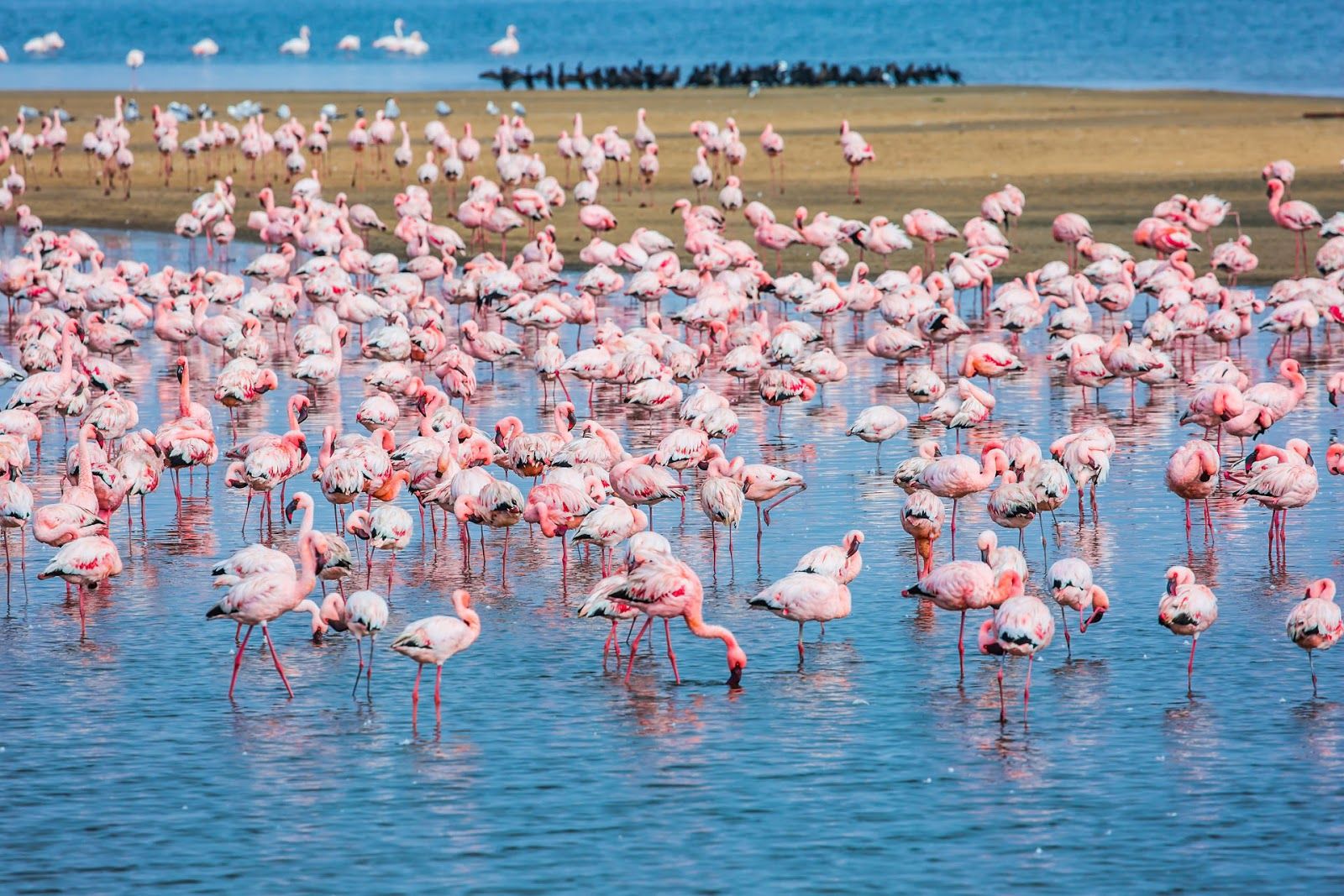
Walvis Bay Lagoon Flamingos © kavram/Shutterstock
The Art of Slow Travel Through Namibia’s Vast Landscapes
Imagine roads that stretch like ribbons beneath endless skies, where the landscape transforms so gradually you’ll find yourself pulled over just watching the horizon breathe. Namibia isn’t a destination to conquer – it’s a place to experience with every sense awake. Forget rushing between Etosha and Sossusvlei. The real magic unfolds between destinations, where stars blink to life above your campfire and the desert whispers stories in the wind.
In Etosha National Park, resist the urge to chase every creature. Instead, stake out a waterhole at dawn. Watch as morning mist lifts to reveal elephant herds lumbering toward their morning drink, while jackal calls echo across the salt pan. Staying inside the park lets you catch these golden-hour moments when wildlife activity peaks.
Damaraland teaches stillness. Base yourself near ancient rock art sites like Twyfelfontein, where passing centuries feel insignificant against 6,000-year-old carvings. Track desert-adapted elephants with local guides who read the dry riverbeds like storybooks. There’s profound peace in simply listening to the desert’s silence here.
The Skeleton Coast naturally enforces slow rhythms. Thick fog blankets this desolate stretch where Atlantic waves devour shipwrecked hulls. Walk beaches dotted with Cape fur seals, each step sinking into sands that swallow time itself.
Zambezi Region (formerly Caprivi) reveals Namibia’s green heart. Sleep to hippo grunts in riverside lodges, glide past crocodile eyes on sunset boat safaris, and discover how water transforms this arid land into Eden.
For digital detox, NamibRand Nature Reserve delivers. With no cell signal or lights for miles, you’ll rediscover the Milky Way’s brilliance and hear your thoughts clearly between dune whispers.
5 Ways to Embrace Namibia’s Pace
- Linger longer: Spend 3 nights at fewer lodges rather than daily relocations
- Shorten drives: Keep distances under 4 hours daily for spontaneous stops
- Connect locally: Chat with San trackers, Himba artisans, and farmers
- Sleep uncovered: Book star beds or roll out a sleeping bag desert-style
- Unplug completely: Let sporadic connectivity become your freedom
Namibia Money Guide: Paying Smart in Remote Places
While Namibia’s payment systems generally work well, its vast emptiness demands smart planning. You’ll need both cards and cash – ATMs disappear faster than desert mirages beyond main towns.
The Namibian Dollar (NAD) partners with South African Rand (ZAR) at 1:1 value. Both work within Namibia, but ditch NAD coins before border crossings – only notes convert regionally.
Cash vs Card Strategies
- Town essentials: Use cards in Windhoek/Swakopmund hotels and restaurants
- Wilderness musts: Carry cash for fuel stops, craft markets, and community tips
- ATM intelligence: Stick to Standard Bank or FNB ATMs in daylight hours
Pro Payment Tips
- Stockpile small bills – breaking NAD$200 at roadside stalls frustrates everyone
- Withdraw in cities before desert/coastal adventures – don’t count on rural ATMs
- Always choose local currency when card machines ask – avoid dynamic currency conversion fees

Waterberg Plateau, Namibia @ Shutterstock
Spotting Scams in Namibia’s Mostly Honest Terrain
Namibia ranks among Africa’s safest destinations, but savvy travelers stay alert to minor hustles. These rarely threaten safety – more like pesky mosquitoes than dangerous wildlife.
- Phony donation seekers: Politely decline “school fund” collectors in cities. Instead, ask lodges about vetted community projects
- Gemstone gimmicks: Those “rare” crystals at roadside stalls? Often plain quartz. Rattle off geology terms to test vendor knowledge
- Parking “protectors”: Toss NAD$5-10 if someone genuinely guards your city car. Walk away if demands escalate
- Fuel station upsells: Unless driving vintage vehicles, decline “special” oils at pumps. Supermarket prices beat station shops
- Self-appointed guides: At cultural sites like Twyfelfontein, verify guides display official accreditation cards
Keep perspective – most Namibians welcome travelers warmly. Even these minor issues pale against the country’s overwhelming beauty and hospitality. Stay alert without suspicion, and Namibia will unfold as one of Africa’s most rewarding slow-travel destinations.
Namibia Travel Ethics: Protect the Land While You Explore
Namibia’s sweeping landscapes aren’t just a playground — they’re a fragile ecosystem where responsible travel makes all the difference. As visitors in this ancient land, we owe it to Namibia’s people, wildlife, and delicate habitats to tread thoughtfully. Here’s how to explore with care while creating unforgettable experiences.
- Connect with local cultures respectfully. Namibia dances to the rhythms of Herero, Himba, San, Damara, and other vibrant cultures. Remember that villages are homes, not exhibits. Always ask before photographing faces, dress modestly in communal spaces, and skip handing out sweets or money to children. For meaningful impact, donate through vetted organizations like conservancy lodges.
- Choose community-led experiences. Swap generic tours for conservancy campsites, village craft markets, and guides born from the soil you’re exploring. Your spending becomes a lifeline for rural jobs and lion conservation projects — while unlocking richer stories you won’t find in guidebooks.
- Minimize your desert footprint. Those fairy circles and desert-adapted plants took centuries to form. Stick strictly to marked tracks (off-roading scars the land for decades), pack out every scrap of trash, and resist pocketing “harmless” stones or bones. In the Namib Desert, even shoeprints linger like permanent signatures.
- Observe wildlife like a silent partner. This isn’t a safari park — animals own these territories. Stay inside vehicles at national parks (except at designated spots), never feed wild creatures, and let rhythms unfold naturally. Your patience might reward you with a desert elephant’s bath ritual or a gemsbok’s twilight stroll.
- Treat water like liquid gold. In Africa’s second-driest nation, every drop counts. Opt for quick showers over baths, reuse towels, and turn off taps religiously. Lodges in places like Sossusvlei often rely on monthly water deliveries — your conservation efforts matter deeply here.
- Tip thoughtfully, not extravagantly. Gratuity supplements incomes in tourism-reliant areas. Aim for N$50-100 daily for expert guides, with smaller amounts for lodge staff. Generosity is kind, but over-tipping distorts local economies for future travelers.
- Speak the language of connection. Crack a smile with a hearty “Moro!” (Good morning in Oshiwambo) or “Dankie” (Afrikaans for thank you). Listen more than you speak — whether chatting with a Damara tracker or a Windhoek bartender. These moments forge bonds no souvenir ever could.
Namibia’s Vastness: Plan for Wide-Open Adventures
Google Maps lies in Namibia. Seriously. That tempting 200km drive between Sossusvlei and Swakopmund? Budget five hours, not three. Rugged gravel roads, spontaneous photo stops (hello, quiver trees!), and wandering wildlife transform every transfer into an expedition. Design your itinerary like a gourmet menu — fewer destinations served with generous time portions.
Fuel Wisdom: Never Pass a Pump!
Picture this: a single dusty pump manned by a teenager with a ledger — that’s your “gas station” in rural Kunene region. Refuel at every opportunity, even with a half-full tank. For remote zones like Kaokoland or Marienfluss, pack jerry cans. Why? Because running dry near the Skeleton Coast means hitchhiking with gemsbok — and they’re terrible drivers.
Wildlife Crossings: Namibia’s Original Traffic Circles
Forget zoos — here, warthogs snuffle through Windhoek suburbs and desert-adapted elephants ghost across Damaraland roads. Slow down near dawn/dusk when creatures materialize like mirages. No warning signs will announce that sprinting springbok — just your sharp eyes and quick reflexes. Bonus? Roadside wildlife sightings beat any game drive when a gemsbok strikes a pose against sunset.
Ditch Scammers, Embrace Local Guides
Skip those airport “guides” offering cut-rate tours for “donations.” Instead, book through lodges or Namibia’s official tourism platform. Certified guides provide richer insights (ever tasted omajowa mushrooms foraged by San trackers?) while fairly supporting communities. Remember — quality guiding protects both your safety and Namibia’s heritage.

Where desert dreams come alive: Little Kulala Lodge blends seamlessly with the Kulala Wilderness Reserve dunes © imageBROKER.com/Shutterstock
Ready to Roam Namibia Responsibly?
Namibia rewards those who wander with open eyes and light footprints. By respecting its rhythms — from Himba traditions to desert-adapted wildlife — your journey becomes part of conservation itself. Pack patience, fill that tank, and let Namibia’s raw beauty rewrite your definition of adventure.


🌟 The Travaloca Travel Editors Community is a dynamic collective of individuals united by their passion for travel and their dedication to high-quality content creation. This community serves as the driving force behind Travaloca's informative and engaging travel resources. ✨ Core Identity: This group consists primarily of passionate travel enthusiasts who have turned their love for exploration into a commitment to writing and content curation. Members are recognized for their: Extensive Travel Experience: Possessing valuable firsthand knowledge from their journeys worldwide. Aptitude for Writing and Editing: Demonstrating a keen interest and skill in crafting, reviewing, and perfecting travel narratives, guides, tips, and reviews. Dedication to Storytelling: Transforming personal experiences and destination knowledge into accessible, inspiring, and reliable information for a global audience. 📝 Community Focus: The community’s primary role is to contribute, edit, and maintain the diverse range of content on Travaloca's platform. They ensure the information provided is accurate, engaging, and reflective of current travel trends. In essence, the Travaloca Travel Editors Community is where travel passion meets editorial excellence, enriching the user experience and solidifying Travaloca’s standing as a trusted travel resource.


