
Step into a world where clean lines meet bold innovation – Germany’s architectural legacy is a masterclass in modern design. As the birthplace of Bauhaus, this nation forever changed how we think about spaces. Walk in the footsteps of visionaries like Mies van der Rohe and Walter Gropius through living monuments that still take visitors’ breath away.
Bauhaus Dreams Come Alive: Weimar, Dessau & Bernau
Imagine architecture that dances between art and function – that’s the magic of Bauhaus. Born from a revolutionary idea to unite creativity and practicality, this movement transformed buildings into living artworks. A century later, Germany preserves these treasures across three remarkable cities.
Start your journey in Weimar, where the Bauhaus University stretches like a modernist masterpiece. Its signature curved windows and red roof set the stage for architectural rebellion. Continue to Dessau, the movement’s vibrant heartbeat, where icons like the Bauhaus Building shout their identity in bold lettering. Don’t miss playful details – from the Kornhaus’s curved walls to balconies at the Dessau-Torten Estate that reimagined community living.
The adventure culminates in Bernau, where the ADGB Trade Union School reveals Bauhaus on a grand scale. Surrounded by forests, this former training center shows how modernist principles adapted to nature’s canvas – now reincarnated as a boarding school keeping Bauhaus spirit alive.

Prellerhaus: Bauhaus in Dessau © DZT / J.D. Andrews
Plan Your Bauhaus Journey
- Perfect for: Design lovers & architecture explorers
- Major cities nearby: Berlin, Leipzig, Erfurt
- Airports: BER (Berlin), DRS (Dresden)
- Discover more: weimar.de | visitdessau.com
Berlin’s Colorful Housing Revolution
When early 20th-century Berlin needed affordable homes, architects answered with something extraordinary. Six visionary housing estates transformed urban living – not just shelters, but communities woven with color and light.
The Falkenberg Garden City feels like stepping into an expressionist painting. Bruno Taut’s vibrant terraces dance around communal courtyards, rejecting rigid layouts to celebrate individuality. Then there’s the legendary Britz Estate, its iconic horseshoe shape embracing residents since the 1920s. Peek inside “Taut’s House” – the architect’s personal retreat frozen in time – to understand how sunlight and smart design create happiness.
Across Berlin, these revolutionary neighborhoods changed city living:
- Schillerpark Estate: Dutch-inspired bricks meeting modernist vision
- Carl Legien: Balcony-filled buildings fostering connection
- Siemensstadt: Industrial chic meets community planning
Guided tours unlock these gems – some even let you step inside original apartments. Witness how Walter Gropius and other masters reinvented urban spaces with humanity and flair, creating legacies that still inspire today’s architects.

Bruno Taut-designed houses in Falkenberg Garden City © Lookphotos/Guenther Bayerl
- Perfect for: Design trailblazers & industrial art lovers
- Closest hub: Hanover (20 miles)
- Airport access: Hanover Airport (HAJ)
- Experience it: Fagus Factory Official Site
Plan Your Visit to Bauhaus History
Where Modernism Was Born: The Revolutionary Fagus Factory
A full decade before the Bauhaus movement swept the world, a groundbreaking factory emerged from the German countryside. Designed by young architects Walter Gropius and Adolf Meyer, the Fagus Factory revolutionized industrial design when its construction began in 1911. Picture this: walls dissolving into glass, sharp angles replacing ornamentation, and a new philosophy of “form follows function” made real.
Walk across the original creaking floorboards today and you’ll discover the world’s only operational UNESCO World Heritage Site. The factory still produces the shoe molds (“lasts”) it’s famous for – though they’ve traded beechwood for plastic since the groovy 70s. Peer through those signature corner windows wrapping around the building like cellophane and you’ll understand why architecture buffs pilgrimage here.
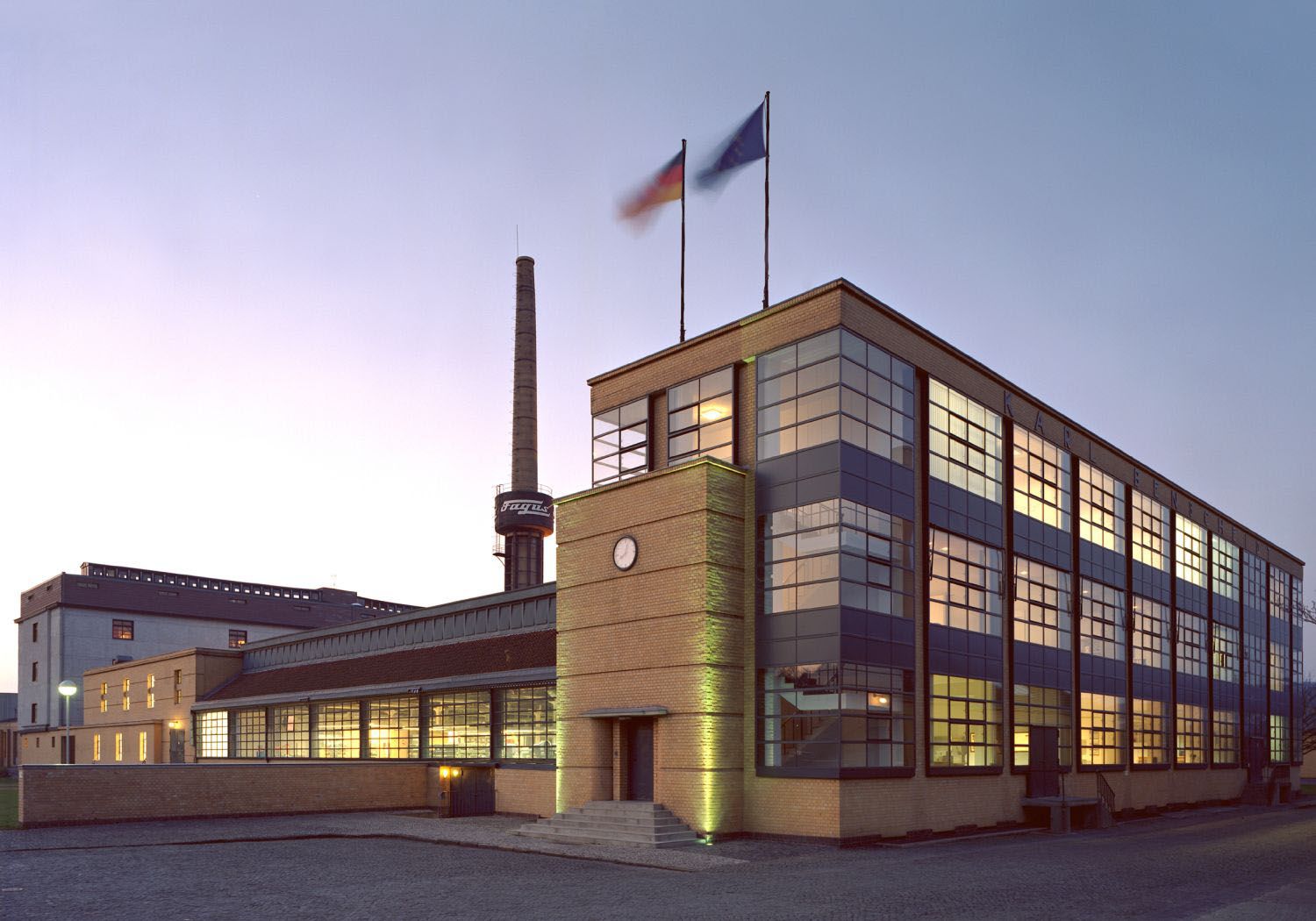
Fagus Factory’s iconic glass facade © Lookphotos/Guenther Bayerl
Inside the Living Landmark
Don’t miss the five-story Fagus-Gropius Exhibition tucked between production areas. Here, shoe history meets avant-garde design:
- Trace footwear evolution from Jazz Age Oxfords to modern sneakers
- Discover prototypes from Gropius’ private collection
- Watch artisans craft lasts using 1911 techniques
- Explore interactive Bauhaus displays revealing design secrets
More than a factory tour – it’s a time capsule where ghosts of modernism still clock in daily.
- Ideal for: Architecture pilgrims & urban design enthusiasts
- City base: Stuttgart city center (1 mile)
- Airport: Stuttgart Airport (STR)
- Plan ahead: Weissenhof Museum Website
The Weissenhof Experience
Le Corbusier’s Vision: The White City That Changed Urban Living
Perched on a Stuttgart hillside, 17 crisp white buildings spark a revelation: these 1927 residences somehow look fresher than most modern apartments. This radical housing estate birthed the “machine for living” concept, masterminded by Swiss visionary Le Corbusier. Though WWII bombs claimed many structures, the survivors form the world’s first modernist UNESCO neighborhood.
Wander past buildings resembling giant sugar cubes balanced on toothpick pillars. Notice how ribbon windows slice through walls like film strips of sunlight – a signature Corbusier touch you’ll now spot in every contemporary high-rise.

The revolutionary Weissenhofsiedlung © SMG / Achim Mende
Museum of Modern Living
Step inside House 13-15, where the Weissenhof Museum unveils early-20th century innovation:
- Pull out origami-like beds hidden in walls – the 1927 answer to studio apartments
- Roam the legendary rooftop garden with panoramic Stuttgart views
- Study original modular furniture blueprints that inspired IKEA
- Marvel at Corbusier’s color theory experiments still influencing interiors today
Two architectural marvels, one unforgettable journey through design DNA that shapes how we live, work and see the world around us.
Where Brick Giants Tell Hamburg’s Maritime Story
Picture this: A labyrinth of waterways lined with red-brick castles where coffee, cocoa, and spices once perfumed the air. Welcome to Hamburg’s UNESCO World Heritage twins – the Speicherstadt and Kontorhaus districts – where industrial might meets irresistible charm.
The Warehouse Wonderland That Built an Empire
Speicherstadt isn’t just any old warehouse district – it’s the world’s largest warehouse complex. Built between 1885-1927, this brick behemoth still makes jaws drop with its neo-Gothic spires reflected in canals. Those iron bridges you’ll stroll across? They’ve supported porters hauling precious cargo for over a century.
Today, the scent of roasting coffee beans still wafts through Speicherstadt’s regenerated spaces. Inside former spice vaults, you’ll now find chocolate ateliers where master confectioners temper couverture, and dockside restaurants serving fresh North Sea shrimp while harbor lights twinkle outside.
The Office District That Became an Architectural Icon
Just beyond the warehouses stands their sleek younger sibling – the Kontorhaus District. Here, 1920s architects reimagined office spaces as temples of commerce. The undisputed crown jewel? Chilehaus, a ship-shaped marvel that looks ready to slice through urban waves.
Imagine craftsmen laying 4.8 million bricks by hand to create Fritz Höger’s vision. The eastern tip’s sharp prow points skyward while cascading windows mirror Hamburg’s ever-changing clouds. Inside this Brick Expressionist masterpiece, modern professionals work where merchants once tracked global spice trades.
More Than Brick Deep: Unmissable Experiences
This UNESCO site pulses with living history. Don’t miss:
- Climbing the Speicherstadtmuseum‘s wooden cargo lifts
- Gasping at the Elbe Philharmonic Hall‘s glass wave atop an old warehouse
- Discovering why the Sprinkenhof complex took 15 years to complete
- Sampling single-origin coffees at 100-year-old roasteries
As dusk falls, join locals at waterfront pubs where amber beer meets salty sea air. That’s when the brick facades turn gold in sunset light – Hamburg’s true golden hour.

Speicherstadt’s Wasserschloss – Where history meets Hamburg’s harbor charm © Michael T. Meyes
Your Hamburg Heritage Checklist
- Perfect for: Architecture buffs, history lovers, and urban explorers
- Must-See: Chilehaus’s ship-like prow at sunset
- Hidden Gem: Miniatur Wunderland’s tiny world inside Speicherstadt
- Local Tip: Take a night harbor cruise for magical illumation views
- Plan Your Visit: www.hamburg-travel.com
Discover more German UNESCO treasures with our free World Heritage guide

Brought to you in partnership with Germany’s official tourism experts


🌟 The Travaloca Travel Editors Community is a dynamic collective of individuals united by their passion for travel and their dedication to high-quality content creation. This community serves as the driving force behind Travaloca's informative and engaging travel resources. ✨ Core Identity: This group consists primarily of passionate travel enthusiasts who have turned their love for exploration into a commitment to writing and content curation. Members are recognized for their: Extensive Travel Experience: Possessing valuable firsthand knowledge from their journeys worldwide. Aptitude for Writing and Editing: Demonstrating a keen interest and skill in crafting, reviewing, and perfecting travel narratives, guides, tips, and reviews. Dedication to Storytelling: Transforming personal experiences and destination knowledge into accessible, inspiring, and reliable information for a global audience. 📝 Community Focus: The community’s primary role is to contribute, edit, and maintain the diverse range of content on Travaloca's platform. They ensure the information provided is accurate, engaging, and reflective of current travel trends. In essence, the Travaloca Travel Editors Community is where travel passion meets editorial excellence, enriching the user experience and solidifying Travaloca’s standing as a trusted travel resource.


