
Imagine standing before the majestic spires of Prambanan, Indonesia’s answer to Cambodia’s Angkor Wat. This UNESCO World Heritage wonder wasn’t just built – it was born from triumph. Around 856 AD, this breathtaking Hindu temple complex rose from the Javanese soil to celebrate a monumental victory in battle. Yet its glory was shockingly brief. Within years of completion, these ornate stone giants stood silent and abandoned, slowly surrendering to time and nature’s relentless embrace.
Centuries later, Prambanan whispered its story to modern explorers. The painstaking resurrection began in 1918, with the heart of the complex finally reborn in 1953 after decades of meticulous restoration. But this temple of resilience had more battles to fight. In 2006, the earth itself trembled – a powerful 5.9-magnitude quake shattered 40% of the sacred structures. Today, as you walk among these resurrected giants, you’ll likely spot scaffolding embracing some shrines – a testament to Indonesia’s ongoing commitment to preserving this architectural masterpiece. Restoration isn’t just history here; it’s a living, breathing part of Prambanan’s enduring legacy.
Java, Indonesia
Yogyakarta, Indonesia
Borobudur, Indonesia
Mount Bromo, Indonesia
Prambanan: The Crown Jewel of Java’s Ancient Temples
Step into a world where stone whispers legends and celestial spires pierce the Javanese sky. Prambanan Temple Complex, Indonesia’s largest Hindu sanctuary and a UNESCO World Heritage Site, stands as a breathtaking testament to 9th-century craftsmanship. Wander through its sacred courtyards and you’ll discover why this spiritual landmark captures hearts with its mathematical perfection and mythic storytelling.
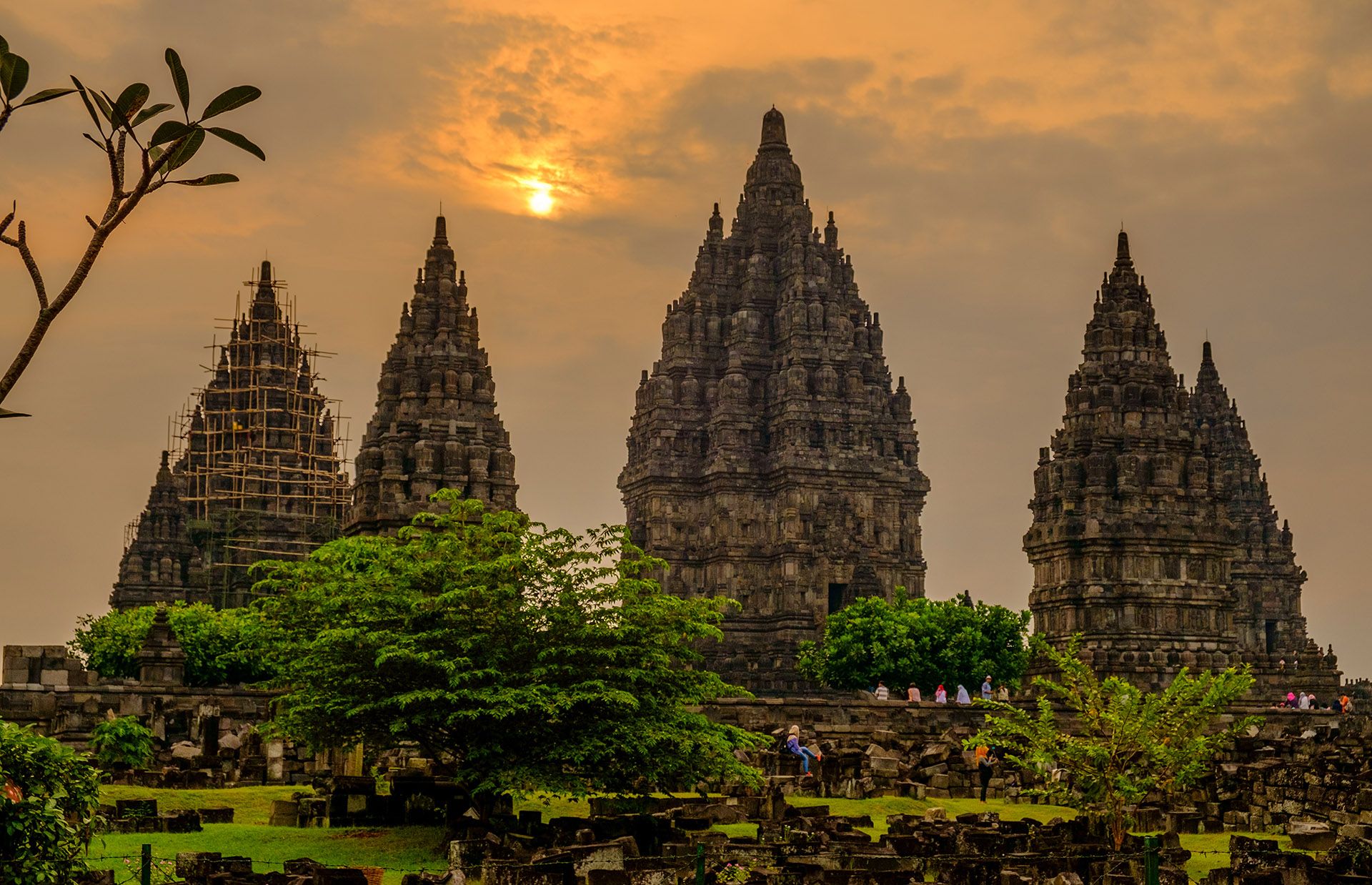
Prambanan temple at sunset © Shutterstock
Architectural Marvels in Stone
The complex’s spiritual heart reveals eight majestic structures. Towering over all is the 47-meter Candi Siva Mahadeva, flanked by the equally impressive Candi Vishnu (north) and Candi Brahma (south). Opposite them stand three smaller shrines honoring the gods’ sacred vehicles – though only Nandi the bull remains fully intact today.
As you explore, notice how every surface tells sacred stories:
- The Ramayana epic unfolds through intricate bas-relief carvings
- Four-faced Brahma statues embody divine wisdom
- Celestial guardians watch from temple niches
Don’t miss the legendary Durga statue in Shiva’s shrine – locals whisper she’s the cursed princess Roro Jonggrang, transformed into stone by a spurned suitor.
5 Unforgettable Ways to Experience Prambanan
1. Sunrise Serenity at Candi Shiva
Beat the crowds and watch dawn paint the temple’s spires gold. The play of light on ancient carvings creates magical photo opportunities you’ll cherish forever.
2. Temple Treasure Hunt
Challenge yourself to spot all three primary shrines and their animal guardians. Seek out Agastya the teacher in southern chambers and elephant-headed Ganesha facing west.
3. Journey Through the Ramayana
Follow the epic’s carvings clockwise from the eastern gate. Notice how the stone narrative flows seamlessly onto the Brahma temple – a 9th-century storyboard masterpiece.
4. Moonlit Magic at the Ramayana Ballet
Between May-October, witness Javanese dance dramatizing the epic under starry skies. Secure tickets early for full-moon performances – the glowing temples create an unforgettable backdrop.
5. Off-the-Beaten-Path Exploration
Use your combined ticket to discover Candi Sewu’s Buddhist ruins nearby. Venture further to hidden gems like hilltop Candi Ijo for panoramic views of Java’s countryside.

Ramayana Ballet performance at Prambanan © Shutterstock
Planning Your Temple Adventure
Where to Stay
Base yourself in vibrant Yogyakarta (45 minutes away) or cultural gem Solo (90 minutes east). Both offer accommodations ranging from heritage guesthouses to luxury resorts. For dual temple experiences, consider Borobudur-area stays combining access to both UNESCO sites.
Pro Tips
- Visit early morning or late afternoon for softer light and cooler temperatures
- Combine with Borobudur using a dual temple pass
- Hire a certified guide to decode the temple’s symbolism
- Dress modestly – sarongs provided at entrance
Whether you’re drawn by spiritual energy, architectural brilliance, or cultural legends, Prambanan’s stone poetry will leave you awestruck. This living museum of Hindu-Javanese heritage offers more than Instagram moments – it invites you to walk through time itself.
Essential Guide to Visiting Prambanan Temple: Tips & Travel Insights
Standing as one of Southeast Asia’s most magnificent ancient wonders, Prambanan Temple takes visitors on a breathtaking journey through Indonesia’s Hindu heritage. Whether you’re planning your visit from Yogyakarta or combining it with nearby Borobudur, our guide will help you unlock the secrets of this UNESCO World Heritage Site with ease.

Prambanan Sewu temple complex at sunrise © Shutterstock
5 Essential Tips for Your Prambanan Visit
1. Timing Is Everything
Beat both the crowds and the heat by arriving for opening time at 6 am. The soft morning light creates magical photo opportunities, and you’ll appreciate the cooler temperatures when exploring the vast temple complex.
2. Dress for Respect
As an active Hindu temple, modest clothing is required. Cover shoulders and knees – light long-sleeved tops and trousers work perfectly. Sarongs are available onsite if needed.
3. Ticket Options
Standard admission costs $25 for adults (ages 10+), with discounted $15 tickets for students and children (3-9 years). Indonesian residents enjoy special rates. Pro tip: The combined Prambanan-Borobudur ticket offers great value for visiting both heritage sites within two days.
4. Stay Hydrated & Protected
With limited shade across the complex, bring water, sunscreen and a hat. Comfortable walking shoes are essential – you’ll be covering significant ground between temple structures.
5. Guided Discoveries
Licensed guides wait at the entrance offering insights into the temple’s fascinating history. Their stories about the intricate carvings and ancient legends enrich the experience beyond simple sightseeing.
Getting to Prambanan: Your Transport Options
Choosing Your Perfect Visit Time
April-October (Dry Season): Ideal conditions with minimal rainfall and lower humidity. Mornings offer comfortable temperatures around 24-28°C (75-82°F).
November-March (Wet Season): Lush green landscapes but prepare for afternoon showers. Ponchos and waterproof footwear recommended. Fewer visitors mean quieter exploration.
Regardless of season, weekdays see fewer tour groups than weekends. Arrive before 9am or after 3pm to enjoy the temples at their most peaceful.
Making the Most of Your Visit
Combine your Prambanan experience with these nearby highlights:
- Explore the atmospheric Sewu Temple complex at sunrise
- Catch sunset at Ratu Boko Palace with volcano views
- Watch the spectacular Ramayana Ballet performance (seasonal)
- Visit the intricate Plaosan Temple just 3km away
Most travelers find 3-4 hours sufficient to appreciate Prambanan’s main structures, though history enthusiasts may want longer. Pair your visit with breakfast at the onsite restaurant before crowds arrive.


🌟 The Travaloca Travel Editors Community is a dynamic collective of individuals united by their passion for travel and their dedication to high-quality content creation. This community serves as the driving force behind Travaloca's informative and engaging travel resources. ✨ Core Identity: This group consists primarily of passionate travel enthusiasts who have turned their love for exploration into a commitment to writing and content curation. Members are recognized for their: Extensive Travel Experience: Possessing valuable firsthand knowledge from their journeys worldwide. Aptitude for Writing and Editing: Demonstrating a keen interest and skill in crafting, reviewing, and perfecting travel narratives, guides, tips, and reviews. Dedication to Storytelling: Transforming personal experiences and destination knowledge into accessible, inspiring, and reliable information for a global audience. 📝 Community Focus: The community’s primary role is to contribute, edit, and maintain the diverse range of content on Travaloca's platform. They ensure the information provided is accurate, engaging, and reflective of current travel trends. In essence, the Travaloca Travel Editors Community is where travel passion meets editorial excellence, enriching the user experience and solidifying Travaloca’s standing as a trusted travel resource.


