
Discovering Manila: The Beating Heart of the Philippines
Manila isn’t just a city – it’s a full-body experience. This electrifying capital welcomes travelers with open arms and non-stop energy, offering round-the-clock dining, vibrant nightlife, and shopping that stretches into the early hours. As the ultimate melting pot of Filipino culture with Spanish, Chinese, and American influences, Manila presents a unique introduction to the Philippines that stands distinct from the rest of the country.
Essential Manila Neighborhoods to Explore
Before diving into your Manila adventure, get acquainted with these three must-visit districts that showcase different facets of the city’s personality:
The Ultimate Manila Survival Guide
Metro Manila’s 636 square kilometers comprise 16 cities and one municipality – an urban sprawl that requires smart planning to navigate successfully. While the city’s reputation for traffic congestion and tropical heat is well-deserved, these insider tips will help you experience Manila like a seasoned traveler:
Mastering Manila’s Geography
Focus your explorations on Manila proper, particularly the historic walled city of Intramuros. This compact area contains many of the city’s most significant landmarks, making it perfect for first-time visitors. Venture north of the Pasig River to discover bustling Binondo (Manila’s Chinatown) and the scenic Manila Bay waterfront with its museum district along Roxas Boulevard.
Transportation Tactics
The key to enjoying Manila is accepting that travel times will be longer than expected. Beat the heat and traffic by:
- Using ride-sharing apps during rush hours
- Riding the efficient (though limited) MRT/LRT lines
- Trying colorful jeepneys for short distances
- Walking early mornings or late afternoons in green spaces
Nightlife and Entertainment
Manilans know how to have fun, and you’ll find exciting nightlife options across the city. Makati and Ortigas offer upscale clubs and international restaurants, while Quezon City (home to the University of the Philippines) buzzes with student-friendly bars and live music venues.
For a truly local experience, don’t miss the city’s vibrant karaoke scene and late-night food markets. Manila’s culinary landscape offers everything from street food adventures to fine dining – your taste buds will thank you!

© Jon Bilous / Shutterstock
10 Unforgettable Manila Experiences
While many travelers rush through Manila en route to Philippine beaches, those who take time to explore discover a city rich in history and culture. These top attractions showcase Manila at its best:
1. Step Back in Time in Intramuros
The 16th-century walled city of Intramuros remains Manila’s historical crown jewel. Founded by Spanish conquistadors in the 1570s, this living monument combines colonial architecture with modern Filipino life. Wander along cobblestone streets past government buildings, historic churches, and family homes that have stood for generations.
Pro tip: Join Old Manila Walks for an expertly guided tour that brings the district’s stories to life. Don’t miss the spectacular views from the Baluarte de San Diego gardens or the fascinating artifacts at Casa Manila museum.
2. Discover San Agustin Church – A UNESCO Treasure
As the oldest stone church in the Philippines (completed 1606), San Agustin Church represents Manila’s spiritual heart. The magnificent Baroque interior features trompe l’oeil ceiling murals, intricate wooden carvings, and the tomb of Spanish founder Miguel López de Legazpi.
Attend a Sunday mass to experience the church’s extraordinary acoustics, then explore the adjacent museum housing centuries-old religious art and artifacts.
3. Feast Your Way Through Binondo
Established in 1594, the world’s oldest Chinatown offers an intoxicating blend of flavors and cultures. Navigate narrow streets perfumed with roasted duck and fresh noodles, stopping to sample legendary eats like crispy pancit canton and hopia (sweet bean pastries).
Time your visit during Chinese New Year for breathtaking dragon dances and lantern displays that transform the district into a glowing wonderland.
4. Sunset Strolls Along Manila Bay
Locals and travelers alike flock to Manila Bay’s famous waterfront for what many consider the world’s most spectacular sunsets. The palm-lined promenade comes alive in late afternoon with street performers, food vendors, and families enjoying the sea breeze.
Enhance your visit by exploring nearby attractions: the National Museum complex, Rizal Park monuments, and the iconic Manila Hotel where General Douglas MacArthur once resided.
5. Retail Therapy in Makati’s Greenbelt
The sleek financial district of Makati surprises visitors with its sophisticated urban oases. The Greenbelt complex combines luxury shopping with serene garden spaces where orchids cascade from trees and koi ponds create peaceful retreats from city noise.
Even if high-end stores aren’t your style, the beautifully landscaped grounds offer shady respite and excellent people-watching opportunities.
6. University of the Philippines Cultural Hub
Head north to Quezon City for a dose of academic energy and youthful creativity. The University of the Philippines campus hosts art exhibitions, theater productions, and indie music festivals throughout the year. Don’t miss the Vargas Museum’s Philippine art collection or the monthly Saturday market featuring handmade crafts and organic treats.
7. Fort Santiago’s Historic Grounds
This defensive fortress within Intramuros tells powerful stories of Spanish colonial rule and WWII occupation. Walk through the same gate where national hero José Rizal spent his final days before execution, and see preserved dungeons that held prisoners of war. The recently renovated complex now includes peaceful gardens and insightful historical displays.
8. Ayala Museum Time Travel
Makati’s premier cultural institution makes Philippine history engaging through innovative exhibits. The Gold of Ancestors gallery dazzles with pre-colonial treasures, while dioramas and interactive displays trace the nation’s development from ancient times through modern democracy. Check schedules for traditional weaving demonstrations and indigenous music performances.
9. Art Deco Marvels in Escolta
Architecture buffs will adore this revitalized historic district showcasing Manila’s golden age. Once the country’s financial center, Escolta’s grand 1930s buildings now host quirky art galleries, vintage shops, and coffee houses. Join a walking tour to appreciate details like the Calvo Building’s winged victory statues and First United Building’s magnificent elevator.
10. Night Market Adventures
As temperatures cool, Manila’s streets transform into culinary wonderlands. Join locals at Mercato Centrale food park for gourmet street eats, or head to Divisoria Market for bargaining adventures under twinkling lights. For seafood lovers, Dampa markets let you choose fresh catches that chefs grill to perfection at your table.
Manila Travel Planning Made Simple
To make the most of your Manila experience, keep these final tips in mind:
- Best Time to Visit: November-February offers cooler temperatures and less rainfall
- Stay Central: Choose accommodations in Intramuros, Makati, or Ermita for easy access to major sites
- Comfort First: Wear breathable clothing and comfortable walking shoes – Manila’s tropical climate demands it
- Stay Hydrated: Carry water and take regular breaks in air-conditioned museums or cafes
- Local Guidance: Consider hiring a guide for efficient navigation and insider knowledge
Manila rewards the curious traveler with layers of history, irresistible cuisine, and infectious energy. By embracing the city’s vibrant chaos and following these tips, you’ll discover why so many visitors find themselves captivated by the Philippines’ dynamic capital.
Ready to experience Manila like a local? Our Philippines travel experts can create your perfect itinerary featuring hidden gems and authentic cultural encounters.
Discover Manila’s Living History: 6 Timeless Treasures You Can’t Miss
Manila pulses with stories carved in stone and whispered through centuries-old corridors. As the cultural heart of the Philippines, this vibrant capital offers extraordinary encounters with history that leave visitors awestruck. From bullet-scarred colonial fortresses to holy spaces that survived devastating wars, these unforgettable landmarks reveal Manila’s resilient spirit.
1. Walk Through Time at San Agustin Church & Museum
Stand beneath the majestic dome of San Agustin Church and you’ll immediately understand why this architectural marvel earned UNESCO World Heritage status. Completed in 1607, it’s Asia’s oldest surviving stone church – a Baroque masterpiece that somehow withstood earthquakes, fires, and the complete destruction of its surrounding Intramuros district during World War II.
The moment you step inside, sunlight filtering through stained glass illuminates magnificent trompe-l’oeil ceilings where frescoed cherubs seem to float above the nave. Don’t miss the intricately carved molave wood choir stalls depicting religious scenes and Philippine flora. The church’s survival seems miraculous when you learn it was the only Intramuros structure left standing after 1945’s Battle of Manila.
Your journey continues at the adjacent San Agustin Museum, housed in the former Augustinian monastery. Here, three centuries of Filipino spiritual heritage unfold through galleries displaying:
- Exquisite 17th-century ecclesiastical garments embroidered with gold thread
- Rare Ming dynasty porcelain traded along the Manila-Acapulco route
- Fascinating exhibits on Fray Andrés Urdaneta, the navigator who charted the trans-Pacific galleon trade

San Agustin Church’s Baroque architecture has witnessed over four centuries of Philippine history © Shutterstock
2. Stand Where Heroes Walked: Rizal Shrine at Fort Santiago
History echoes through the weathered stone walls of Fort Santiago, where Manila’s most dramatic chapters unfolded. Built by Spanish conquistadors in 1571 atop the ruins of Rajah Sulaiman’s settlement, this strategic fortress guarded the Pasig River for centuries. Today, its restored battlements and dungeons offer haunting insights into Manila’s turbulent past.
Walking the cobbled pathways, you’ll encounter physical remnants of the fortress’s dark history as a Spanish prison and Japanese torture chamber during WWII. But the true emotional center lies in the Rizal Shrine – a moving tribute to Dr. José Rizal, the national hero imprisoned here before his 1896 execution.
Inside the reconstructed Spanish barracks, personal artifacts humanize the revolutionary writer:
- His final poem “Mi Último Adiós” handwritten on a hidden lamp
- Medical instruments from his ophthalmology practice
- Detailed scale models of his execution at nearby Luneta (now Rizal Park)

Fort Santiago’s gates have welcomed and imprisoned generations of historical figures © Shutterstock
3. Marvel at Filipino Masterpieces: National Museum of Fine Arts
Within the grand neoclassical Legislative Building (itself a historical landmark), the National Museum of Fine Arts houses the Philippines’ most important art collection. Walking its airy galleries feels like taking a visual journey through the archipelago’s soul, showcasing how Filipino artists interpreted their world from colonial times to modern independence.
Don’t miss these showstopping works:
- Juan Luna’s monumental “Spoliarium” – a 4.22m x 7.67m masterpiece depicting Roman gladiators that earned gold at Madrid’s 1884 Exposición Nacional de Bellas Artes
- Fernando Amorsolo’s sun-drenched landscapes celebrating rural Philippine life
- José Joya’s abstract expressionist works that redefined modern Filipino art
Beyond paintings, the museum preserves stunning architectural elements salvaged from historic Manila buildings destroyed during WWII, including art nouveau stained glass from the Hotel de Oriente and carved church facades.

The National Museum Complex preserves Philippines’ artistic and cultural legacy © Shutterstock
4. Dive into Maritime Mysteries: National Museum of Anthropology
Just steps from the Fine Arts museum, the National Museum of Anthropology takes visitors on an extraordinary journey through 50,000 years of Philippine cultural heritage. Housed in a stately 1940s government building, its galleries reveal astonishing archaeological finds that rewrite our understanding of Southeast Asian maritime history.
The undeniable showstopper is the San Diego Gallery, displaying artifacts recovered from the Spanish galleon that sank in 1600 off Batangas province. After lying undisturbed for nearly 400 years, divers brought up over 5,000 remarkably preserved objects:
- Intact Chinese blue-and-white Ming dynasty porcelain
- European navigational instruments and weaponry
- Everyday items like hazelnuts and chicken bones that reveal sailor diets
Equally fascinating are exhibits on indigenous Filipino cultures, including intricate Ifugao bulul rice gods from the Cordilleras and mesmerizing Maranao brasswork from Mindanao.
5. Taste Old Manila’s Glamour at the Historic Manila Hotel
For a final glimpse into Manila’s storied past, step beneath the crystal chandeliers of the Manila Hotel lobby. Opened in 1912, this grande dame hosted Hollywood stars, royalty, and historical figures throughout its gilded history. General Douglas MacArthur made it his home from 1935-1941, charting Pacific war strategy from his suite overlooking Manila Bay.
Even if you don’t stay overnight, you can soak up the atmosphere by:
- Savoring high tea in the mahogany-paneled Lobby Lounge accompanied by live classical music
- Exploring the Heritage Gallery displaying photos of illustrious guests from Mick Jagger to Pope John Paul II
- Sipping a perfectly chilled martini at the Tap Room bar where Ernest Hemingway once drank
The hotel’s storied past includes surviving WWII bombardments and hosting the legendary rigodon balls where Manileño high society danced in terno gowns and white ties well into the tropical night.
Why Manila’s Historical Gems Matter More Than Ever
In a city constantly evolving between tradition and modernity, these historical landmarks serve as vital touchstones to Manila’s spirit. Each weathered stone at San Agustin Church, every brushstroke in Luna’s masterpieces, all whisper stories of cultural fusion, colonial struggle, and extraordinary resilience.
Beyond their historical significance, these sites offer profound insights into contemporary Filipino identity. The faith embodied in San Agustin explains the Philippines’ deep Catholic traditions born from Spanish conversion. Rizal’s martyrdom at Fort Santiago fuels ongoing dialogues about nationalism. Even the salvaged porcelain at the Anthropology Museum testifies to Manila’s centuries-old role as a global trading hub – a legacy continuing today with the Philippines’ vibrant export economy.
For travelers, Manila’s historical treasures provide more than Instagram moments. They offer meaningful connection points with a nation’s soul. Whether you’re tracing Spanish galleon routes through museum artifacts or imagining revolutionary whispers in Fort Santiago’s dungeons, Manila invites you to become part of its ongoing story.
Practical Tips for Visiting Manila’s Historic Sites
- Best visiting times: Early mornings avoid crowds and midday heat at outdoor sites like Intramuros
- Dress codes: Churches require covered shoulders and knees; museums are air-conditioned – bring a light jacket
- Ticket combos: Save with joint tickets for multiple National Museum buildings
- Guided tours: Intramuros offers excellent guided walking tours via bamboo bikes or electric trikes
- Local insights: Strike up conversations with museum guards and hotel staff – they often share fascinating unofficial history
Resilience Etched in Stone: Manila’s Eternal Spirit
From World War II ruins rose these living monuments to Filipino determination. Each site showcases how Manila absorbed Spanish, American, and Asian influences while forging its unique identity. This cultural alchemy makes the city endlessly fascinating – where Baroque churches neighbor modern skyscrapers, and ancient maritime trade routes find echoes in today’s bustling markets.
As you explore San Agustin’s quiet cloisters or view gilded frames in the National Museum, remember that you’re encountering more than historical artifacts. You’re witnessing the soul of a city that continually reinvents itself while honoring its storied past – a place where history isn’t confined to textbooks, but lives in every sun-warmed stone and whispered family story.
Manila invites you not merely to observe, but to participate in its unfolding narrative. When you sip coffee where revolutionaries once plotted, or shadow lovers stealing kisses in Fort Santiago’s moonlit gardens, you become part of the city’s eternal dance between memory and progress. These historical sites aren’t just destinations – they’re portals to understanding the Philippines’ resilient heart.
Discover Makati and Manila: 14 Unforgettable Experiences in the Philippines’ Beating Heart
Manila’s vibrant energy combines with Makati’s cosmopolitan flair to create one of Southeast Asia’s most dynamic urban experiences. From glittering golden treasures to sizzling street food, sacred spaces to pulsing nightlife, this guide reveals the absolute best ways to experience these iconic Filipino destinations.
1. Marvel at Golden Masterpieces in Ayala Museum
Step into a shimmering world of Philippine heritage at Makati’s crowning cultural jewel – the Ayala Museum. This modern architectural marvel, expanded in 2004 from the original 1967 collection, offers anything but boring textbook history. The museum’s smart curation takes visitors on an immersive journey through the islands’ story, starting with its most breathtaking display on the fourth floor.
The Gold of Ancestors exhibit will leave you speechless with its collection of over 1,000 pre-Hispanic gold artifacts. These magnificent pieces were crafted between the 10th and 13th centuries by the Philippines’ indigenous cultures – artistic proof that sophisticated civilizations thrived long before Spanish galleons arrived. The star attraction? The astonishing 4kg Gold Regalia, a chest-covering chain worn by powerful datu (chieftains). Don’t miss the famed Surigao Treasure hoard from Mindanao, where intricate belts, death masks, and ritual bowls reveal the spiritual significance of gold in ancient Filipino society.
2. Indulge in Legendary Barbecue at Aristocrat
No visit to Manila is complete without experiencing Aristocrat Restaurant, where the scent of smoky barbecue has wafted since humble beginnings as a 1936 food van. This beloved institution serves what locals passionately argue is the nation’s best barbecue chicken – marinated in a secret sweet-savory sauce and perfectly charred over coals. The José Reyes family recipe has remained unchanged for generations, drawing families, politicians, and celebrities alike.
Beyond their signature inasal (grilled chicken), Aristocrat offers a delicious introduction to Filipino comfort food classics. Time your visit for lunch to try their famous chicken barbecue plate with java rice and atchara (pickled papaya). Save room for halo-halo royalty – their special version piles taro ice cream, sweet bananas, chewy nata de coco, and vibrant jellies into an edible kaleidoscope crowned with leche flan.
3. Experience Makati’s Electric Nightlife
When the sun sets, Makati transforms into Manila’s premier playground for night owls. Unlike the tourist-oriented bars of Malate (home to the city’s vibrant LGBTQI+ scene), Makati attracts a mix of expats, young professionals, and travelers seeking sophisticated evening entertainment. The district offers everything from rooftop cocktail bars with skyline views to underground vinyl clubs spinning the latest beats.
The Central Business District buzzes with sleek wine bars and craft cocktail spots, perfect for post-work unwinding. For those craving rhythm, clubs like XX XX and The Palace offer world-class DJs and bottle service until dawn. A word to the wise: P. Burgos Street’s reputation for raucous go-go bars has tempered in recent years, now mostly hosting Korean-style karaoke lounges and Japanese izakayas sandwiched between classic British-style pubs serving San Miguel at local prices.

Roof top dining in Makati, Philippines © Shutterstock
4. Haggle Like a Pro at Manila’s Colorful Markets
Leave the air-conditioned malls behind and dive into Manila’s vibrant street markets for a true Filipino shopping adventure. The contrast between gleaming shopping centers and sprawling outdoor bazaars feels like traveling between different worlds. At Quiapo’s labyrinthine alleys or Divisoria’s dizzying maze of stalls, bargaining is both sport and art form.
For budget fashion, Baclaran Market near the LRT station offers rainbow-hued clothes and shoes at rock-bottom prices. Early birds get the best deals here – vendors slash prices dramatically by mid-afternoon. Greenhills Shopping Center’s infamous “tiange” section remains the go-to for knockoff designer goods (buyer beware) and surprisingly beautiful pearl jewelry sourced from Mindanao’s waters. Remember to negotiate firmly but good-naturedly – starting at 50% of the asking price is standard practice.
5. Step Back in Time at Casa Manila
Within Intramuros’ stone walls stands Casa Manila, a meticulously reconstructed 19th-century Spanish colonial home offering glimpses into the privileged lives of Manila’s elite. Commissioned by Imelda Marcos during her controversial tenure as First Lady, this museum-home blends accurate period architecture with Marcos-era grandeur.
Wander through opulent salas (living rooms) where high society once hosted tertulias (soirees), and marvel at European furnishings alongside traditional capiz-shell windows. The most talked-about feature? The upstairs “gossip toilets” – side-by-side seats allowing married couples private conversation while attending to nature’s call, safely hidden from servant ears. Historical recreation enhanced by the scent of bayabas (guava) wood polishing the floors.
6. Marvel at Manila Cathedral’s Resilience
Manila Cathedral stands as a powerful symbol of Filipino faith and endurance. Since its nipa-and-bamboo origins in 1581, this religious landmark has survived eight reconstructions following devastation by earthquakes, fires, typhoons, and wartime bombing. The current incarnation, completed in 1958 under famed architect Fernando Ocampo, showcases striking Neo-Romanesque architecture with Byzantine flourishes.
While less ancient than nearby San Agustin Church, the cathedral impresses with its soaring vaulted ceilings, magnificent stained-glass rose windows, and tranquil marble interiors. Time your visit for Saturday weddings to witness Filipino celebratory traditions, or attend Sunday Mass to experience the cathedral resonating with powerful choral harmonies. Look for the modern bronze doors depicting the cathedral’s dramatic history – a testament to Manila’s indomitable spirit.

Facade of Manila Cathedral, Manila, Philippines © Shutterstock
7. Explore Underwater Worlds at Manila Ocean Park
Dive beneath Manila Bay’s surface without getting wet at one of Asia’s most engaging marine parks. Manila Ocean Park’s stunning Oceanarium features over 20,000 creatures thriving in a carefully maintained ecosystem. The 25-meter walk-through tunnel creates surreal moments as sharks glide overhead and schools of batfish swirl around visitors.
Beyond the main tank, interactive experiences abound. Get kissed by sea lions during scheduled shows, or watch penguins waddle in their cooling habitat. After dark, the park transforms with spectacular laser water shows synchronized to music. Families shouldn’t miss the jellyfish exhibit – dozens of pulsating moon jellies glowing under black lights create living psychedelic art.
8. Discover Mindanao’s Kamagi Necklaces at the Metropolitan Museum
The Metropolitan Museum of Manila surprises visitors with thoughtful exhibitions spanning Filipino artistry from prehistoric times to cutting-edge contemporary works. While rotating exhibitions attract repeat visitors, the museum’s anthropological collections hold special treasures from indigenous cultures.
Among the most fascinating displays are Mindanao’s Kamagi necklaces – intricate adornments made from rare golden beads woven with sacred patterns. These pieces functioned as both status symbols for Datu leaders and spiritual talismans in animist rituals. Study these alongside 16th-century wooden bulul rice gods from Ifugao province, juxtaposed against modern masters like National Artist BenCab.
9. Walk Through History at San Agustin Church
As the Philippines’ oldest stone church (completed 1607), San Agustin Church in Intramuros whispers centuries of history through its weathered walls. Unlike reconstructed Manila Cathedral, San Agustin miraculously survived WWII bombings intact. Enter beneath the impressive trompe-l’oeil frescoes to discover why this UNESCO World Heritage Site deserves its title.
The adjacent museum houses ecclesiastical treasures including centuries-old ivory saints and an intricately carved choir loft. For a truly unforgettable experience, attend the Sunday Gregorian Mass where the 16th-century pipe organ’s deep tones mingle with monks’ plainsong chants – an auditory time machine transporting listeners to Spanish colonial Manila.
Manila Uncovered: The Capital’s Best-Kept Secrets
Manila pulses with energy – a city where Spanish colonial churches stand beside skyscrapers, where jeepneys honk past centuries-old plazas, and where every corner reveals layers of fascinating history. Whether you’re marveling at golden treasures from ancient kingdoms or sipping craft cocktails in a converted Art Deco building, this guide reveals why Manila deserves more than just a stopover.
Golden Treasures and Living History: Manila’s Must-See Attractions
Discover Priceless Ancient Gold at the Metropolitan Museum
Did you know the basement of Manila’s Central Bank holds one of Southeast Asia’s most astonishing collections? The Gold Room at the Metropolitan Museum will leave you breathless with its Kamagi necklaces – impossibly delicate golden threads dating from 200 BC. These weren’t mere decorations; they served as ceremonial wear and symbols of power long before Spanish galleons arrived.
Look closer and you’ll discover:
- The haunting ancestral death masks from Mindanao
- Intricate Surigao Treasure artifacts proving advanced goldsmithing techniques
- Maranao Islamic art featuring mesmerizing geometric patterns
Upstairs, the story continues through global art spanning Egyptian relics to works by modern Filipino masters. Pro tip: Visit on weekday mornings when crowds thin and golden sunlight streams through the museum’s grand windows.
Step Back in Time on Escolta Street
Walk down Escolta today and you’ll feel the ghost of Manila’s Gilded Age. Once called the “Paris of the East,” this street still retains architectural gems that witnessed the city’s transformation:
- The First United Building (1928): Pink-and-white Art Deco elegance housing quirky boutiques
- Regina Building (1934): Its wedding-cake cupolas showcase Filipino craftsmanship
Local artists have breathed new life into these spaces – don’t miss vibrantly painted jeepneys during the annual “Escolta Block Party” every September.
Inside the Palace of Power: Malacañang
For 150 years, Malacañang Palace has witnessed revolutions, presidential dramas, and colonial rule. While much remains off-limits, visiting its museum reveals captivating insights:
- Original furnishings from Spanish governor-generals’ summer residence
- Portraits tracing presidential history from Aguinaldo to Marcos
- Hidden gardens where crucial political meetings occurred
Fun fact: The palace name comes from “may lakan diyan” (there’s a nobleman there) – a phrase shouted when Spanish officials approached.

Witness where Philippine history unfolded at Malacañang Palace
Where to Rest Your Head: Manila’s Best Neighborhoods
Choosing where to stay in Manila shapes your experience. Here’s how three distinct areas cater to different travelers:
Manila Bay: Budget Meets Beachfront
Love sunset strolls? The bayside districts of Ermita and Malate offer:
- Affordable guesthouses steps from historic sites
- The iconic Manila Hotel – where MacArthur planned WWII strategies
- Dining with sea views at Seaside Boulevard’s dampa (seafood markets)
Perfect for first-time visitors who want everything walkable.
Makati: Glass Towers and Green Oases
Manila’s financial heart pulses with sophistication:
- Luxe stays near designer malls like Greenbelt
- Nightlife ranging from posh rooftops to underground jazz clubs
- Quiet escapes in Ayala Triangle Gardens
Insider advice: Stay near Salcedo Saturday Market for immediate access to foodie heaven.
Quezon City: Local Flavors & Night Owl Vibes
Where Manileños really let loose:
- Budget-friendly hotels near Tomas Morato’s 24-hour eateries
- Live music venues showcasing OPM (Original Pinoy Music)
- Easy transit to Cubao’s bus terminals for Northern Luzon adventures
Don’t miss: The kinetic energy of Quezon Memorial Circle at dawn when tai chi practitioners fill the park.

Marine wonders await at Manila Ocean Park
Feast Like a Local: Manila’s Food Scene Unwrapped
Filipino food tells stories of trade routes and traditions. Dive into these culinary hotspots:
Ilustrado (Intramuros): Time Travel Through Taste
Dining at this 19th-century mansion feels like joining a governor-general’s banquet. Must-tries:
- Bagnet: Twice-fried pork belly so crispy it sings
- Lengua con Setas: Ox tongue in mushroom sauce that melts like butter
- Tsokolate Eh: Drinking chocolate thick enough for your spoon to stand upright
Market! Market! (Bonifacio Global City): Hawker-Style Heaven
This isn’t your average mall food court. Wander through themed alleys offering:
- Freshly shucked oysters paired with local palm vinegar
- Bizarre-but-delicious balut (fertilized duck eggs) for the brave
- Halo-halo stations building Instagram-worthy shaved ice treats
Quick Snack (Binondo): Wok Hei Magic
Tucked in Chinatown’s alleyways, this unassuming spot serves:
- Foot-long lumpia bursting with minced shrimp
- Hokkien noodles stir-fried in flaming woks
- Sweet taho (silken tofu) carried through streets by dawn vendors
Craft Cocktails with History
Manila’s bars blend creativity with heritage:
- The Spirits Library: Browse “borrowed” books to order secret cocktails
- B-Side: Vinyl-spinning hideaway in a converted garage
- 1919 Grand Café: Sip gin tonics beneath historic Santa Cruz Church
Beyond the Guidebook: Manila Travel Tips
- Beat the Heat: Schedule indoor attractions like museums between 11am-3pm
- Transport Hacks: Download Grab app for taxi alternatives; try the LRT for quick north-south moves
- Festival Alert: January’s Feast of Black Nazarene creates major road closures
- Safety First: Keep valuables close in crowded areas like jeepney terminals
- Language Note: While English is widely spoken, learning basic Tagalog phrases warms hearts
Why Manila Deserves Your Time
From gold-laden museums to sizzling street food stalls, Manila offers experiences no Philippine island can match. It’s a city that rewards travelers willing to look beyond initial chaos – where every Art Deco doorway whispers colonial tales, every mouthful of adobo carries generations of family recipes, and every sunset over Manila Bay paints new possibilities. Give it three days, and you’ll leave already planning your return.
Manila’s Culinary Delights: Hidden Gems Worth Discovering
The aroma of sizzling pork skin and the sweet tang of secret sauces waft through Quezon City’s streets – welcome to Manila’s thriving food scene where every bite tells a story. While the city boasts countless dining options, two establishments stand out for their unique charm and unforgettable flavors.
Lechon House: Where Crispy Skin Meets Magic Sauce
At this beloved local institution, the lechon isn’t just food – it’s an experience. The star of the show? Their legendary boneless roast pig stuffed with fragrant paella. The tender meat falls off the bone while the skin crackles with each glorious bite. But regulars will whisper the real secret lies in the signature sauce – a sticky-sweet barbecue concoction that transforms good pork into something celestial. Sold by the quarter kilo, this crowd-pleaser makes for perfect sharing (though you might want to keep it all to yourself).
Conspiracy Garden Café: Where Art Meets Appetite
Tucked away in Quezon City’s creative heart, this bohemian sanctuary serves more than just meals – it feeds the soul. By day, artists scribble in notebooks over steaming kapeng barako, while musicians strum original compositions. Come evening, the garden transforms into Manila’s most intimate performance space where poets share verses and activists brainstorm over steaming bowls of comfort food. The menu respects Filipino traditions while embracing contemporary creativity – much like the eclectic crowd it attracts.
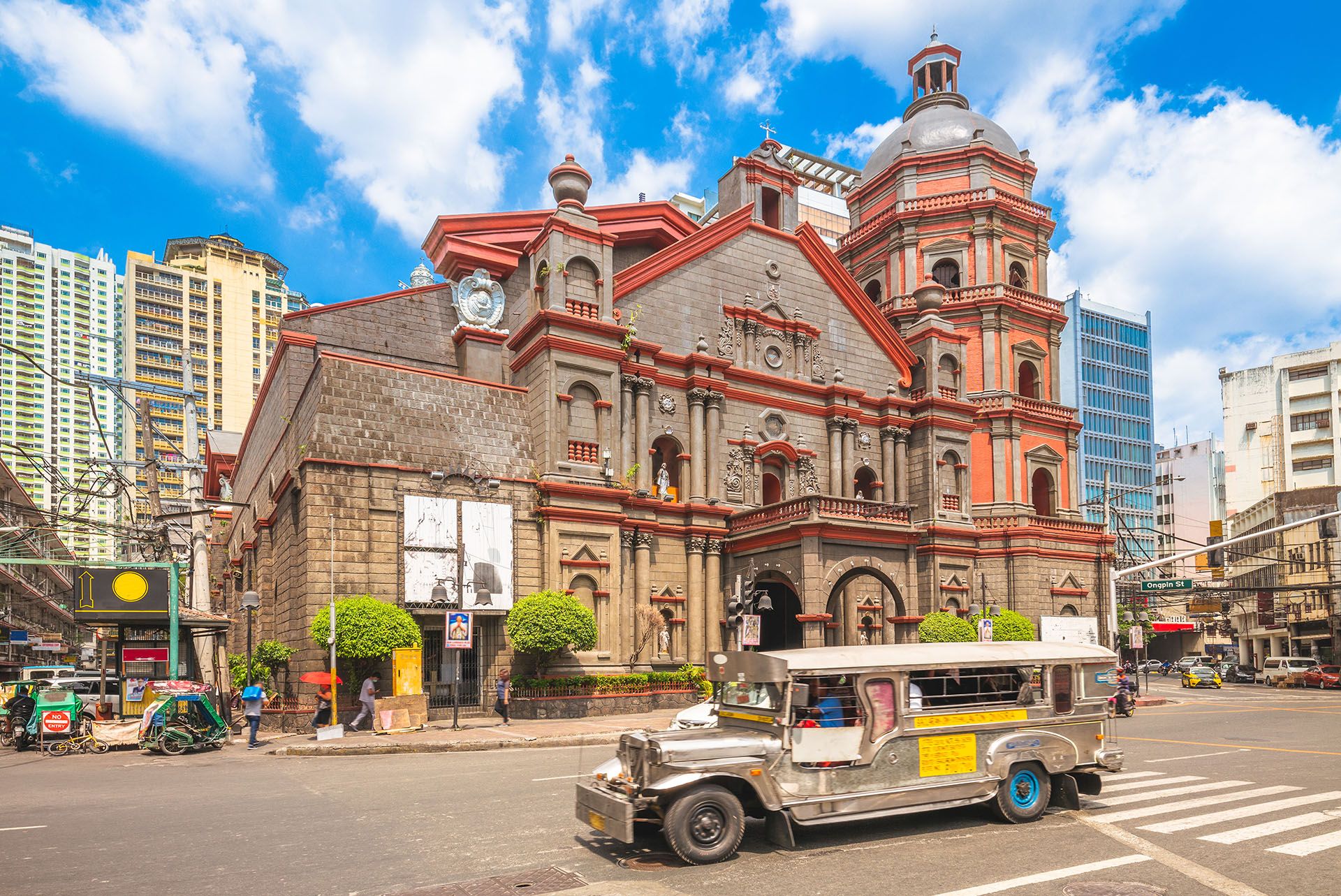
© Richie Chan / Shutterstock
Mastering Manila’s Maze: Your Ultimate Transportation Guide
Navigating Manila’s streets requires strategy, patience, and a sense of adventure. With over 13 million residents sharing limited road space, transportation choices make or break your Manila experience. Let’s break down your options:
The MetroStar Express (MRT): Yellow Line Efficiency
Running daily from 5:30 AM to 11 PM along EDSA Boulevard, the MRT-3 connects Pasay City to Quezon City with trains arriving every 3-6 minutes. This elevated rail provides respite from street-level congestion, especially when traveling between major hubs:
- Smart Tip: Grab a reloadable beep card at station kiosks to avoid ticket lines
- Peak Hour Warning: Avoid 7-9:30 AM and 5-8 PM unless you enjoy sardine-can conditions
- Future Expansion: Watch for upcoming connections to LRT lines at North Avenue
Manila Light Rail Transit (LRT): Green and Purple Pathways
Manila’s dual-line LRT system offers affordable alternatives to road transport:
Green Line (LRT-1)
Your express route from Baclaran’s markets to Roosevelt’s shopping districts. Perfect for avoiding Taft Avenue traffic while accessing historical sites near Doroteo Jose Station.
Purple Line (MRT-2)
Connects Pasig’s business districts to Quiapo’s bustling markets. Exit at Recto Station for walking access to University Belt’s student haunts.

Food stall at Quiapo market in Manila, Philippines © Shutterstock
Beyond Rails: Manila’s Colorful Road Transport
Philippines National Railway: Heritage Meets Commuting
This slowly reviving 1892 railway currently offers limited routes, but watch this space! Future expansion promises convenient trips to Makati and Malolos, making this nostalgic mode worth following.
Jeepneys: Manila’s Moving Culture
These flamboyant WWII-era relics remain Manila’s most affordable transport. Perfect for short hops between landmarks but be prepared:
- Cramped seating: Designed for 14, often packed with 20+
- Route Confusion: Destinations painted on sides change frequently
- Cultural Bonus: Each hand-painted design showcases Filipino artistry
UV Express Vans: Compact Commuting
These shared minivans shuttle between fixed points without stops. Great for airport runs or express routes when you’re in a hurry.
Manila Buses: Bargain Long-Haul
Air-conditioned buses ply major arteries like EDSA. Look for modern units with free WiFi – worth the few extra pesos during grueling commutes.
Taxis: Your Comfortable Shortcut
White metered cabs offer surprisingly affordable comfort. Always insist on using the meter – most drivers comply these days. Bonus: AC works better here than on most buses!
Crafting Your Perfect Manila Itinerary
The 3-Day Introduction
Perfect for first-timers wanting Manila’s greatest hits:
Day 1: Intramuros & Rizal Park
Day 2: National Museum Complex & Binondo Food Tour
Day 3: Makati Shopping & Poblacion Nightlife
The 7-Day Immersion
Dig deeper into Manila’s diverse neighborhoods:
Days 1-3: Cultural Core (Intramuros, Binondo, Quiapo)
Days 4-5: Modern Manila (BGC High Street, Rockwell Center)
Days 6-7: Local Living (Quezon City Markets, Coastline Sunsets)
The 10-Day Explorer
For those wanting metropolitan mastery:
Add day trips to Corregidor Island orTaal Volcano
Dedicated foodie days in Maginhawa Street’s restaurant row
Behind-the-scenes tours at universities and artist studios
Manila Memories: Making the Most of Your Visit
Beyond logistics, Manila rewards those who embrace its organized chaos. Wake early to beat the crowds at historical sites, linger over merienda snacks at neighborhood bakeries, and let spontaneous encounters shape your journey. Whether marveling at sunset over Manila Bay or debating politics with students at a Quezon City cafe, this city’s true magic lies in its endlessly layered humanity.

© PH Tourism Promotions Board
Discovering Manila’s Ideal Seasons: When to Plan Your Trip
Manila pulses with energy year-round, but timing your visit can transform your experience from sweltering endurance test to tropical paradise exploration. Nestled in the heart of the Philippines, this vibrant capital dances to the rhythm of two distinct seasons that shape its character and activities.
The dry season from November through April showers visitors with endless sunshine opportunities. January and February become the city’s sweet spot – you’ll enjoy pleasantly cooler temperatures hovering around 28°C (82°F) while escaping both the monsoon downpours and scorching summer heat. These months offer golden opportunities for walking historic Intramuros without becoming a sweating tourist cliché or enjoying al fresco dining along Manila Bay’s famous sunset strip.
Come March through May, Manila transforms into a solar oven. Locals joke that standing still counts as exercise during these months, with temperatures regularly hitting 36°C (97°F) and humidity clinging to your skin like plastic wrap. Yet this season unveils unique charms – tropical fruits reach their juiciest perfection and beach-loving Manileños create contagious energy escaping to nearby coastal havens.
The rainy season from June to October paints the city in dramatic shades. Don’t dismiss these months outright – mornings often dawn bright and clear with afternoon storms providing theatrical natural light shows. Savvy travelers discover hidden advantages: fewer crowds at major attractions like Fort Santiago, better hotel rates, and lush greenery bursting with life. Just keep an umbrella handy and stay informed about typhoon forecasts, particularly during the peak storm months of August and September.
Cultural enthusiasts should time visits with Manila’s vibrant festival calendar. January’s Sinulog Festival floods the streets with colorful processions while December transforms the city into a dazzling wonderland of Christmas lights – the world’s longest festive season kicks off here in September!
Conquering the Gateway to the Philippines: Your Manila Arrival Guide
As Southeast Asia’s powerhouse of culture and commerce, Manila welcomes travelers through multiple portals. Understanding your arrival options unlocks stress-free transitions into the Philippine adventure that awaits.
Mastering Manila’s Aviation Hub
Ninoy Aquino International Airport (NAIA) serves as the nation’s primary gateway, handling over 45 million passengers annually. Its four separate terminals confuse even seasoned travelers, but cracking the code is simpler than you think:
- Terminal 1: The aging workhorse hosting most international carriers
- Terminal 2: Exclusive domain of Philippine Airlines flights
- Terminal 3: Modern facility for international and domestic budget carriers
- Terminal 4: Tiny domestic terminal confusingly called the “Old Domestic Airport”
The secret to terminal-hopping success? Allow at least 90 minutes for transfers between facilities. While the official airport shuttle runs regularly, Manila’s notorious traffic can turn a 2km journey into an hour-long odyssey. Better yet, book connecting flights on the same airline to avoid terminal changes altogether.
Maritime Adventures: Arriving by Sea
For those embracing the slow travel movement, Manila’s historic North Harbor offers romantic arrivals straight from a Conrad novel. 2GO Travel’s modern ferries connect the capital to over a dozen island destinations, arriving at Pier 4 like maritime giants disgorging stories from distant shores.
The 32-hour journey from Puerto Princesa transforms transport into an adventure, passing through the stunning Calamian Islands. Opt for premium cabins on overnight routes – waking to Manila Bay’s sunrise view makes the extra investment worthwhile. Arriving passengers discover taxis readily available, but ride-hailing apps like Grab often provide better rates for reaching central hotels.
Overland Odyssey: Bus Travel Tactics
Manila’s decentralized bus system intimidates newcomers, but strategic terminal choices streamline provincial travel. Follow these expert guidelines:
- Southern Destinations: Utilize Pasay terminals near the MRT/LRT interchange
- Northern Routes: Depart from Cubao’s bustling transport hub in Quezon City
- Unseen Advantage: Avenida terminals in Quiapo offer surprising routes to Bicol and beyond
Top operators like Victory Liner and Philtranco maintain modern fleets with surprisingly comfortable amenities. Night buses to Baguio or Legazpi feature business-class style reclining seats perfect for catching rest while traveling. Remember to book return tickets in advance during peak holiday seasons – Holy Week transforms bus stations into survival challenges!
Navigating Manila Like a Local: Insider Transportation Tips
Once you’ve conquered your arrival, mastering Manila’s urban maze completes your initiation into Filipino travel mastery. The city’s eclectic mix of transport options creates an urban adventure at every turn.
The celebrated Jeepney symbolizes Manila’s cultural resilience – these kaleidoscopic former military jeeps now shuttle commuters along fixed routes for pocket change. While not always comfortable, riding one constitutes an essential Manila experience. Simply listen for barkers calling out destinations and hop aboard – payment passes hand-to-hand through fellow passengers in a show of casual trust.
Modern alternatives include the MRT and LRT rail systems, surprisingly efficient when not at rush hour crush capacity. The LRT Yellow Line serves historic Manila and Binondo (the world’s oldest Chinatown), while the MRT cruises through Makati’s financial district. Invest in a stored value Beep card from any station for hassle-free transfers.
For door-to-door convenience, ride-hailing apps revolutionized Manila transport. Grab dominates the market with transparent pricing that spares you taxi meter anxiety. Premium options include GrabCar Plus for newer vehicles during important meetings, while GrabShare offers budget-friendly pooling when time isn’t priority.
Weather Wizardry: Packing for Manila’s Climate
Manila’s tropical temperament demands wardrobe strategy rather than simple packing. The golden rule? Layers become your best travel companions regardless of season.
Dry season warriors need lightweight, breathable fabrics – think technical wicking materials rather than heavy cotton. A compact umbrella serves dual duty as sunshade during scorching afternoons and unexpected drizzle protection. Quality walking sandals trump enclosed shoes when tackling humid pavement adventures.
Rainy season visitors elevate waterproofing to an art form. Quick-dry clothing prevents that perpetually damp feeling, while waterproof bags protect electronics during sudden downpours. Don’t overlook anti-chafing solutions – humid conditions create friction challenges your guidebook won’t mention!
Year-round essentials include:
- Reusable water bottle (stay hydrated without plastic waste)
- Portable power bank (perfect for ride-hailing and photo emergencies)
- Hand sanitizer and tissues (many restrooms lack supplies)
- Light scarf/shawl (for overly air-conditioned malls and religious sites)
Beyond Arrival: Crafting Your Manila Experience
Manila rewards travelers who push past first impressions. Once you’ve navigated arrival logistics, immerse yourself in these authentic experiences:
History buffs time-travel through Intramuros’ Spanish colonial walls. Join Carlos Celdran’s legendary walking tours (resuming post-pandemic) for passionate storytelling that brings history alive. Nearby, the American Cemetery mesmerizes with its serene memorial to WWII sacrifices.
Food adventurers dive into Binondo’s ancient alleyways where fifth-generation shops serve culinary heirlooms. Master the art of dumpling hopping or join a guided food tour to unlock secrets even locals forget. Don’t miss the midnight barbecue stalls along Malate’s Adriatico Street – grilled chicken intestines (isaw) taste better than they sound!
Retail therapy ranges from Makati’s luxury brands to Divisoria’s labyrinthine bargain wonderland. For ethical shopping, visit social enterprise boutiques like Rags2Riches supporting local artisans. Greenhills Shopping Center’s tiangge (market) stalls perfect your haggling skills while scoring quality pearls and handicrafts.
Typhoon Tactics: Weathering Manila’s Storms
While modern forecasting minimizes weather surprises, understanding Manila’s storm patterns ensures you stay safe and flexible.
Typhoon season peaks August-September, though storms occasionally arrive as early as May. Warning signals progress from PSWS 1 (prepare) to PSWS 4 (extreme danger). Smart travelers:
- Book flexible accommodation rates during storm season
- Save emergency contacts +63 2 911-5061 to 65 (NDRRMC hotline)
- Monitor PAGASA’s reliable typhoon updates
- Keep devices charged when storms approach
Travel insurance becomes non-negotiable during rainy season – ensure coverage includes weather disruptions and medical evacuation. Major malls like SM Megamall transform into emergency shelters during extreme weather, equipped with supplies and information centers.
The Manila Advantage: Gateway to Paradise
Manila excels as springboard to Philippine adventures. Clark Airport (2 hours north) handles growing international traffic with stress-free efficiency compared to NAIA. New expressways make Tagaytay’s volcano views reachable in 90 minutes, while Batangas Port provides ferry access to Mindoro and Boracay.
Savvy travelers structure itineraries with Manila bookending their journey. Start with urban energy before escaping to islands, returning for final shopping and culture fixes. Or buffer international connections with stopovers – many hotels offer day rates for flight recoveries.

Fort Santiago, Manila © Shutterstock
The Takeaway: Manila Mastery Made Simple
Manila seduces travelers willing to embrace organized chaos. By timing your visit strategically and mastering arrival logistics, you unlock Southeast Asia’s mostunderrated urban adventure. Remember that Filipinos elevate hospitality to art form – don’t hesitate to ask for directions or recommendations. That genuine smile breaking through language barriers? That’s Manila’s true welcome mat.
Ready to discover your perfect Manila experience? The city’s legendary sunsets await your arrival, promising unforgettable memories whether you stay for days or merely pause before island hopping through paradise. Pack that umbrella, perfect your Jeepney boarding technique, and prepare for urban thrills only Manila delivers.


🌟 The Travaloca Travel Editors Community is a dynamic collective of individuals united by their passion for travel and their dedication to high-quality content creation. This community serves as the driving force behind Travaloca's informative and engaging travel resources. ✨ Core Identity: This group consists primarily of passionate travel enthusiasts who have turned their love for exploration into a commitment to writing and content curation. Members are recognized for their: Extensive Travel Experience: Possessing valuable firsthand knowledge from their journeys worldwide. Aptitude for Writing and Editing: Demonstrating a keen interest and skill in crafting, reviewing, and perfecting travel narratives, guides, tips, and reviews. Dedication to Storytelling: Transforming personal experiences and destination knowledge into accessible, inspiring, and reliable information for a global audience. 📝 Community Focus: The community’s primary role is to contribute, edit, and maintain the diverse range of content on Travaloca's platform. They ensure the information provided is accurate, engaging, and reflective of current travel trends. In essence, the Travaloca Travel Editors Community is where travel passion meets editorial excellence, enriching the user experience and solidifying Travaloca’s standing as a trusted travel resource.


