
Ultimate Japan Travel Itinerary: 7, 10 & 14 Day Adventure Plans


Imagine standing at Shibuya Crossing as thousands of Tokyoites surge around you like a perfectly choreographed dance. Then picture yourself days later strolling through Kyoto’s timeless temple gardens, cherry blossom petals swirling around your feet. This magical contrast is why Japan captivates travelers – ultra-modern cities seamlessly blending with centuries-old traditions, all connected by bullet trains zipping between destinations at nearly 200 mph.

With countless shrines, mouthwatering cuisine, and endless day trip possibilities, planning your Japan adventure can feel overwhelming. That’s where local expertise makes all the difference. Our Japan-based travel specialists craft personalized itineraries that transform logistics into memorable experiences – securing train tickets, booking authentic ryokan stays, and revealing hidden gems you’d never find alone.

Your Perfect Japan Itinerary: 3 Unforgettable Options

Whether you have one week or two, Japan offers life-changing experiences. Here’s how to maximize your travel time:

The Taste of Japan (7 Days)

Ideal for first-timers, this highlights reel combines Tokyo’s neon energy with Kyoto’s cultural heart. Experience Shibuya’s scramble crossing, mysterious Fushimi Inari’s vermilion gates, and a Mount Fuji day trip. Savor sushi-making classes, witness sumo morning practice, and unwind in bamboo forests – all without feeling rushed.

Deep Culture Dive (10 Days)

Slow down and savor Japan’s richness. Add overnight stays in mountain-ringed Takayama or deer-filled Nara. Soak in Hakone’s volcanic onsens surrounded by autumn colors, sleep on tatami mats in traditional ryokans, and taste multi-course kaiseki cuisine. Perfect for travelers craving both urban excitement and countryside serenity.

Off-The-Beaten-Path Explorer (14 Days)

For the ultimate immersion, hike ancient samurai trails, reflect at Hiroshima’s Peace Park, and discover Kanazawa’s golden teahouses. Learn pottery in local studios, cruise Shikoku Island’s artisan villages, and uncover why two weeks barely scratches Japan’s surface.

Ditch the planning stress – our Japan experts create seamless journeys featuring your dream experiences.

Ultimate Japan Travel Itinerary: 7, 10 & 14 Day Adventure Plans

Beppu’s therapeutic hot springs represent Japan’s perfect blend of nature and tradition

7-Day Japan Itinerary: Maximum Impact

Follow this carefully crafted week-long journey to experience Japan’s essential contrasts – futuristic cities, sacred spaces, and natural wonders:

Tokyo Lights & Neon Nights (Day 1)

Dive straight into Tokyo’s electric energy at Shibuya Crossing’s human tidal wave. Feel Harajuku’s youthful pulse along Takeshita Street’s rainbow-colored boutiques before gliding to Ginza’s sophisticated department stores. Cap your day with sunset city views from Shibuya Sky’s open-air deck.

Pro Tip: Arrive 30 minutes before closing for shorter queues and glittering night vistas.

Time Travel Through Tokyo (Day 2)

Morning reveals sumo culture’s raw power in Ryogoku, where steaming chankonabe stew fuels wrestlers. Journey to Asakusa next, wandering Nakamise Street’s shrine-approaching stalls unchanged for centuries. Ascend Tokyo Skytree for panoramic views stretching to Mount Fuji, then drift along Sumida River aboard a traditional yakatabune boat as city lights twinkle.

Secret Moment: Witness Senso-ji Temple’s morning rituals before tourist crowds arrive.

Fuji Majesty & Volcanic Bliss (Day 3)

2-hour Scenic Journey

The Romancecar train whisks you to Hakone’s forested mountains where clouds cling to volcanic peaks. Cruise Lake Ashi’s mirror-like waters reflecting Fuji’s perfection (weather permitting), then descend into bubbling hot spring valleys via cable car. Your day culminates soaking in mineral-rich waters with snow-dusted mountain views, followed by kaiseki dining in a ryokan’s tranquil setting.

Tokyo Skytree illuminates the night sky beside traditional temple architecture

Tokyo Sky Tree embodies Japan’s harmony of cutting-edge technology and timeless beauty

Your dream trip awaits:
Find the most exciting Japan tours and start packing

Experience Japan in 10 Days: Culture, Cuisine & Iconic Landscapes

Immerse yourself in Japan’s perfect blend of ancient traditions and modern wonders with this carefully crafted 10-day journey. From Tokyo’s neon pulse to Kyoto’s serene temples, discover why Japan captivates travelers worldwide.

Mount Fuji & Hakone’s Natural Wonders

A quick train ride from Tokyo brings you to the gateway of Japan’s most iconic sight. As you approach Hakone, keep your camera ready – panoramic windows frame stunning countryside vistas with glimpses of Mount Fuji on clear days.

Don’t miss the Hakone Ropeway – soaring above volcanic valleys, you’ll witness steam rising from sulfur vents while enjoying breathtaking views of Lake Ashi below. When the waters are calm, Fuji’s majestic reflection creates a picture-perfect moment.

The dramatic Owakudani Valley delivers an otherworldly experience. Walk among active sulfur vents and see eggs turn jet-black in natural hot springs. Locals swear these special treats add seven years to your life!

Pro Tip:

Carry 500-yen coins for ropeway tickets – machines often don’t accept large bills or cards. Pack a light jacket too – temperatures drop at higher elevations.

Mount Fuji reflecting in Lake Ashi with Hakone temple

Hakone’s iconic views © Shutterstock

Kyoto: Where Tradition Comes Alive

Glide effortlessly to Kyoto aboard the famous Shinkansen bullet train (3.5 hours). Secure a window seat on the right side for Fuji views during your first hour. Watch volcanic landscapes transform into lush farmland as you approach Japan’s cultural heartland.

Step back in time at Nijo Castle, where “nightingale floors” still chirp warnings of approaching visitors just as they did for shoguns centuries ago. The Golden Pavilion (Kinkaku-ji) dazzles with its gold-leaf exterior shimmering above mirror-still waters – each architectural layer telling a different chapter of Japanese design history.

Arashiyama’s Bamboo Wonderland

Venture west to discover one of Japan’s most photographed spots. Follow the Hozu River across Togetsukyo Bridge into the Bamboo Grove, where sunlight filters through towering green stalks that whisper and sway overhead. Hidden among the bamboo path, you’ll find quaint teahouses perfect for a matcha break.

For a different perspective, hike up to Monkey Park Iwatayama. The rewarding views across Kyoto compete for attention with troops of wild macaques roaming freely.

Pro Tip:

Follow feeding guidelines carefully at the monkey park – these clever creatures know exactly when snacks appear! Small coins help with vending machines at feeding stations.

Traditional ryokan in Kyoto

Traditional Kyoto accommodation © Shutterstock

Ancient Nara & Vibrant Osaka

A short train ride (under 1 hour) transports you to Japan’s first capital. Nara Park’s bowing deer have charmed visitors for 1,300 years – buy special crackers from vendors and watch them politely nod for treats. The colossal bronze Buddha at Todai-ji Temple will leave you speechless – it’s housed in one of the world’s largest wooden structures despite being rebuilt multiple times.

Osaka’s Culinary Finale

Cap your journey in Japan’s food capital. Wander through 190-year-old Kuromon Ichiba Market – nicknamed “Osaka’s Kitchen” – where sizzling Kobe beef skewers compete with fresh sashimi stalls for your attention. Pick up unique regional snacks and teas as edible souvenirs before departure.

Airport express trains whisk you from Osaka Station to Kansai International Airport in comfort, giving you time to reflect on ten unforgettable days exploring Japan’s highlights.

Sacred deer in Nara Park

Nara’s gentle deer ambassadors © Shutterstock

Ready for Your Japanese Adventure?

This 10-day journey perfectly balances must-see sights with authentic local experiences. From Fuji’s majesty to Kyoto’s cultural treasures and Osaka’s food scene, you’ll discover why Japan remains travelers’ favorite destination year after year.

Want to customize this itinerary? Our Japan experts create personalized trips matching your interests and travel style – contact us to start planning your dream vacation today!

Day 1: Savor Tokyo’s Culinary Pulse

Kickstart your Japan adventure with an intimate Tokyo dinner experience at a counter-style restaurant specializing in sushi, sukiyaki, or tempura. Perching at the counter transforms dining into theater – watch master chefs shape seasonal ingredients with razor-sharp precision. The sizzle of the grill, the delicate knife work, and artful plating become your evening entertainment.

Pro tip: Counter seats offer front-row access to culinary mastery. Chat with chefs about their techniques while witnessing how Japanese cuisine celebrates each season’s bounty.

Day 2: Tokyo’s Flavor Frontier

Dive into sensory overload at Tsukiji Outer Market where narrow alleyways overflow with glistening seafood and sizzling street eats. Follow your nose past stalls grilling plump scallops, vendors assembling tamago-yaki omelette sandwiches, and skewers of yakitori dripping with savory glaze. Don’t just taste – join a sushi workshop to learn the secrets behind perfect vinegared rice and expert fish preparation.

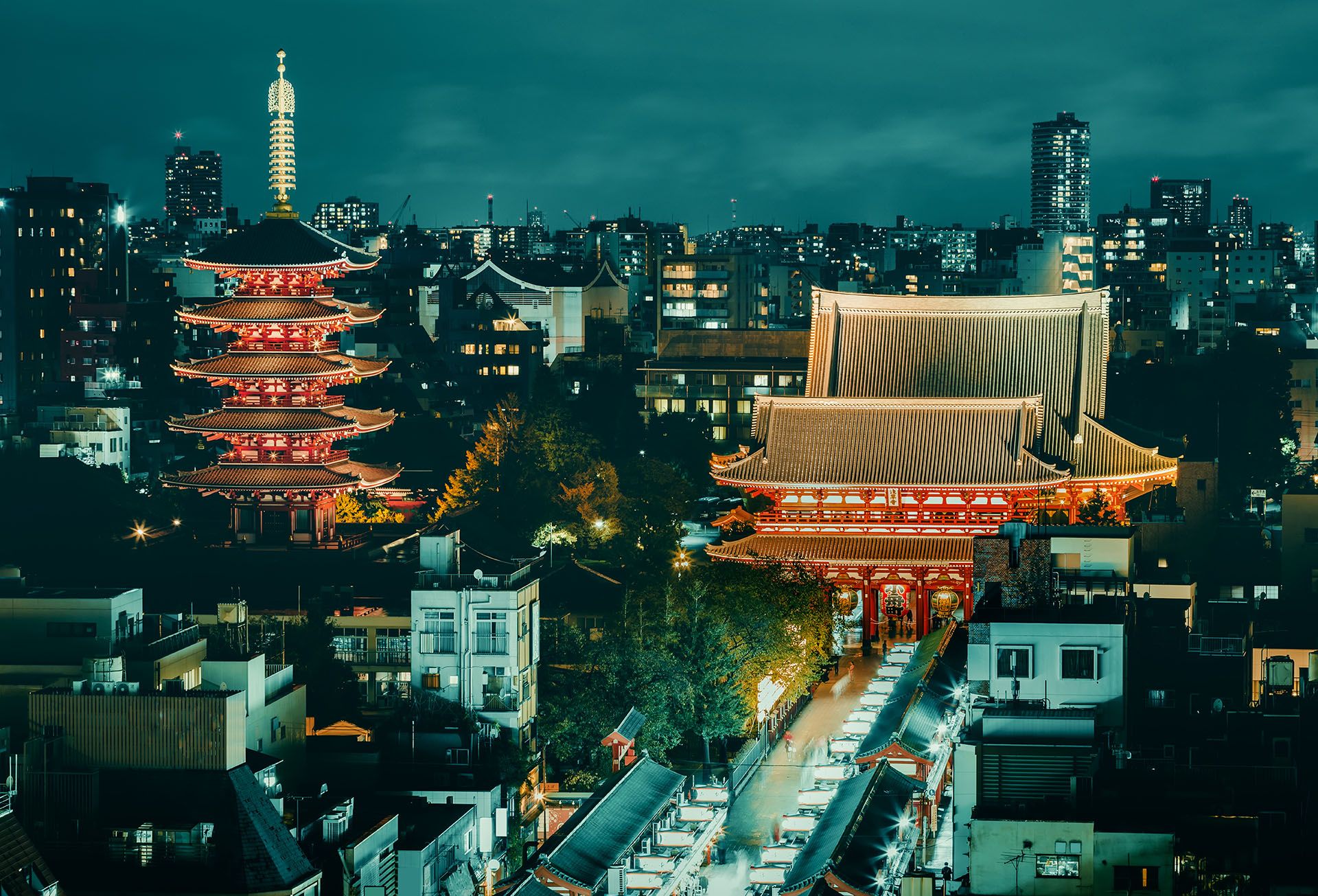
After lunch, travel through time in Asakusa. Wander Nakamise-dori’s centuries-old shopping lane leading to Senso-ji Temple’s crimson gates. Cap your day with panoramic city views from Tokyo Skytree before a twilight cruise along the Sumida River, watching skyscrapers transform into glittering light sculptures.

Tokyo traffic © Nick Jackson/single use only

Tokyo’s vibrant crossroads where tradition meets modernity © Nick Jackson

Day 3: Mountain Escape to Takayama

Trade city bustle for alpine serenity aboard the JR Limited Express Hida. As the train climbs through the Japanese Alps’ forested valleys, wide windows frame terraced rice fields and snow-dusted peaks. Four hours later, step into Takayama’s preserved Edo-era charm.

At Hida Folk Village, wander among steeply thatched gassho-zukuri farmhouses designed to shrug off heavy snowfall. Peek into reconstructed homes where hearth smoke scents the air, and watch artisans demonstrate traditional woodworking and indigo dyeing techniques unchanged for centuries.

Day 4: Takayama’s Rustic Flavors

Wake to the mouthwatering aroma of grilling mitarashi dango (sweet soy-glazed rice dumplings) at Miyagawa Morning Market. Browse stalls overflowing with foraged mountain vegetables, jewel-like preserves, and ruby-marbled Hida beef – Japan’s answer to Kobe steak.

Discover why mountain water makes perfect sake during a tasting at Takayama Shuzo brewery. Cedar-aged varieties change with the seasons – sip crisp daiginjo in spring or rich junmai in autumn as brewers explain how local climate shapes each batch.

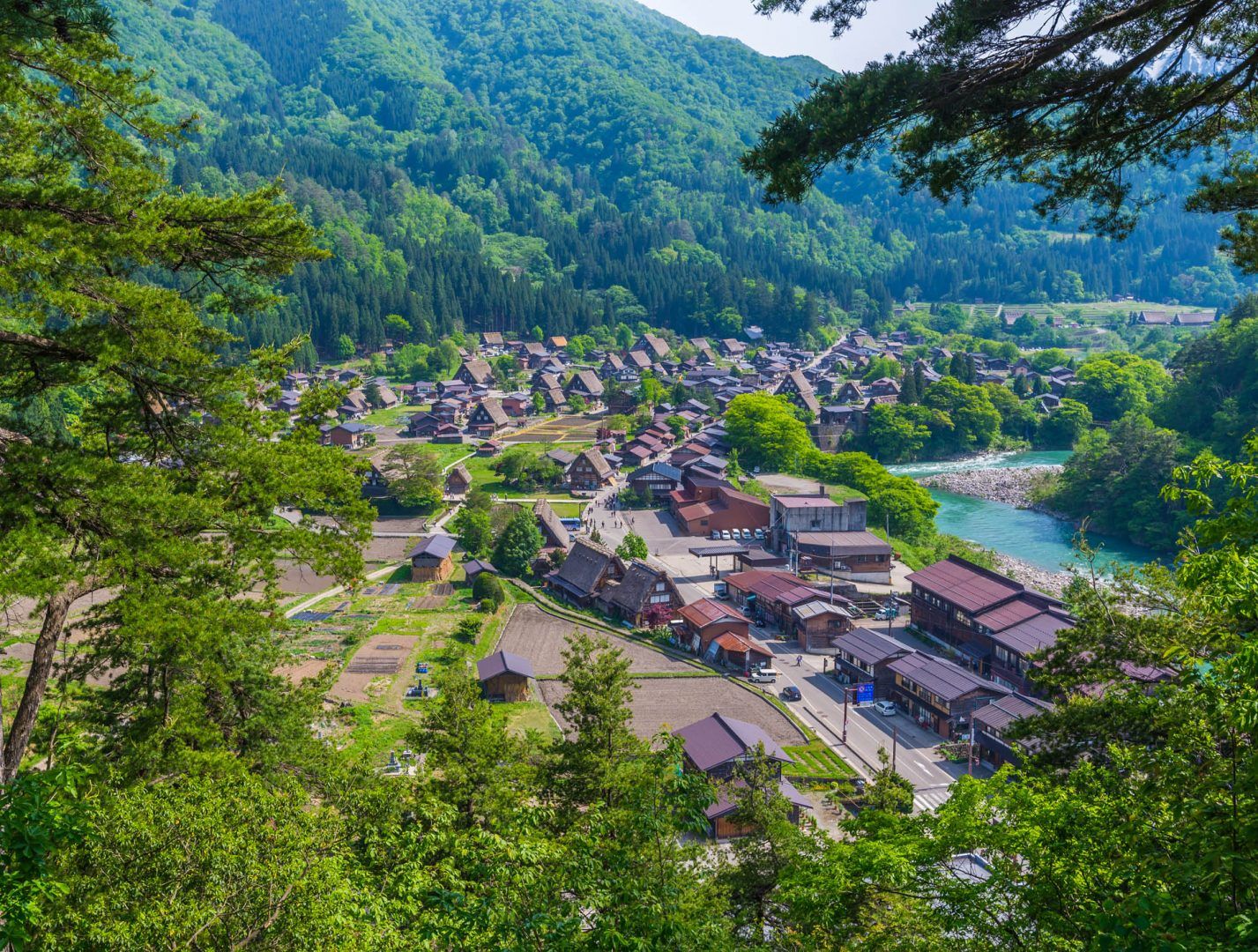
Shirakawa, Takayama, Japan Alps © Shutterstock

Traditional gassho-zukuri houses nestled in Takayama’s alpine valleys © Shutterstock

Day 5: Kanazawa’s Garden Paradise

Journey two hours through rural landscapes to Kanazawa, where Kenroku-en Garden unfolds like a living painting. Stroll past mirror-like ponds reflecting arched bridges, ancient pines pruned to perfection, and moss gardens glowing emerald in dappled light. Participate in a matcha ceremony at a teahouse, savoring bitter-sweet froth that mirrors the garden’s balance of simplicity and complexity.

As night falls, join a guided culinary walk through Higashi Chaya District. Sample the Sea of Japan’s bounty through delicate kaiseki courses featuring golden crab legs, sweet shrimp, and yellowtail so fresh it melts like ocean butter.

Day 6: Osaka’s Nighttime Spectacle

Fuel up at Kanazawa’s Omicho Market with a fisherman’s breakfast – kaisendon bowls piled high with uni, tuna, and salmon roe. Then board the Thunderbird Express to Osaka, watching rice paddies gradually give way to urban sprawl.

When neon lights start flickering in Dotonbori, join the street food extravaganza. Navigate crowds drawn to sizzling takoyaki (octopus balls), savory okonomiyaki pancakes, and crispy kushikatsu skewers. Let glowing giant crab signs and laughing street vendors lead your tasting tour through Japan’s unofficial food capital.

Japan, Osaka sakura - cherry blossom ©  Sean Pavone/Shutterstock

Osaka’s cherry blossom magic © Sean Pavone/Shutterstock

Day 7: Sacred Tastes of Mount Koya

Ascend to Buddhist tranquility via cable car through Koya-san’s ancient cedar forest. Walk Okunoin Cemetery’s mossy path flanked by 200,000 stone monuments, their weathered surfaces whispering centuries of prayers.

At temple lodging, discover shojin ryori – exquisite vegan cuisine where grilled tofu mimics meat and seasonal roots transform into edible art. Join evening meditation as incense curls through candlelit halls, then wake pre-dawn for chanting ceremonies that vibrate through wooden beams.

Day 8: Kyoto’s Culinary Heritage

Descend into Japan’s cultural heart via a scenic train ride to Kyoto. Dive into Nishiki Market’s nickname “Kyoto’s Kitchen” through 400+ years of food history. Nibble yuba (tofu skin) rolls, sample pickled mystery vegetables, and watch craftsmen shape delicate wagashi sweets.

As dusk falls, wander Gion’s lantern-lit alleys where wooden machiya houses whisper geisha tales. Your final feast unfolds in a ryokan inn, where multi-course kaiseki becomes a delicious farewell to Japan – each dish a flavorful haiku celebrating seasonal perfection.

The Phoenix Hall of Byodo-in Temple in Kyoto, Japan © Shutterstock

The Phoenix Hall of Byodo-in Temple in Kyoto, Japan © Shutterstock

Day 9: Kyoto’s Cultural Treasures

Kickstart your morning embracing Kyoto’s culinary soul at a cooking class inside a beautifully restored Kyo-Machiya townhouse. Learn to craft airy tempura with feather-light batter, umami-rich miso soup using authentic dashi broth, and seasonal dishes shaped by centuries of Kyoto traditions.

After lunch, step into Japan’s golden age at Kinkaku-ji. The Golden Pavilion’s shimmering reflection dancing across Mirror Pond creates postcard-perfect views. Next, feel history come alive at Nijo Castle – walk across its famed “nightingale floors” that chirp with every step, just as they alerted shoguns to intruders centuries ago.

As afternoon hues deepen, surrender to the meditative rhythm of a traditional tea ceremony in Gion. Watch with rapt attention as each graceful movement transforms powdered matcha into velvety perfection, revealing the profound connection between ritual, mindfulness, and flavor.

Day 10: Departure With Delicious Memories

Awaken early to immerse yourself in Kyoto Central Market’s lively atmosphere. Wander past stalls piled high with vibrant matcha powders, handcrafted wagashi sweets, and regional teas – perfect edible souvenirs. Watch master vendors prepare fresh delicacies as locals shop for their day’s ingredients.

Board the lightning-fast Shinkansen bullet train for your 2.5-hour scenic journey back to Tokyo. Gaze through panoramic windows as patchwork farmland and sleepy towns blur past. Keep cameras ready – glimpses of majestic Mount Fuji often appear when least expected. Arriving at Tokyo Station, seamless connections whisk you toward your departure flight, Japan’s magic still lingering in your heart.

Dreaming of a personalized Japan adventure? Our travel experts craft tailor-made itineraries so you experience exactly what makes your soul sing.

Nijo Castle Kyoto Japan

Nijo Castle in Kyoto © Shutterstock

Save up to 30%:
Check out the top-rated Japan tours with the best prices this month

Ultimate 14-Day Japan Adventure: Cities & Countryside

This perfectly paced two-week journey unveils Japan’s dazzling contrast – from neon-lit metropolises to whispering alpine forests. Glide between destinations via futuristic bullet trains, winding mountain buses, and even scenic ropeways, discovering why Japan captivates every traveler’s imagination.

Day 1: Dive Into Tokyo’s Electric Heart

Plunge straight into Tokyo’s beating pulse at Shibuya Crossing – where thousand-person symphonies of organized chaos unfold beneath towering screens. Time your visit for the 5pm rush when salarymen flood the intersection like schools of fish. Duck into adjacent alleys where steaming melon pan ice cream sandwiches await alongside retro game arcades.

Elevate your perspective at Shibuya Sky’s open-air observatory, drinking in panoramic city views as twilight paints the skyline. Download the essential JR Pass app beforehand – its real-time platform updates make subway navigation effortless.

Tokyo Metro, Japan © Shutterstock

Tokyo Metro, Japan © Shutterstock

Day 3: Mount Fuji & Hakone’s Natural Wonders

Rise early for an unforgettable encounter with Japan’s most iconic silhouette. At Oshino Hakkai’s crystal-clear springs, Mount Fuji’s perfect reflection will steal your breath. Channel your inner photographer climbing Arakurayama’s famed stairs, where a vermilion pagoda frames the snow-capped titan beautifully.

Later, soar above the clouds on the Mt. Fuji Panoramic Ropeway, Lake Kawaguchiko glittering like liquid silver below. Cap your day soaking in a Hakone ryokan’s restorative onsen waters as stars emerge over the mountains – pure Japanese bliss.

The Reiki garden of the Silver Temple, Kyoto © Nick Jackson/single use only

The Reiki garden of the Silver Temple, Kyoto © Nick Jackson/single use only

Day 5: Kyoto’s Golden Splendor

Begin your Kyoto adventure at the breathtaking Kinkaku-ji, where the Golden Pavilion’s shimmering reflection dances across the pond’s surface. Just a short journey away, Nijo Castle whispers tales of shoguns through its “nightingale floors” that chirp with every step, revealing masterful Kano school paintings on sliding doors.

Later, lose yourself in Fushimi Inari’s hypnotic corridor of vermillion torii gates winding up the mountainside. As dusk falls, experience Gion’s timeless elegance: savor matcha whisked before your eyes in an intimate teahouse, then indulge in a kaiseki feast where each dish celebrates Kyoto’s seasonal treasures. While buses connect these icons, savvy travelers explore Fushimi Inari early to avoid crowds.

Day 6: Kyoto’s Temple Trail & Bamboo Whispers

Beat the crowds at Kiyomizu-dera for sunrise – the perfect moment to admire Kyoto awakening from its wooden veranda. Wander the historic Higashiyama slopes to Arashiyama, where sunlight filters through a cathedral of towering bamboo stalks. Nearby, Tenryu-ji’s Zen garden frames mountain vistas with koi-filled ponds and meticulously raked gravel. Cap your day with contemplative strolls along the Philosopher’s Path, where cherry trees and quaint teahouses border a gurgling canal. Walking reveals Kyoto’s magic, though occasional buses help bridge longer distances.

Japanese garden in Nagamachi Samurai District, Kanazawa city

Japanese garden in Nagamachi Samurai District, Kanazawa city © Shutterstock

Day 7: Kanazawa’s Cultural Treasures

The Thunderbird train whisks you from Kyoto to Kanazawa in under three hours. Dive into Japan’s garden artistry at Kenroku-en, where arched bridges and ancient pines frame mirror-like ponds. Step back in time at neighboring Kanazawa Castle, its reconstructed Edo-era gates standing sentry over history.

In the afternoon, explore Higashi Chaya’s geisha district with its latticed teahouses before wandering Nagamachi’s samurai quarter, where earthen walls guard secret gardens. Conclude at Omicho Market with donburi piled high with fresh Sea of Japan bounty. Kanazawa’s compact size makes walking ideal, though the efficient loop bus connects key districts effortlessly.

Day 8: Mountain Villages & Alpine Beauty

Journey into the Japanese Alps to Shirakawa-go’s fairytale valley. These UNESCO-listed gassho-zukuri farmhouses, with steep thatched roofs designed to shed heavy snow, look plucked from ancient folktales. Climb to the panoramic viewpoint before exploring Wada House’s fascinating silk-rearing attic. Continue to time-capsule Takayama, where Edo-period streets like Sanmachi Suji showcase sake breweries marked by cedar balls and specialty shops tucked in hundred-year-old buildings.

Shirakawa-Takayama-japan-shutterstock_283260488

Shirakawa, Takayama © Shutterstock

Day 9: Takayama’s Morning Markets & Festival Floats

Greet the day at Miyagawa Morning Market, where local farmers offer mountain herbs, handmade miso, and crafts against a backdrop of flowing river waters. Wander Sanmachi Suji’s preserved merchant quarter, popping into sake breweries for tastings and museums revealing feudal-era lifestyles. Don’t miss the iconic red Nakabashi Bridge before exploring Sakurayama Shrine’s sacred grounds and the spectacular Festival Float Exhibition Hall, where elaborate parade vehicles dazzle with lacquer and gold leaf.

Day 10: Kamikochi’s Alpine Wonders

Board an early bus into Kamikochi’s pristine mountain wilderness – private vehicles stay at the valley rim. Start at mysterious Taisho Pond, where volcanic Mt. Yake-dake reflects in still waters, before hiking the Azusa River’s idyllic trails beneath Japan’s Northern Alps. Cross the Kappa Bridge to marvel at the jagged Hotaka Range before evening travel to Matsumoto. Smart packing is essential: mountain weather shifts rapidly, requiring layers and waterproof gear even in summer months.

Nature landscape at the Center of Kamikochi national park, Nagano, Japan or Japanese Alps  © Shutterstock

Nature landscape at the Center of Kamikochi national park, Nagano, Japan or Japanese Alps © Shutterstock

Day 11: Conquer the Tateyama Kurobe Alpine Route

Imagine soaring above Japan’s Northern Alps on one of the world’s most scenic mountain routes. The Tateyama Kurobe Alpine Route isn’t just a journey – it’s an adventure connecting Toyama and Nagano through an ingenious network of cable cars, trolley buses, and ropeways. Brace yourself as the Tateyama Cable Car climbs nearly vertical forested slopes, giving way to jaw-dropping vistas at every turn.

Stand in awe before the Kurobe Dam, a 186-meter engineering marvel that creates a turquoise alpine lake. Then ascend through clouds to Mt. Tate’s 3,015-meter summit, where spring visitors witness the unforgettable Yuki-no-Otani – snow corridors towering 20 meters high like frozen canyon walls. Pro tip: Pack snacks and plan your transport carefully – this full-day spectacle deserves your undivided attention.

Day 12: Step Back in Time at Matsumoto Castle

Welcome to Japan’s answer to a fairy-tale fortress. Matsumoto Castle’s dramatic black facade mirrors perfectly in its serene moat, earning its nickname “Crow Castle.” Inside, climb steep samurai-era staircases to panoramic views of the Japanese Alps from the top floor. The castle’s ancient wood creaks with stories of feudal lords and wartime strategy.

After your history fix, dive into Matsumoto’s creative scene. The City Museum of Art dazzles with Yayoi Kusama’s iconic polka-dot installations, while the Ukiyo-e Museum reveals delicate woodblock prints by masters like Hokusai. Don’t miss lunch at a local soba shop – Nagano’s buckwheat noodles are legendary. Cap your visit with a scenic 3-hour train ride to Tokyo aboard the JR Azusa Limited Express, watching mountain valleys fade into urban sprawl.

Matsumoto Castle  © Phattana Stock/Shutterstock

Matsumoto Castle © Phattana Stock/Shutterstock

Day 13: Tokyo’s Thrilling Urban Safari

Tokyo rewards early risers. Start in Harajuku where Takeshita Street explodes with rainbow wigs, limited-edition sneakers, and Insta-famous crepes. Just around the corner, Omotesando’s architectural wonders house haute couture boutiques – Tokyo’s elegant yang to Harajuku’s wild yin.

Afternoon brings digital magic at teamLab Borderless in Odaiba. Wander through flowers that bloom beneath your feet and crystal universes that shift with your movement. Book tickets weeks ahead for this ever-changing wonderland. As night falls, Tokyo transforms: Shinjuku’s Golden Gai alleyways buzz with tiny bars, while Shibuya’s legendary scramble crossing becomes a human tidal wave of neon-lit energy.

Day 14: Tokyo’s Cultural Grand Finale

Set your alarm for Tsukiji Outer Market’s symphony of sizzling grills and shouting vendors. Join locals slurping dawn-fresh sushi and savoring steaming bowls of donburi. By mid-morning, escape to Ueno Park’s cultural oasis where the Tokyo National Museum guards samurai swords older than some countries.

Make your final hours count at Ameyoko Market – haggle for souvenirs beneath the railway arches or revisit your favorite Tokyo neighborhood for those last-minute treats. As your bullet train speeds toward the airport, you’ll realize two weeks only scratched Japan’s surface.

shinjuku-golden-gai-tokyo-japan-shutterstock_1230032881

Shinjuku, Golden Gai, Tokyo © Shutterstock

Travel for less:
Explore budget-friendly Japan tour packages designed for you

Your Dream Japan Trip Made Simple

Why settle for generic tours when Japan offers endless possibilities? Our local experts craft journeys around your passions – whether that’s hunting anime treasures in Akihabara, carving fresh powder in Hokkaido, or sleeping in a Kyoto machiya where geishas once roamed. We handle the tricky bits: securing impossible restaurant reservations, shipping luggage between cities, even matching you with guides who geek out over your interests – be it robot cafes or 300-year-old sake breweries.

From JR Pass logistics to gluten-free ramen hunts, we’ve got you covered with 24/7 support. Ready to explore Japan your way? Request your personalized itinerary today – it’s free, flexible, and packed with local secrets.

Tourist spots of Japan Takachiho Gorge © Shutterstock

Tourist spots of Japan Takachiho Gorge © Shutterstock

More Ways to Fall in Love With Japan

Whether you’ve got a week or a month, Japan keeps reinventing itself. City enthusiasts might combine Tokyo’s electric energy with Osaka’s street food paradise and Kyoto’s timeless temples. Nature lovers could add Hakone’s volcanic valleys or Yakushima’s primeval forests. Winter wanderers chase perfect powder in Nagano, while foodies pilgrimage to Hokkaido’s seafood markets and Fukuoka’s midnight ramen stalls.

Think of Japan as a kaleidoscope of experiences — where futuristic cities meet timeless traditions and snow-dusted villages appear straight from storybooks. Whether you’re chasing winter magic, Tokyo’s neon pulse, or the quiet charm of lesser-known towns, these handcrafted itineraries help you uncover the country’s many layers. Let’s dive into journeys that blend iconic sights with places even seasoned travelers might miss.

The Ultimate Winter Japan Adventure: 12 Days of Snow, Lights & Culture

Winter transforms Japan into a shimmering wonderland, perfect for travelers craving festive lights, steaming onsens, and villages blanketed in white. This 12-day loop from Tokyo to Kyoto delivers both urban energy and serene beauty — without the crowds.

  • Days 1–3: Tokyo’s Sparkle & Nagano’s Snow Monkeys
    • Tokyo dazzles with winter illuminations in Shibuya and Roppongi, while shrines glow with New Year’s decorations. Then, hop on the bullet train to Nagano, where wild snow monkeys soak in natural hot springs at Jigokudani, their fur frosted with snow.
  • Days 4–6: Kanazawa’s Gardens & Alpine Charm
    • Kanazawa’s Kenroku-en Garden becomes a winter painting, its pines supported by traditional yukizuri ropes to withstand snowfall. Next, wander Takayama’s wooden merchant streets, soak in an open-air onsen, and step into Shirakawa-go’s UNESCO-listed farmhouses — their steep roofs heavy with snow.
  • Days 7–11: Kyoto’s Quiet Elegance & Tokyo’s New Year Buzz
    • Kyoto shines in winter: imagine the Golden Pavilion framed by snow or warming up with matcha during a temple tea ceremony. Return to Tokyo as the city prepares for New Year’s celebrations — think market stalls piled with mochi and shrines buzzing with festive energy.
Shirakawago village in Gokayama Japan © Mitsuboshi Kaidou

Shirakawago village in Gokayama Japan © Mitsuboshi Kaidou

Japan’s Hidden Gems: A 14-Day Journey Beyond the Guidebooks

Swap the well-trodden path for a deeper dive into Japan’s culture. From Tokyo’s secret alleys to Hiroshima’s poignant history, this two-week itinerary balances tradition with moments of quiet wonder.

  • Days 1–3: Unmasking Tokyo’s Soul
    • Go beyond Skytree and Senso-ji: Hunt for vintage kimonos in Yanaka’s retro lanes, marvel at Kappabashi’s lifelike plastic food displays, and people-watch amid Harajuku’s pop culture chaos.
  • Days 4–6: Mountain Air & Morning Markets
    • Ride the train into the Japanese Alps to Takayama. Sleep on tatami mats in a family-run ryokan, then browse riverside markets at dawn for handmade sansai pickles. Nearby, Hida Folk Village’s thatched huts reveal rural life centuries ago.
  • Days 7–10: Osaka’s Bite & Hiroshima’s Resilience
    • Devour Osaka’s street food (try takoyaki octopus balls!), then reflect at Hiroshima’s Peace Memorial Park. A short ferry delivers you to Miyajima Island, where deer roam freely and the “floating” torii gate glows at sunset.
  • Days 11–14: Kyoto’s Time Capsule Moments
    • In Kyoto, wander Gion’s lantern-lit streets at dusk, practice whisking matcha during a tea ceremony, and hike Fushimi Inari’s crimson torii tunnels. End with a kaiseki feast, possibly accompanied by a graceful Maiko performance.
Senso-ji Buddhist temple at dusk in Asakusa, Tokyo © FenlioQ/Shutterstock

Senso-ji Buddhist temple at dusk in Asakusa, Tokyo © FenlioQ/Shutterstock

Tokyo Unlocked: 7 Days in the World’s Most Electrifying City

Tokyo rewards those who embrace its contrasts. This one-week plan weaves together tradition, pop culture, and culinary gems — with plenty of surprises along the way.

  • Days 1–2: Shrines, Scrambles & Sweet Treats
    • Feel the pulse at Shibuya Crossing, then find peace at Meiji Shrine’s towering gates. Dive into Asakusa’s Nakamise Street for manju (sweet bean buns), then explore Yanaka — where old Tokyo survives in wooden tea houses and cat-filled lanes.
  • Days 3–4: Digital Dreams & Fish Markets
    • Get lost in teamLab Borderless’ digital art universe, then feast on fresh otoro tuna at Toyosu Market. Master sushi rolling with a local chef, then toast the day with skewered yakitori in Shinjuku’s lantern-lit yokocho alleys.
  • Days 5–7: Royal Gardens & Neon Nights
    • Stroll the Imperial Palace’s East Gardens before diving into Akihabara’s anime wonderland. Hunt for rainbow-colored crepes in Harajuku, belt out J-pop in a karaoke booth, and sip whisky high above Shinjuku’s neon maze.
Beppu onsen © Shutterstock

Beppu onsen © Shutterstock

Start your adventure:
Plan your perfect Japan getaway right here

Japan Travel Itineraries: Your Questions Answered

How many days do I need for Japan?

First-timers should aim for 10–14 days. This lets you combine Tokyo’s buzz, Kyoto’s culture, and one lesser-known region (like the Japanese Alps or Hiroshima) without rushing. Short on time? Focus on either Kanto (Tokyo, Hakone) or Kansai (Kyoto, Osaka, Nara).

How Many Days Do You Need to Truly Experience Japan?

Ten to fourteen days is the sweet spot for soaking up Japan’s magic without feeling rushed. Imagine splitting your time between Tokyo’s buzzing energy, Kyoto’s serene temples, Osaka’s legendary street food, and perhaps Hiroshima’s poignant history or the alpine beauty of the Japanese Alps. Rushing through this country? That’s like trying to savor a gourmet meal in three bites. Even with just a week, the Tokyo-Kyoto-Osaka trifecta delivers—though you’ll likely start planning your return trip before you even leave.

Japan rewards travelers who slow down. Those unexpected moments become your fondest memories: stumbling upon a cozy izakaya alleyway, soaking in a steaming onsen as dusk falls, or wandering ancient shrine paths beneath centuries-old trees.

When’s the Perfect Time to Experience Japan?

Spring (March-May) blankets Japan in cherry blossoms, while autumn (October-November) sets the landscape ablaze with fiery red maples. Both offer postcard-perfect weather—but be prepared for crowds and peak prices.

Summer brings humidity and June rains, but it pulses with energy. Kyoto’s Gion Matsuri festival transforms streets into living tapestries of music and tradition. Just pack light clothing and embrace the lively atmosphere!

Hikone Castle surrounded by cherry blossoms in spring

Hikone Castle in Shiga prefecture offers stunning seasonal views © Shutterstock

Why Winter Might Be Japan’s Best-Kept Secret

Picture this: snowflakes drifting into steaming outdoor hot springs, Mount Fuji crisp against a cobalt sky, and cities sparkling with winter illuminations. While Tokyo and Kyoto hover around 40-50°F (5-10°C), Hokkaido and the Japanese Alps become powder paradises with world-class skiing. Fewer visitors mean better deals on accommodations and more breathing room at iconic sites—a serene side of Japan most travelers never experience.

Chasing Cherry Blossoms: Your Sakura Season Guide

From late March through May, Japan transforms as cherry blossoms sweep northward. Tokyo and Kyoto typically peak in late March or early April—but nature keeps her own schedule, so check the annual sakura forecast before booking!

Join locals for hanami picnics beneath pink canopies at Tokyo’s Ueno Park or Kyoto’s Philosopher’s Path. For a more intimate experience, head to Yoshino’s mountain slopes in Nara, where over 30,000 trees create a floral wonderland. Pro tip: Blossoms last just a week, so flexibility pays off. Book accommodations early and expect premium rates during this enchanting season.

Cherry blossom landscape in Yoshinoyama, Nara prefecture

Yoshinoyama’s cherry blossom slopes offer breathtaking views © Sean Pavone/Shutterstock

Navigating Japan Like a Pro: Transportation Unpacked

City to City Travel

The iconic shinkansen (bullet train) lets you zip between Tokyo and Kyoto in under three hours—a thrilling ride with Fuji-san views! Budget travelers can opt for overnight buses, while domestic flights make sense for Hokkaido or Okinawa trips.

City Exploration

Tokyo’s subway may seem daunting, but color-coded lines and English signage simplify navigation. Kyoto’s flat streets beg to be explored by rented bicycle, while Osaka’s food alleys are best reached via its efficient metro. Taxis are pristine but pricey—save them for late-night returns after train service ends.

Road-Tripping Essentials

Renting a car unlocks hidden gems in rural Hokkaido or Kyushu, but steer clear of major cities. Narrow streets, steep tolls (about ¥10,000 Tokyo-Kyoto), and astronomical parking fees make urban driving stressful. Remember: An International Driving Permit is mandatory.

Shinkansen bullet train passing Mount Fuji

The shinkansen offers stunning views of Japan’s landscapes © Shutterstock

Mastering Japan’s World-Famous Train System

Japan’s railways redefine precision—trains arrive and depart with clockwork accuracy. The shinkansen network features three main services: lightning-fast Nozomi (not covered by JR Pass), comfortable Hikari, and all-stops Kodama. Pro tip: Reserve seats during peak seasons or opt for non-reserved cars for flexibility.

In cities, rechargeable IC cards (Suica/Pasmo) are your golden ticket—tap for subways, buses, and even convenience store purchases. Ticket machines offer English menus, and station staff excel at guiding lost travelers. Whether you’re commuting in Osaka or riding a scenic rural line, Japan’s trains transform transportation into an experience itself.

Is Japan’s Train System Really That Easy to Navigate?

Picture this: You swipe your IC card with a satisfying beep as you enter Tokyo Station. No fumbling for tickets – just tap and go! While bullet trains (shinkansen) welcome bento box picnics, local commuter trains have different etiquette. During Tokyo’s morning scramble, you’ll find packed cars and special women-only carriages (look for pink signage). Pro tip: Download Japan’s Hyperdia app for real-time schedules that’ll make you feel like a rail expert!

© Visit Gifu

Goshikigahara Forest, Japan © Visit Gifu

Will the JR Rail Pass Save You Money?

That ¥50,000 ($330) JR Pass isn’t magic – it’s math! At roughly the price of a Tokyo-Kyoto round trip plus a regional day trip, the 7-day pass becomes golden. Remember:

  • Covers: Most bullet trains (except Nozomi/Mizuho), JR buses, even the Miyajima ferry
  • Skip it if: You’re staying regional (try Kansai or Hokkaido passes instead)
  • Green Car upgrade: First-class comfort but rarely worth the extra ¥

Can’t decide? Map your itinerary first – sometimes regional passes plus pay-as-you-go IC cards work better!

Japan Travel Costs Decoded

Think Japan = expensive? Think again! With smart choices, you can experience cherry blossoms and sushi without Swiss-level spending:

  • Backpacker mode (¥5,000-8,000/day): Capsule hotels + conveyor belt sushi + night buses
  • Comfort explorer (¥12,000-20,000/day): Business hotel private rooms + izakaya dinners + Shinkansen tickets
  • Luxury immersion (¥30,000+/day): Kaiseki feasts in ryokans + private onsens + geisha performances

Food hack: Department store basement “depachika” food halls offer gourmet lunch boxes at half prices after 7 PM!

Mizuno Ryokan © Siobhan Warwicker

Mizuno Ryokan © Siobhan Warwicker

Sleeping Japanese-Style: Which Accommodation Fits You?

From pillow hotels to palace-like ryokans, Japan reinvents sleep:

Ryokans (¥15,000-50,000): Where every detail whispers tradition – tatami underfoot, kaiseki feasts in your room, and yukata robes for strolling gardens. Pro tip: Bath before dinner or miss the hot water!

Business Hotels (¥6,000-12,000): Think “cozy efficiency” – compact rooms with everything from pajamas to toiletries, often a stone’s throw from train stations.

Capsule Hotels (¥2,000-5,000): Futuristic sleeping pods perfect for minimalist travelers. Just pack light – luggage lockers can’t fit massive suitcases!

hotel-ryokan-onsen-japan-shutterstock_715062052

Traditional Japanese Ryokan © Shutterstock

Onsen Etiquette: Don’t Be “That Tourist”

Japan’s volcanic hot springs promise bliss – if you follow the rules:

  • Tattoo trouble? Many onsens still ban them. Search “tattoo-friendly onsen” or cover small ink with waterproof patches
  • Shower first: Scrub thoroughly at washing stations before dipping (soap suds in the bath = major faux pas!)
  • Towel tricks: Never soak your towel – most bathers fold them into origami-like head wraps
  • Temperature test: Ease into scalding waters slowly – some onsens hit 113°F (45°C)!

Pro tip: Evening onsen visits often feature mystical steam rising under starry skies – pure magic!

onsen-hot-spring-japan-shutterstock_645280435

Japanese Onsen Experience © Shutterstock

Survival Japanese: Essential Phrases for Travelers

While many Japanese speak English, these phrases unlock smiles:

  • “Sumimasen” (soo-mee-mah-sen): The Swiss Army knife of words – means “excuse me,” “sorry,” and “thank you”
  • “Kore o kudasai” (ko-reh oh koo-da-sai): “This please” – point at plastic food displays with confidence
  • “Eigo menu arimasu ka?” (ay-go men-yoo ah-ree-mas kah): “Do you have an English menu?”

Tech hack: Google Lens translates restaurant signs instantly – perfect for deciphering ramen shop vending machines!

Visas Made Simple

Good news for 68 countries including USA, Canada, and EU nations: No visa needed for stays ≤90 days! Just ensure your passport doesn’t expire during your trip. Travelers from China, Russia, or the Philippines need advance visas – apply 2+ weeks early. Pro tip: Always carry your passport – you’ll need it for tax-free shopping!

Overwhelmed by planning? Let our Japan experts craft your perfect itinerary – from secret onsens to the best sushi counters, with 24/7 local support. Discover stress-free travel with Travaloca’s custom trips.

Travaloca Travel Editors Community

🌟 The Travaloca Travel Editors Community is a dynamic collective of individuals united by their passion for travel and their dedication to high-quality content creation. This community serves as the driving force behind Travaloca's informative and engaging travel resources. ✨ Core Identity: This group consists primarily of passionate travel enthusiasts who have turned their love for exploration into a commitment to writing and content curation. Members are recognized for their: Extensive Travel Experience: Possessing valuable firsthand knowledge from their journeys worldwide. Aptitude for Writing and Editing: Demonstrating a keen interest and skill in crafting, reviewing, and perfecting travel narratives, guides, tips, and reviews. Dedication to Storytelling: Transforming personal experiences and destination knowledge into accessible, inspiring, and reliable information for a global audience. 📝 Community Focus: The community’s primary role is to contribute, edit, and maintain the diverse range of content on Travaloca's platform. They ensure the information provided is accurate, engaging, and reflective of current travel trends. In essence, the Travaloca Travel Editors Community is where travel passion meets editorial excellence, enriching the user experience and solidifying Travaloca’s standing as a trusted travel resource.

We will be happy to hear your thoughts

Leave a reply

Travaloca
Logo
Shopping cart